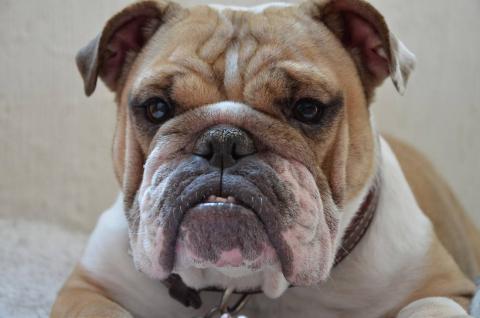
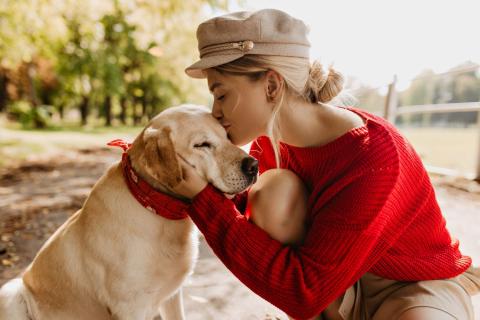
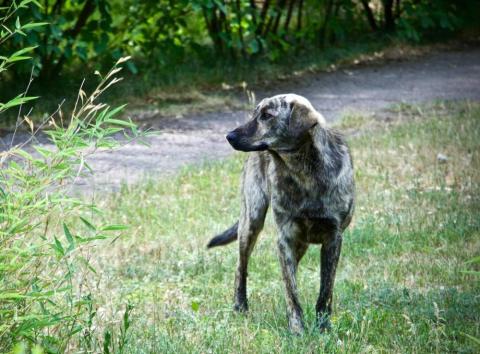
Some dogs and cats have been bred to have the same flat face
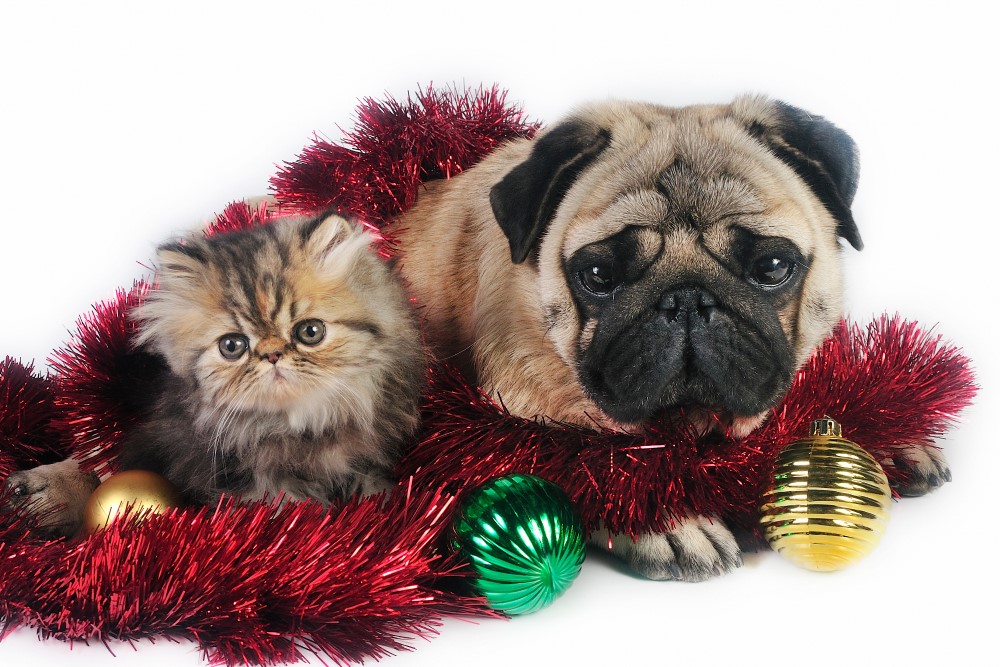
An analysis carried out in the United States has shown that, through intensive breeding and artificial selection, humans have pushed breeds such as pugs and Persian cats to evolve with very similar skulls and flattened faces. These two species, which have a common ancestor but have been evolutionarily separated for 50 million years, have converged to the point where they resemble each other more than they do members of their own species or their ancestors. According to the study, published in PNAS, ‘this phenomenon has not been observed before in domesticated species.’ The authors lament that humans ‘have bred brachycephalic breeds to such an extreme that they are prone to respiratory, feeding and birthing problems and would not survive in the wild.’
Pedro Morell - cara gatos perros EN
Pedro Morell
Doctor of Biology and postdoctoral researcher at the Centre for Palaeogenetics at Stockholm University (Sweden)
The study by Drake et al. compares the skull shapes of domestic cats and dogs, both among themselves and with their wild relatives. The study thoroughly samples and analyses the data, including a large number of samples to ensure that the results are representative. To my knowledge, no one had done a comparison of this kind before, and there are a couple of very interesting results.
The first is that both domestic dogs and cats show several times more variation in skull shape than all wild species in their respective families. This attests to how strong artificial selection has been on this trait and how humans have modified it according to our needs and aesthetic preferences.
The second is that, while the varieties with more elongated skulls show a divergent pattern between the two species, and more akin to their wild relatives, those with flattened skulls show a convergent pattern, in which dogs and cats ultimately resemble each other more than their respective undomesticated ancestors. Interestingly, this is also seen in large wild cats, which in this analysis appear closer to large dog breeds such as the Pyrenean Mastiff or the Chow Chow than to other smaller felines. These results once again highlight the important effect of selection, whether natural or artificial, in shaping the evolution of species that have been separated for millions of years.
Drake et al.
- Research article
- Peer reviewed
- Animals