Supercell thunderstorms could become more frequent if global warming is not controlled
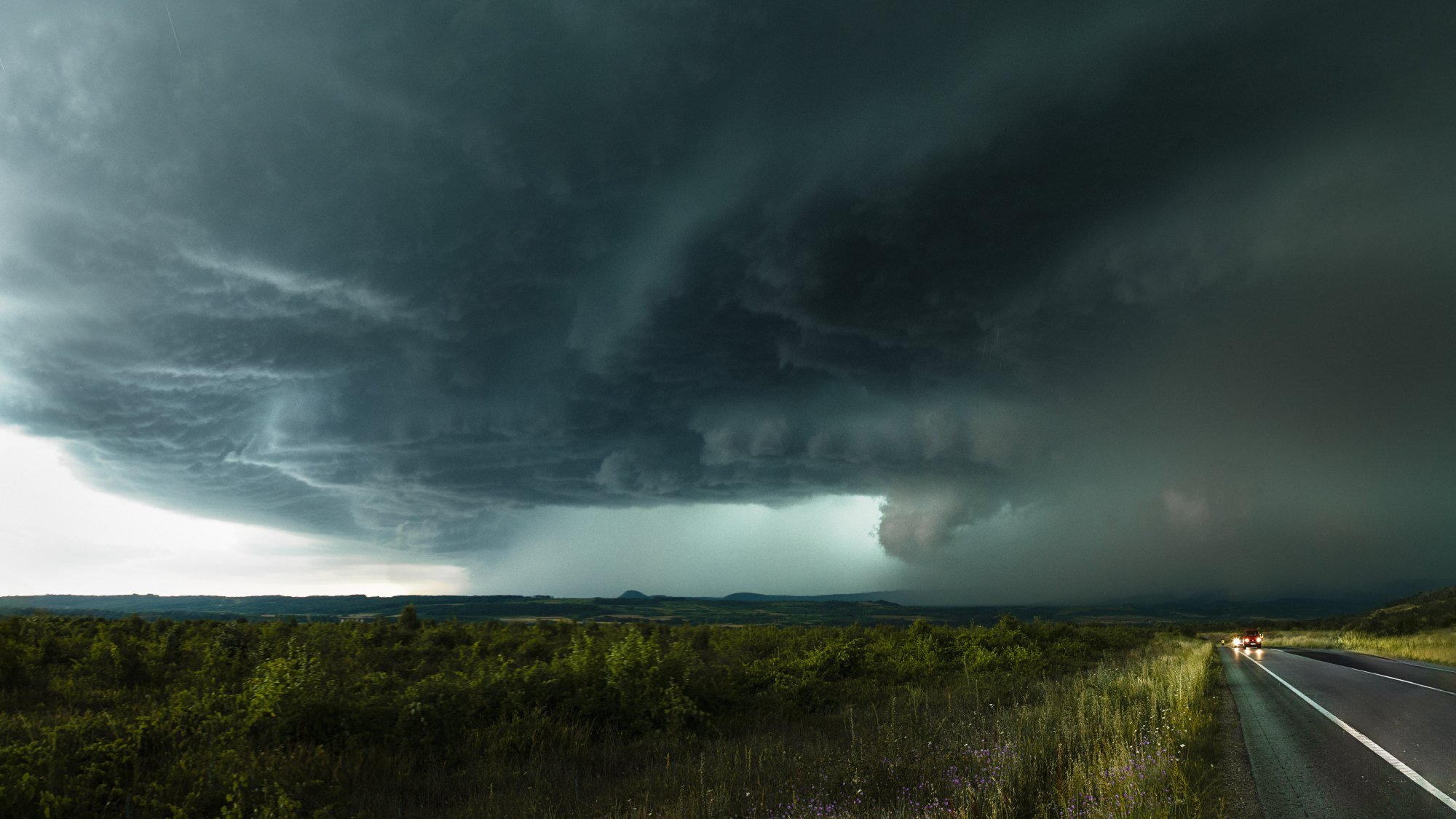
So-called ‘supercell thunderstorms’ — incredibly intense phenomena that bring hurricane-force winds, hail, torrential rain and often tornadoes — will become more frequent in Europe as the Earth continues to warm. This is the conclusion of a study published in Science Advances, which indicates that the increase could reach 11% in a scenario where temperatures rise by 3°C.
Tomeu - tormentas eléctricas
Tomeu Rigo Ribas
Technician, Forecasting and Monitoring Team, Forecasting Department, Catalonia Meteorological Service
In my opinion, the interesting points of the study would be: ‘Appearance of supercell thunderstorms at +3 °C’ and ‘changes in convective environments’. The last sentences of each point are the most remarkable part of the work.
This work was carried out by scientists from leading European centres and the data used is rigorous. The only drawback is that the current data still do not accurately reflect certain environments, the most complex ones, such as tornadoes and supercells, especially in complex topographical areas, which is why we often talk in meteorological terms of uncertainty. In any case, the conclusions show results that tend to correspond to what is currently observed.
In the case of Europe, and the Mediterranean in particular, we have detected many more cases of supercell storms in recent years, although it is true that these are usually associated with large hailstones (for example, in Catalonia, in 2022 and 2023, they exceeded 10 cm in diameter, as in Greece in 2021, and Italy, where a stone measuring 19 cm was recorded in 2023). It is true that we now have better observation networks, more observers and, above all, data from mobile phones, but even so, we have no record of such violent cases occurring in the last 50 years (or even longer), although they cannot be ruled out.
I believe that confounding factors have been taken into account, because they are experts in modelling work. The most important limitations are those of generating the correct environment for this type of storm. It should be noted that the numerical models used at European level have a mesh size of around 10 km, but the phenomena are much smaller in scale. In any case, the optimal environment can be approximated with great precision, but with the limitations indicated, which may mean that parameters such as shear can have different values within each pixel and are not reflected in the data.
The increase in the number of storms associated with severe weather (hail, tornadoes or flash floods, even very heavy rain) has a major impact on society, and it does not take a cold drop to cause it. Every year, hailstorms cause extensive damage to agriculture, but more recently also to urban areas: roofs, furniture, cars, even injuries and, in some cases, fatalities. Fortunately, these are local phenomena, but in the case of tornadoes in Central Europe or in the centre of the Iberian Peninsula, with large plains, they could cause real disasters if tornadoes similar to those that occur in the plains of the Central-South of the United States (in fact, there have already been recent cases in Andalusia of extensive damage to agriculture caused by a tornado).
Feldmann et al.
- Research article
- Peer reviewed