
Miguel Hernandez University of Elche
If you are the contact person for this centre and you wish to make any changes, please contact us.
Nutritionist and Doctor of Public Health from Miguel Hernández University in Elche. Member of the Sports Nutrition Research Group at Alfonso X El Sabio University.
Associate Professor in the Department of Health Psychology at Miguel Hernández University of Elche and researcher at the Center for Research on Childhood and Adolescence
Director of the Nutrition and Bromatology research group.
Full professor at the Miguel Hernández University, specialising in Pharmacology and pain, coordinator of the SED Bioethics working group and coordinator of the Neuropharmacology applied to pain research group of the ISABIAL Foundation
Director of the Institute of Neurosciences, a joint centre of the Miguel Hernández University of Elche (UMH) and the CSIC
Professor and vice-director of the Institute for Research, Development and Innovation in Health Biotechnology of Elche (IDiBE) of the Miguel Hernández University
Researcher in the Biomedical Neuroengineering group at the Miguel Hernández University (UMH) of Elche
Director of the Institute of Bioengineering at the Miguel Hernandez University of Elche and director of the Biomedical Neuroengineering group at the Center for Biomedical Research Network on Bioengineering, Biomaterials and Nanomedicine (CIBER-BBN)
Postdoctoral Researcher, Department of Applied Biology.
Professor of Nutrition at Miguel Hernández University in Elche.
Research scientist at the Institute of Neurosciences in Alicante (CSIC-UMH), head of the Molecular Neurogenetics group
Professor of Preventive Medicine and Public Health at the Miguel Hernández University and director of the Global Health research group.
CSIC Group Leader at the Institute of Neurosciences (CSIC-UMH)
Professor of Preventive Medicine and Public Health and Director of the Unit of Epidemiology of Nutrition at the University Miguel Hernández
CSIC research professor (honorary) at the Instituto de Neurociencias de Alicante (CSIC-UMH) and member of the Royal Academy of Sciences of Spain
Researcher at the Department of Plant Production and Microbiology, Miguel Hernández University of Elche
Professor of Social Psychology, Department of Health Psychology
Researcher at the Department of Applied Biology.
Research Professor at CSIC at the Institute of Neurosciences (Alicante)

The Karolinska Institute has awarded the Nobel Prize in Medicine or Physiology to Karl Deisseroth, Peter Hegemann, and Georg Nagel for their discoveries regarding light-activated ion channels and optogenetics. This method, which makes it possible to activate or deactivate individual neurons in a living brain, “is currently used in laboratories around the world to unravel the mysteries of the brain,” the institute announced.
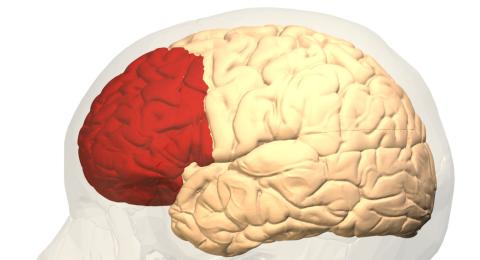
The prefrontal cortex is a brain region involved in some of the defining characteristics of human beings, such as planning, complex problem-solving, and impulse regulation. Researchers from the PsychAD consortium have created the most comprehensive map to date of gene expression in this region across the lifespan. According to the authors, the maturation process is complete by approximately age 24. The study—which will facilitate research into aspects of aging and cognitive decline—is published in Nature alongside seven other papers describing disease-related alterations and new genetic risk factors.

An article published in Brain Health proposes using the concept of the ‘criticome’ to refer to the sensory, motor, social, cultural and environmental information recorded from pregnancy up to the age of 25, which is the period of greatest brain plasticity. According to the authors, this concept reframes autism, schizophrenia and depression as developmental disorders rather than purely synaptic disorders. Besides, they say this approach would have implications for educational policy, mental health care and screen use, amongst other issues.
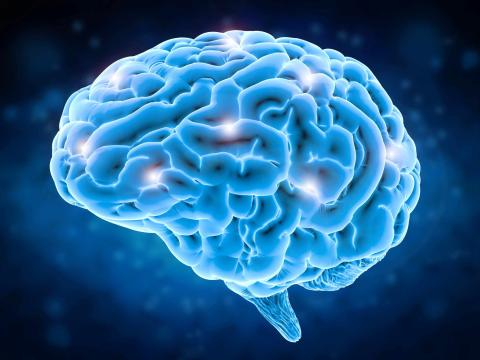
A US team analyzed the genetic activity of individual brain cells from 15 men and 15 women and found 133 genes that showed consistent differences. Although biological sex explained only a small part of the differences they found when comparing all the brains, variants in many of these genes have been associated with neuropsychiatric and neurodegenerative disorders—such as ADHD, schizophrenia, depression, and Alzheimer's—suggesting that sex differences could play a role in the distinct risk men and women have of developing certain diseases. The authors, however, acknowledge that the sex-related differences in their study could stem from differences in socialization and experience. The results are published in Science.

High academic pressure during adolescence is linked to increased rates of depressive symptoms and self-harm, which can persist into early adulthood. This finding, published in The Lancet Child & Adolescent Health, was observed in a sample of nearly 5,000 young people born in England (UK) in 1991 and 1992. Academic pressure was measured when participants were 15 years old, mental health was assessed repeatedly between ages 16 and 22, and self-harm was tracked up to age 24. While the association with depressive symptoms was observed up to age 22, it was strongest at 16. Regarding self-harm, each one-point increase in academic pressure was associated with an 8 % higher likelihood of engaging in self-injurious behavior.

A team from the Miguel Hernández University of Elche and the Alicante Hospital has implanted a microelectrode array in the brains of two blind people. This array is capable of sending electrical stimuli that evoke visual perceptions, something that has been done before, and also of "reading" neuronal responses and adapting to them in real time. The system has allowed them to recognize various complex patterns, movements, shapes, and even some letters. According to the researchers, this new technology "can help make the difference between perceiving a flash and seeing the world." The results are published in the journal Science Advances.

The use of creatine among athletes is not new, although its consumption has become popular on social media. We answer questions about this compound with the help of experts in nutrition, sports and dietetics.
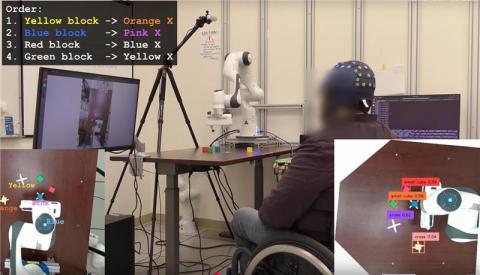
Brain-computer interfaces are devices that decode nerve signals and can help people with paralysis move and communicate. Now, a team at the University of California (USA) has used artificial intelligence tools to improve their functioning. In an initial study, their use improved a person with paraplegia's cursor control fourfold. It also allowed the person to perform tasks with a robotic arm that they couldn't complete without the AI. The results are published in the journal Nature Machine Intelligence.
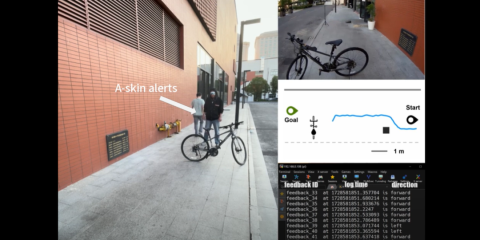
A team has developed a wearable designed to aid navigation for people who are blind or visually impaired. The system uses artificial intelligence (AI) algorithms to probe the environment and send signals to the wearer when approaching an obstacle or object. The technology, which is presented in Nature Machine Intelligence, was tested with humanoid robots and blind and partially sighted participants in both virtual and real environments.
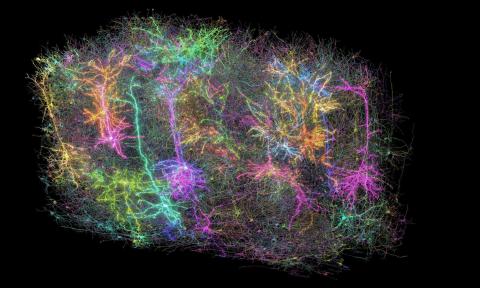
A set of articles published in Nature and Nature Methods draws a high-resolution map of the structure of and connections between the brain cells of mice. The map is based on data from a single cubic millimetre of brain and includes more than 200,000 cells, around 84,000 neurons and 524 million synaptic connections. Although this is a very small part of the mouse brain, it will help us understand how different types of cells work together.