
Polytechnic University of Valencia
If you are the contact person for this centre and you wish to make any changes, please contact us.
Professor at the Polytechnic University of Valencia and researcher at the CMT – Clean Mobility & Thermofluids University Research Institute
Researcher at the Institute of Molecular and Cellular Biology of Plants (UPV-CSIC)
Senior Scientist in Social Sciences at INGENIO (CSIC-UPV)
Lecturer at the Polytechnic University of Valencia and former Deputy Director-General of the FAO
Full professor at the Polytechnic University of Valencia and member of the Evaluation and Monitoring Committee of the ANECA state accreditation system
Director of the ETSI of Telecommunications of the Polytechnic University of Valencia
Researcher on the evaluation of science at Leiden University (Netherlands) and at the Ingenio Institute (CSIC-UPV)
Head of the Department of Architectural Constructions at the Universitat Politècnica de València (UPV)
Professor and researcher at the Valencian University Institute for Research in Artificial Intelligence at the Universitat Politècnica de València.
Professor of Optical Communications Systems and Networks at the Polytechnic University of Valencia (UPV)
Professor at the Valencian Institute for Research in Artificial Intelligence (VRAIN), Universitat Politècnica de València, and researcher at the Leverhulme Centre for the Future of Intelligence, University of Cambridge
Doctor of Architecture from the Department of Architectural Constructions at the Polytechnic University of Valencia
Full Professor, Deputy Head of the Department of Electrical Engineering at the School of Industrial Engineering of the Polytechnic University of Valencia and Academic Director of the Degree in Energy Engineering
Professor in the Department of Urban Planning at the Universitat Politècnica de València (UPV) and Director of the Aquaculture and Environment Research Center (ACUMA)
Research Professor at INGENIO (CSIC-UPV)
Deputy Director of the Higher Technical School of Agricultural Engineering

A study published in PNAS sets out a worst-case scenario for current climate change, explains the likelihood of its occurrence and analyses the devastating consequences it would have. It also includes a research agenda to address it.
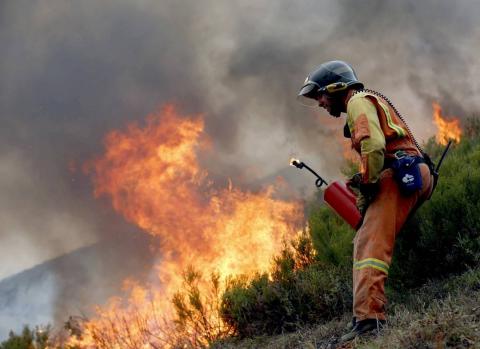
We are finding fires that exceed the maximum extinguishing capacity of the resources that are being asked to control them by 4 or 5 times, which is nonsense, as well as recklessness. We should ask ourselves about our territorial, social and economic model for dealing with this situation so that we do not leave the fire-fighting services with this intractable and unsolvable problem.
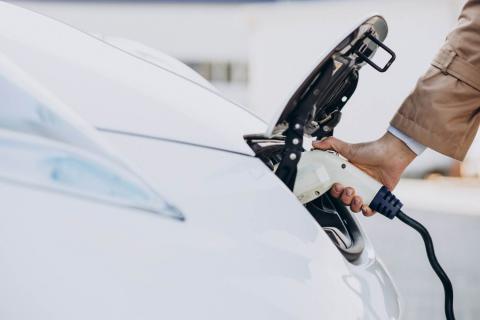
Last week, the European Parliament approved a ban on the sale of vehicles with emissions of more than 0 grams of CO2 per kilometre from 2035 in Europe. In addition, they also voted against an amendment that would allow car manufacturers to buy credits for so-called synthetic fuels. Is this the right measure to accelerate the decarbonisation of the transport sector?