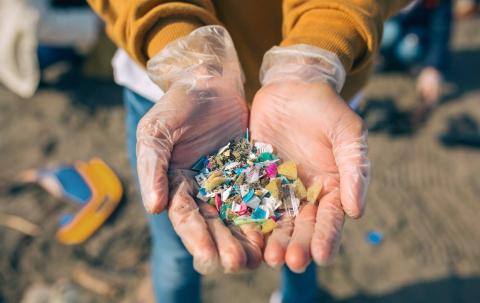
Negotiations to move forward with global plastics treaty fail
After 10 days of meetings and beyond the deadline, representatives from more than 180 countries gathered at the UN headquarters in Geneva (Switzerland) have failed to agree on a global treaty against plastic pollution, the first legally binding one. This negotiation was, in principle, the last chance to reach an agreement, after the last meeting in Busan (South Korea) also ended without a treaty in December, two and a half years after negotiations began.
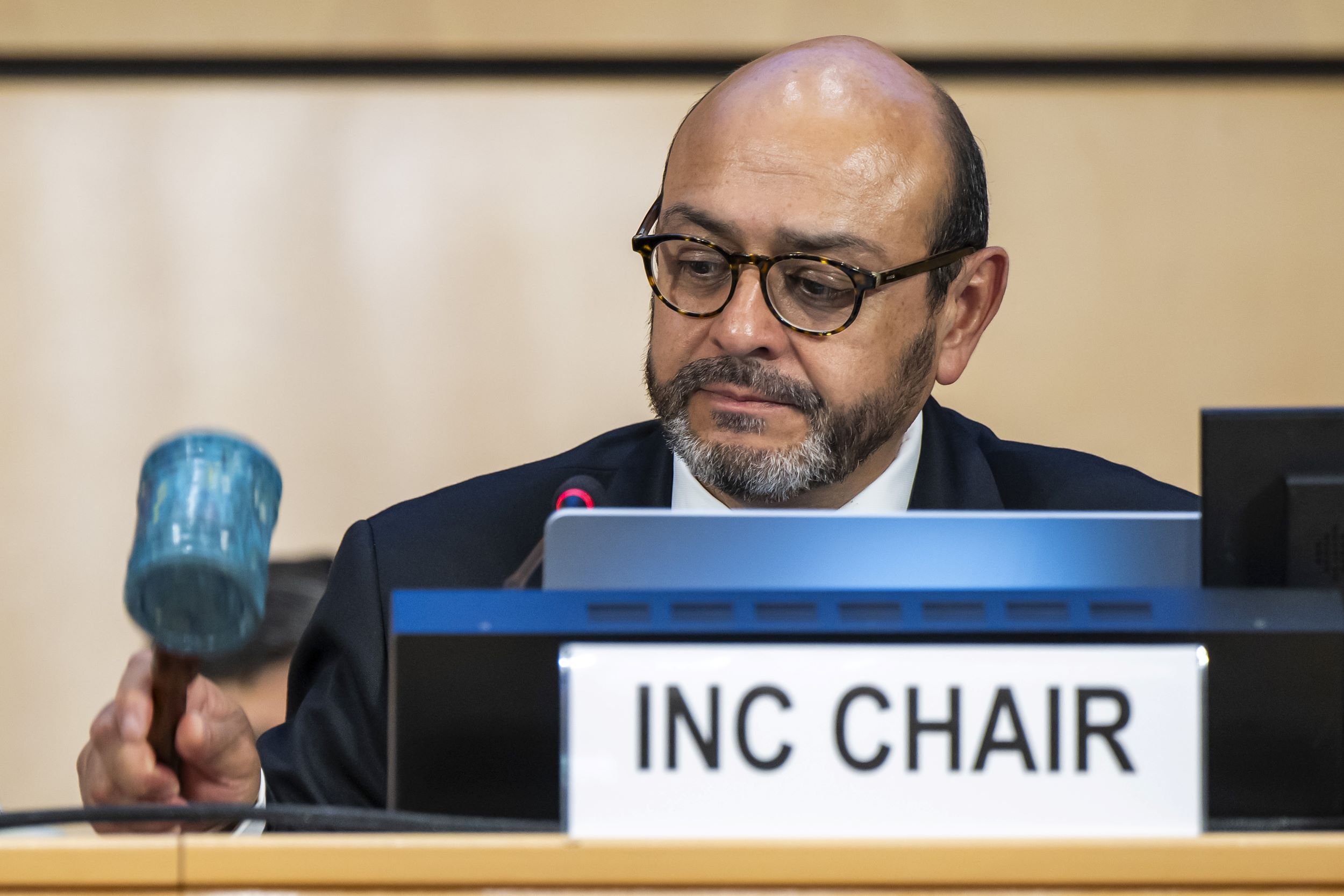
The president of the International Negotiating Committee, Luis Vayas Valdivieso. EFE/EPA/MARTIAL TREZZINI.
Carmen Morales - no acuerdo plásticos EN
Carmen Morales
Lecturer at the University of Cadiz, researcher at the Institute of Marine Research (INMAR) and Scientists Coalition for an Effective Plastics Treaty
After 10 days of negotiations, in this sixth phase to agree on a global treaty on plastic pollution, no treaty has been reached. We see two main groups: Member States that want an ambitious and effective agreement, and those that want a treaty limited to waste management.
We have scientific evidence showing that in order to tackle the problem of plastic pollution, we must consider the entire life cycle of the material, from resource extraction to the final destination of the plastic. An effective treaty should reflect a reduction in the production and use of plastics. If the chemicals associated with plastics are not regulated, our health and that of all living beings will be compromised.
It seems that science is being listened to more, but it is not always taken into account. The draft text presented by the chair on Wednesday [Ecuadorian Luis Vayas Valdivieso, chair of the negotiating committee] left out these points, resembling a waste treatment agreement, much weaker than the previous Busan proposal.
There was a lot of disagreement among countries and a request was made for a new draft to be prepared.
In the early hours of Friday morning, after long hours of waiting and widespread uncertainty, a new text was issued, with a more ambitious tone but not enough for the majority. A significant group of countries preferred not to accept a weak agreement that does not include the entire material cycle.
Despite the frustration, a weak treaty that ignores key elements is not desirable, as it could keep the world tied to a long-term agreement that is incapable of ending plastic pollution. The current proposal should be significantly strengthened and, with a more concerted global effort, it is still possible to achieve a treaty that is commensurate with the problem we face.
Ethel Eljarrat - no acuerdo plásticos EN
Ethel Eljarrat
Director of the Institute of Environmental Assessment and Water Studies (IDAEA-CSIC)
Six rounds of meetings over almost three years have failed to produce agreement on the measures needed to tackle one of the greatest environmental challenges facing our planet. Disappointment and frustration reign, although this was to be expected.
Unfortunately, a small group of oil-producing countries has blocked progress on the two key issues needed to tackle the problem: putting a cap on global plastic production and banning toxic chemicals associated with plastic.
The other countries have not agreed to sign a minimalist treaty, which seems quite reasonable. The proposal presented did not provide any guarantees as to its effectiveness in advancing the fight against the harmful effects of plastic pollution. Accepting it would have been tantamount to giving in and denying the existence of a real problem. International treaties on other issues of global concern, such as climate change, have usually set targets to be achieved within a timeframe that, unfortunately, is never met and needs to be extended. But in this case, the starting point is so weak that it is unacceptable.
Focusing the solution to the problem of plastic pollution solely on recycling the waste generated, when recycling rates with current production levels do not even reach 10%, is clearly insufficient. Pretending that measures should be addressed at the national level is to misunderstand what plastic pollution means for the environment.
Now we can only hope for further meetings that will lead to a treaty that, at the very least, sets acceptable minimum standards. Meanwhile, with every year that passes without an agreement, we continue to increase the production of virgin plastic, generate more plastic waste that spreads into our aquatic and terrestrial ecosystems, and use toxic substances that enter our bodies and affect our health.