It is estimated that around 400 large data centers in the United States already account for 1.8% of the country’s total electricity consumption
A team in the United States has estimated the electricity consumption and CO₂ emissions attributable to 403 large data centers in the country—facilities used for services such as cloud computing and artificial intelligence. Although these represent only a portion of all existing data centers, the calculations indicate that they accounted for 1.8% of the nation’s total electricity consumption between May 2024 and April 2025, resulting in approximately 25.7 million tons of CO₂ emissions linked to their operation. The findings are published in Nature Sustainability.
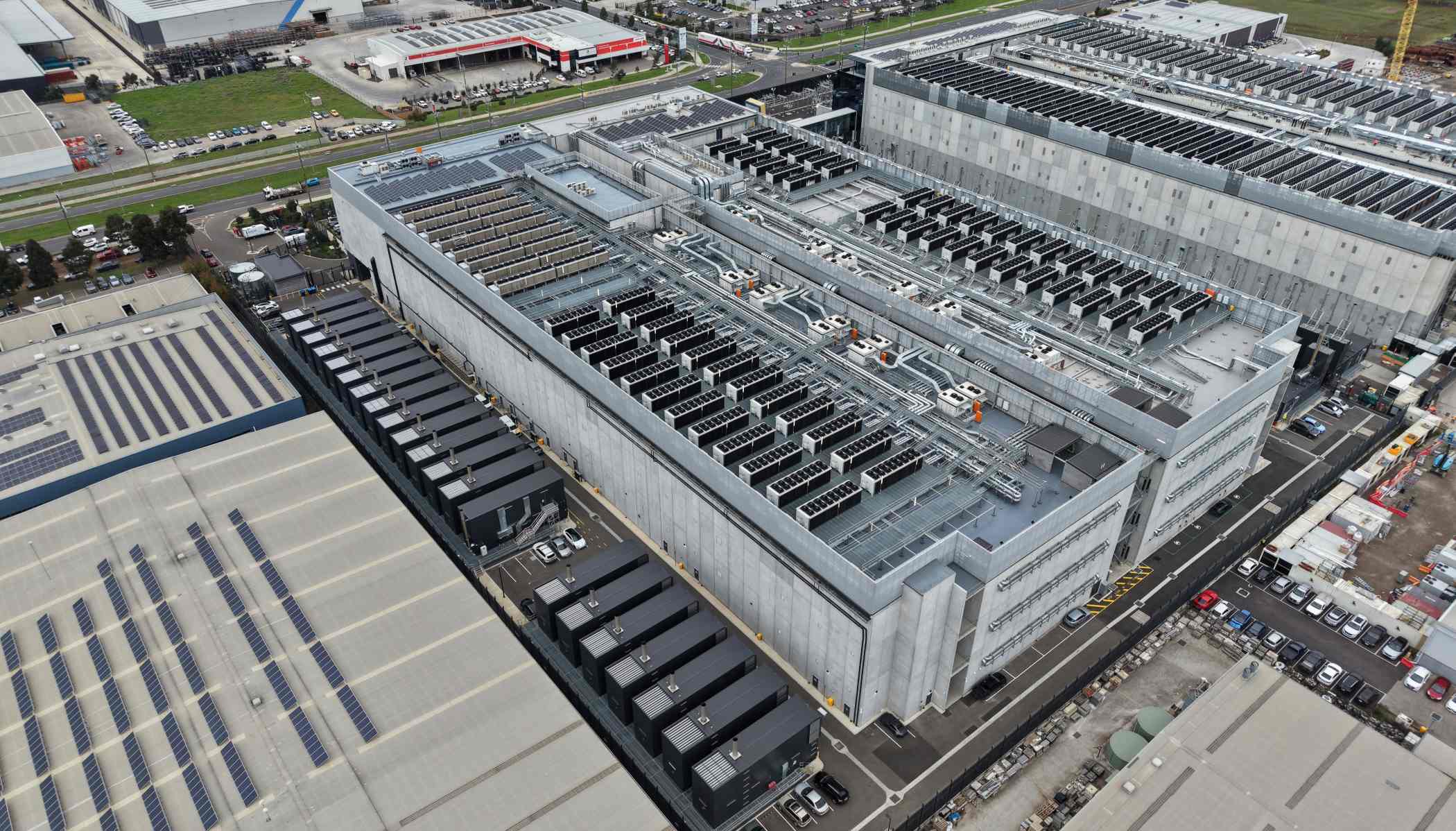
Gómez - IA electricidad
Carlos Gómez Rodríguez
I believe this is a high-quality paper. The authors employ a transparent, well-documented, and logical methodology: they estimate the electricity consumption of data centers based on the facilities' electrical capacity—what a household user might call "installed power"—alongside a series of hypothetical scenarios regarding the actual percentage of that capacity being utilized. A key strength is that they account for individual data centers rather than relying on aggregate global statistics; furthermore, they verify each data center included in the study using maps and satellite imagery. A drawback, however, is that the sample is incomplete—some data centers could not be verified, perhaps because they are too new to appear in the available imagery.
It should be clarified that while this is a solid piece of work—which I believe it is—that does not mean the estimates are highly precise. They cannot be, for two reasons: first, the sample is incomplete; and second, the actual consumption data for any given data center is private. Consequently, the authors’ findings are estimates with a significant margin of error. This is by no means a shortcoming of the authors themselves, who have done the best possible work given the data available.
The findings align well with previous estimates. For instance, a recent report from Lawrence Berkeley estimated that U.S. data centers collectively consumed approximately 4.7% of the nation’s electricity in 2024. The current study suggests a figure closer to 2%, though this is based on a partial sample consisting only of large data centers; thus, the two sets of figures are compatible, accounting for the margins of error inherent in all such estimates. A precise, granular estimate is impossible because actual consumption data is not public; therefore, any such estimate will inevitably carry a significant margin of error. Regarding the implications, 2% or 4.7% of a country’s total energy consumption—taking the U.S. as an example—are certainly significant figures, but they should be viewed in context. We are talking about an infrastructure that, in many ways, underpins the modern economy—supporting everything from e-commerce and cloud services to scientific research and artificial intelligence (AI)—while providing the U.S. with a massive competitive advantage. While it is clearly essential to moderate energy consumption and carbon emissions across all sectors, I do not believe the criticism should be focused on this particular industry, especially when other mature industrial sectors—such as transportation or textiles—have far larger energy and carbon footprints. Furthermore, the energy consumed by data centers can be made "greener" by integrating more renewable and nuclear energy into the power grid (for instance, in Spain, we already emit significantly less CO2 per kWh than in the U.S.). This is a transition that is much harder to achieve in other sectors, where the energy consumed is not in the form of electricity.
Guidi et al.
- Research article
- Peer reviewed
- Modelling