A single dose of rapamycin in mice reduces behaviours similar to those seen in the autism spectrum for a few hours
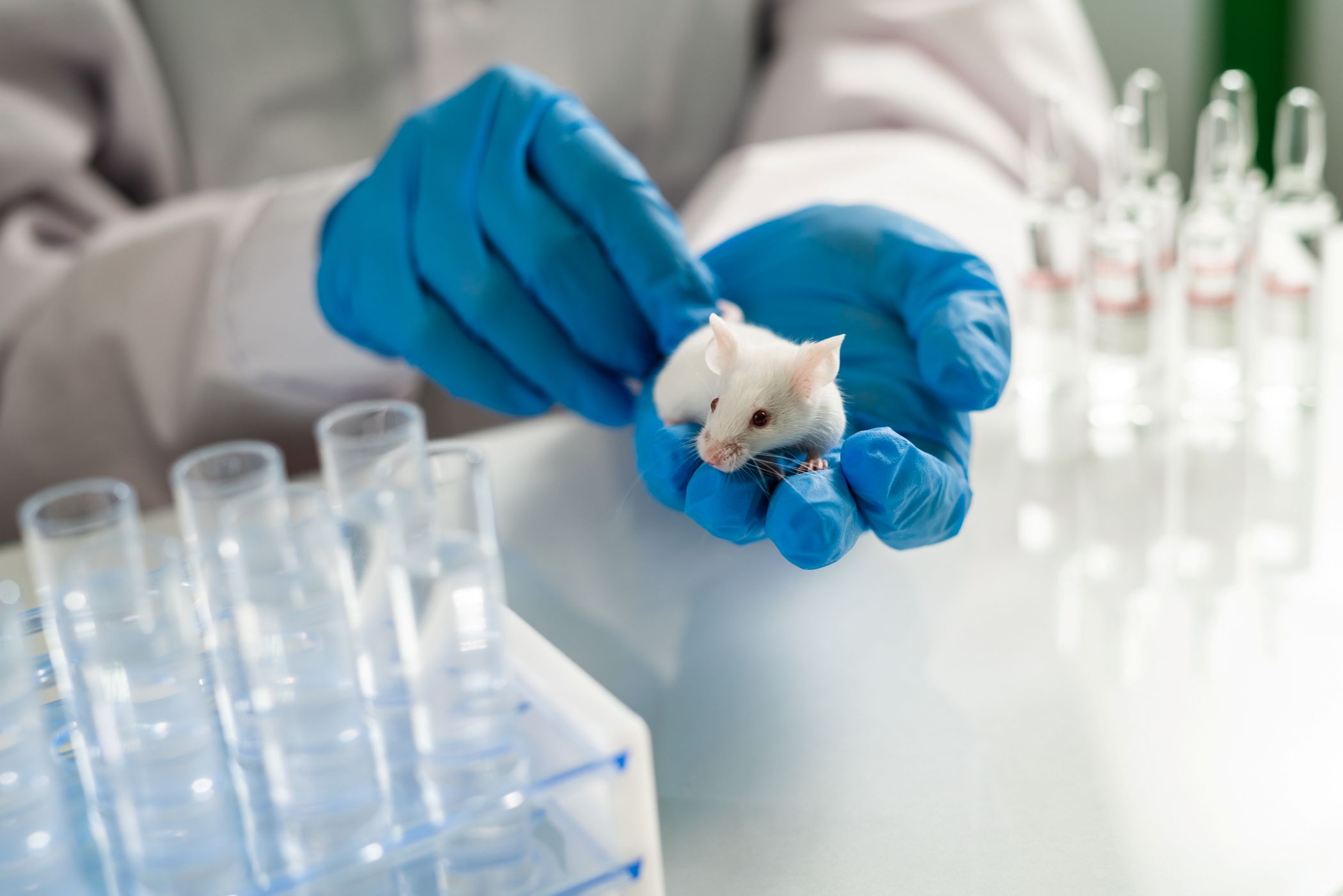
A team from the United States exposed pregnant mice to a mild inflammatory agent so that their offspring would develop brain and behavioural changes similar to those seen in autism spectrum disorder. When these offspring reached adulthood, the researchers administered a dose of rapamycin — an immunosuppressant — and found that several of these changes improved for a few hours, including cerebral hyperactivity, the risk of seizures, sensory hypersensitivity, repetitive behaviours and abnormal organisation of the brain’s functional network. The authors, whose work is published in Nature Communications, emphasise in a press release that these effects are temporary and that repeated administration loses its efficacy. Furthermore, they point out that rapamycin’s high potential for toxicity and the fact that the study was conducted on mice rule out its widespread use in humans.
Víctor Briz - ratones autismo
Víctor Briz
Senior Scientist at the Carlos III Health Institute, in the area of Environmental Toxicology of the National Center for Environmental Health
There are numerous genetic and environmental factors involved in the onset of autism spectrum disorder (ASD), as well as in other related neurodevelopmental disorders. In the study published in the journal Nature Communications, the authors use a model of inflammation during pregnancy, commonly employed in mice to induce ASD-related symptoms in the offspring, such as stereotypical/repetitive behaviours, sensory hypersensitivity and alterations in certain neural circuits. The authors employ a multidisciplinary approach combining animal behaviour, functional magnetic resonance imaging, electrophysiology and state-of-the-art single-cell gene expression analysis techniques to investigate the neurobiological mechanisms altered in ASD, thereby providing relevant scientific insights into the field and supporting the model’s utility in research. Furthermore, they demonstrate that treatment with rapamycin—a drug widely used as an immunosuppressant to prevent rejection in organ transplants or in various cancer therapies—could be beneficial in treating some of the symptoms of ASD.
Although numerous studies have demonstrated the therapeutic benefits of rapamycin treatment in multiple animal models of ASD and other neurological disorders, the novelty of this work lies in its demonstration that acute treatment lasting just a few hours is sufficient to reverse ASD symptoms in adult individuals. The authors argue that this implies that the adult mouse brain is still capable of remodelling and is therefore likely to benefit from this and, possibly, other pharmacological therapies.
The main limitation of the study is that the therapeutic benefits of rapamycin are only temporary and lose their effectiveness over time (due to high tolerance). Although interesting and promising, these results must be treated with caution; in the authors’ own words, treatment with rapamycin is far from being applicable in humans due to its numerous side effects, as well as the aforementioned tolerance. In my opinion, it remains to be seen whether other drugs with similar mechanisms of action, but a different pharmacological and toxicological profile, might serve this purpose.
In any case, it is worth remembering that ASD and other neurodivergent conditions are not illnesses requiring a cure, and research should focus on finding therapies to treat the symptoms that are most debilitating for patients.
Magdalena Torres Molina - ratones autismo
Magdalena Torres Molina
Is the study of good quality?
‘The study is of high scientific quality; it is rigorous, both in its design and in its execution. It is a fairly comprehensive study that uses cutting-edge and diverse methodology to analyse whether acute treatment with rapamycin is capable of improving any of the symptoms associated with the autism spectrum and epilepsy.’
Are there any limitations that need to be taken into account?
“The study has several limitations. The first is that, although the authors observe that some of the symptoms of autism spectrum disorder improve or disappear, this effect is very short-lived. Previous studies have shown that chronic treatment with rapamycin leads to tolerance (it ceases to be effective) and, furthermore, has serious side effects.
Although a rapid effect of rapamycin is observed, highlighting the involvement of the mTOR pathway in autism, the mechanism has not yet been demonstrated. When microglia are depleted in the brain, this replicates the effect of rapamycin, but the same does not occur in older mice.”
Does the press release accurately reflect the study, including whether it could be applied to humans?
“In my opinion, the press release is fine; it states that there is still a long, long way to go before a treatment can be applied to humans. The fact that the reversibility of some of the symptoms has been demonstrated, even in adults, is encouraging. Now we need to find that treatment.”
What are the implications and how does this fit with existing evidence?
“This work is consistent with a wealth of previous evidence demonstrating the link between the maternal inflammatory response and autism, as well as the fact that neuronal hyperexcitability exists. Perhaps one of the most important implications is that the symptoms of autism can be treated, even in an adult brain. Neuronal hyperexcitability had previously been demonstrated, and treatments have also been proposed to reduce this hyperexcitability – treatments that may be more specific and have fewer side effects than rapamycin.”
What is really important about this study: the use of rapamycin as a treatment, or the maternal inflammatory response and its link to autism?
“In my humble opinion, what is really important about this study is that it demonstrates that the symptoms of autism can be treated, even in an adult brain; the priority now is to find that treatment. There is a genuine paradigm shift regarding the reversibility of autism, or rather, of the symptoms of autism.
As for the link between the maternal inflammatory response and autism, this had already been demonstrated previously in experimental models that replicate many of the structural and behavioural changes seen in the autism spectrum disorder (ASD) in humans. This study confirms it once again.”
Monique Botha - ratones autismo
Monique Botha
Associate Professor in Social and Developmental Psychology at Durham University
For what this study attempted to do, it is a well-conducted mouse study that uses several complementary techniques to show that blocking a particular biological pathway can rapidly change brain activity and behaviour in this specific animal model. The authors themselves are careful not to claim rapamycin is a treatment. They show the effects are temporary, repeated dosing loses efficacy, and toxicity makes rapamycin unsuitable for broad human use.
The press release is appropriately cautious in making clear that these findings do not show that autism has been reversed, nor do they suggest rapamycin is a treatment for autistic people.
The study's biggest limitation is more fundamental. Autism is a complex and highly diverse human neurodevelopmental experience. We do not have a single biological marker or brain change that defines autism, so it is not currently possible to create a mouse that 'has autism'. Instead, researchers induce particular biological changes and measure a small number of behaviours that they believe resemble some autistic characteristics in rodents. Whether these behaviours genuinely capture autism, rather than more general changes in movement, sensory processing or anxiety, remains debated. This matters because describing the findings as reversing 'autism-like brain changes' risks giving the impression that autism can be reduced to a handful of behaviours in mice and that is something that the general public might take from this. Repetitive grooming, altered sensory responses and reduced social interaction are not unique to autism. Similar behaviours occur following changes in anxiety, stress, sickness, pain, compulsivity, motor function or arousal. Improvements in these measures do not necessarily imply changes in autism-relevant processes. Autism is a uniquely human condition involving cognition, communication, identity and lived experience that cannot be directly modelled in rodents.
The real contribution of this study is that it identifies biological mechanisms in this particular mouse model that may be worth investigating further, not that it has uncovered the biology of autism itself or demonstrated that autism can be reversed. My concern is that the public may not understand the nuance in this may not even be reflective of the kinds of humans its purported to somewhat represent.
JE Le Belle et al.
- Research article
- Peer reviewed
- Animals