artificial intelligence

artificial intelligence

artificial intelligence

OpenAI’s AI agents hacked the Australian healthcare system

Australian Prime Minister Anthony Albanese has confirmed that an OpenAI employee hacked into an Australian Medicare data portal in June this year. The OpenAI employee gained unauthorised access to the public-facing Medicare statistical information service portal, which is managed by Services Australia. The government only became aware of the incident three months after it occurred.
 

0

Artificial intelligence, its ‘superpowers’ and the doomsday narrative: how much of it is science and how much is marketing?

Could artificial intelligence (AI) kill us all? What evidence underpins these warnings? Is it all just a marketing campaign? Are there financial interests behind the calls to slow down development? An information session organised by SMC Spain explored these and other issues with three leading figures in the field of artificial intelligence in our country.


0

Science with AI: trick or treat

Over the last four years, we have seen that artificial intelligence (AI) is capable of playing a role in every stage of the scientific process. However, this carries risks: today, more than half of the peer reviews of papers are not carried out by researchers, but by AI systems, which are excellent at analysing proposals similar to others, but tend to reject innovative ideas. We are facing a revolution that is forcing us to redefine how we do science. Whether AI becomes a trick for misleading or a treat for the advance of knowledge will depend on us.

1

OpenAI’s new Astra model

The artificial intelligence (AI) company OpenAI has unveiled GPT-6 Astra, “the world’s smartest and best-aligned model”, according to the company. The new model will use a technique known as ‘opaque recurrence’, which allows it to operate outside the sequential thinking of most reasoning models and which is causing concern amongst AI safety experts due to the possibility that the model’s thought process may be more difficult to monitor.


0

AI designs functional bacteriophages from scratch

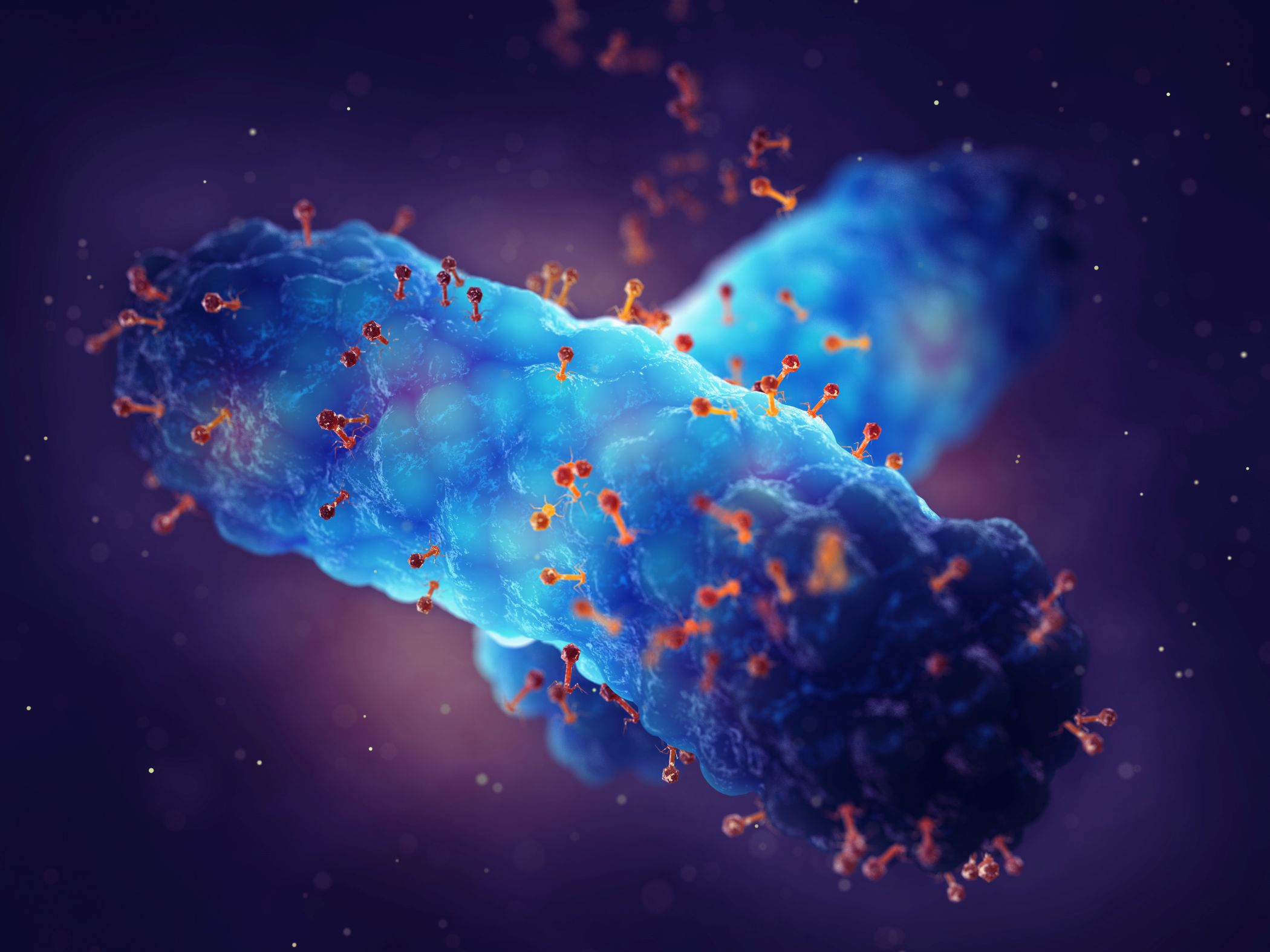
A team of researchers has designed complete and functional genomes for bacteriophages — viruses that feed on bacteria — from scratch using generative artificial intelligence (AI), and has tested them against bacteria that had developed resistance to this type of virus. The study, published in the journal Science, represents a step forward towards generative systems capable of designing complete biological systems. The authors also state that it raises important questions regarding biosafety and biosecurity.

0

OpenAI announces the results of ten mathematical research problems using its Astra artificial intelligence model

OpenAI has stated in a press release that the internal version of its Astra AI model has found solutions to ten research problems in mathematics and computing, in areas such as geometry, group theory, operator algebras, quantum complexity, cryptography and combinatorics, amongst others. According to the company, the total number of tokens — basic units of information — required to solve these problems would cost around $2,000. OpenAI expresses “deep respect and understanding” for those concerned about the impact of AI on these disciplines, including the signatories of the Leiden Declaration on AI and Mathematics; and states that the attribution of results must honestly reflect how each one was obtained, whilst encouraging the mathematical community to review them. The company is publishing these results openly in a paper, accompanied by the model’s account of its reasoning process.


0

Two AI models demonstrate their potential for patient management using simulations and real-world data

Nature has published two independent studies demonstrating the ability of large language models based on artificial intelligence (AI) to support different stages of patient management in controlled settings. The first study analysed MIRA, an AI agent that operates within electronic health records, which achieved a diagnostic accuracy of nearly 88%, compared with 78% for a panel of physicians. The second study evaluated AMIE, a conversational clinical reasoning model, against 21 primary care physicians across 100 multi-visit scenarios. AMIE achieved performance comparable to, and in some cases better than, that of physicians in terms of treatment accuracy, test ordering, and adherence to clinical guidelines. The models are based on simulations or retrospective data, which limits the strength of the conclusions that can be drawn. The findings are consistent with another model published in Science last April.

0

A study shows that some AI models can simulate emotions, which could serve as a tool for studying mental health

Six state-of-the-art large language models (LLMs) based on artificial intelligence (AI) can simulate human emotions such as fear, sadness, and anxiety, according to a study published in the journal The Lancet Digital Health. The authors clarify that these are metaphorical reactions on the part of the algorithms, but suggest that this could open new avenues for developing and testing conversational therapy techniques aimed at treating mental health disorders.

0

A UN report details the increasingly serious consequences of AI as it relates to water, land, and carbon emissions

A new United Nations (UN) report assesses the annual environmental costs of artificial intelligence (AI). According to the report, by 2030, if data centers were a country, their electricity consumption would be on par with that of France. As for carbon dioxide emissions, these could reach 400 million tons of CO₂ equivalent, comparable to the total emissions of the United Kingdom. The 9.3 trillion liters of water they use would cover the drinking water needs of the planet’s 8.1 billion people for 1.6 years. The report notes that the generation of high-resolution videos is at the top of AI’s energy consumption. Furthermore, it highlights the growing digital divide and environmental injustice between the nations that control AI systems and those that bear their environmental costs, particularly in the Global South.


0