When and where is COP30 being held?
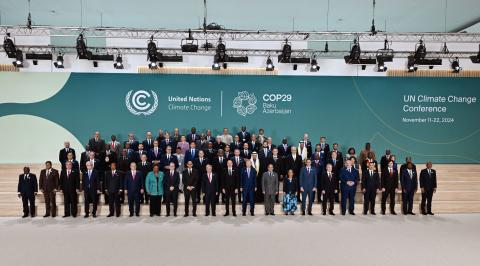
The Climate Summit or COP30 will take place in Belém, capital of the state of Pará in Brazil, located at the mouth of the Amazon River and at the gateway to the Amazon rainforest, a key ecosystem that is already suffering the damage caused by the climate crisis. The summit will be held from 10 to 21 November and will be chaired by André Corrêa do Lago, diplomat and current Secretary for Climate, Energy and Environment at the Ministry of Foreign Affairs of the Brazilian Government, led by Lula Da Silva. Corrêa do Lago headed the Brazilian delegation at the last two COPs.
‘Expectations, as always, are high, despite uncertainties such as those relating to the organisation of the event, the leadership of the host country and the prevention of possible initiatives that could frustrate the results that may be obtained,’ Carlos de Miguel Perales, lawyer and professor of Civil and Environmental Law at the Faculty of Law of the Pontifical University of Comillas-ICADE, told SMC Spain.
From Brazil, Karen Silverwood-Cope, director of climate at the World Resources Institute in that country and coordinator of the Public Policy Group at Rede Clima, highlights the links between the summit and Brazilian politics. ‘Since Lula's first term in office, which ran from 2003 to 2011, climate has always been treated as a fundamental pillar of Brazil's foreign policy, with the firm conviction that Brazil can and must play a leading role in global climate action,’ she said at a briefing organised by Browning Environmental Communications last week.
Expectations, as always, are high, despite the uncertainties
Carlos de Miguel Perales
Heads of state, authorities, scientists, businesspeople, NGOs, activists and members of civil society from more than 190 countries are expected to attend. ‘One of the most encouraging things is that, as it is being held in Brazil, there will be a very high level of participation from indigenous nations, with more than 1,000 representatives,’ Fernando Valladares, a researcher at the CSIC and associate professor at the Rey Juan Carlos University in Madrid, told SMC Spain.
What do the initials COP stand for, and when did they start?
COP stands for Conference of the Parties to the United Nations Framework Convention on Climate Change. This conference is the decision-making body of the United Nations Framework Convention on Climate Change (UNFCCC). The convention was adopted in New York (USA) in 1992, entered into force in 1994 and has been ratified by 198 parties — 197 states and the European Union.
The number 30 in this COP means that it is the thirtieth meeting of this conference. The first took place in Berlin in 1995. COPs are held annually — except in 2020, due to the pandemic—and at these meetings, countries come together to take action with the aim of achieving the climate goals agreed upon in the Paris Agreement—which was reached at COP21 in Paris in 2015—and the UNFCCC.
‘The Paris Agreement was an exciting agreement, and I think we need to regain some of that excitement,’ says Valladares. It has been 11 years since a summit of this kind was held in Latin America, following COP20 in Lima (Peru) in 2014.
What are the objectives of this summit?
As at other COPs, the two central themes are limiting the rise in global temperature to 1.5 °C above pre-industrial levels and climate finance commitments. The organisation states that progress made since the previous summit will be monitored and future actions accelerated.
‘The main challenges include aligning the commitments of developed and developing countries in relation to climate finance, ensuring that emission reduction targets are compatible with climate science, and addressing the socio-economic impacts of climate change on vulnerable populations,’ they note.
In addition, this year is key because the 195 signatories to the Paris Agreement must submit new national contributions, known as NDCs. NDCs specify the measures that each country intends to take to limit global warming to 1.5 °C, as agreed in the Paris Agreement. Every five years, this document must be submitted to the UNFCCC. On this website of the UNFCCC, you can see who has already submitted theirs.
The Brazilian organisation claims that NDC 3.0 — representing the third round of contributions from each country — ‘must be progressive and more ambitious than the current NDCs’.
‘When we look back and see how these NDCs can be a lever for transition, we begin to see them being used as a signal of where an economy is heading,’ recalled Cassie Flynn, global director of Climate Change at the United Nations Development Programme (UNDP), at last week's briefing. There are also plans to discuss a new action plan on gender and climate, as the previous plan was extended in Baku.
What are the outstanding issues from the COP in Baku?
On the brink of collapse and after lengthy negotiations, the Baku summit reached an agreement to set a new climate finance target. The agreement stipulated that rich countries would contribute at least $300 billion annually to less resource-rich countries until 2035, as part of a broader commitment of up to $1.3 trillion. This figure is much lower than initially proposed.
‘We need to specify the commitments made and the aid to be provided, specify the abandonment of fossil fuels and establish clear roadmaps to achieve the proposed objectives,’ summarises De Miguel Perales.
Valladares points out that the big unresolved issue is finding the financial mechanism to ensure that this aid fund reaches the most vulnerable countries, because, as the biologist points out, this will be the fifth summit to address this issue.
The lack of real consequences for countries that fail to implement the agreed measures is one of the endemic problems of these summits and a very important issue that remains to be addressed
Fernando Valladares
‘There are also audits, quantitative declarations of each country's emissions,’ he stresses, calling for consequences for those who do not comply. ‘It cannot be that nothing is binding at this point in time,’ he denounces, proposing that sanctions be imposed. ‘The lack of real consequences for countries that do not take the agreed measures is one of the endemic evils of these summits and a very important unresolved issue,’ he stresses.
Despite the lack of ambition at these meetings and the fact that they always achieve less than initially planned, according to Valladares, the COPs are ‘necessary’ and ‘essential’ because they move things forward and allow agreements between countries to be observed.
How does the possible absence of the United States in Belém and Donald Trump's decision to abandon the Paris Agreement for the second time influence the situation?
Since taking office as President of the United States for the second time in January 2025, Donald Trump has made far-reaching decisions that run counter to the fight against the climate crisis, including announcing, also for the second time, that his country was withdrawing from the Paris Agreement.
"The United States is the exception to the trend we have been seeing in terms of the true resilience of global climate diplomacy. Although the United States has left the Agreement, or is about to do so for the second time, this has not led any other country to follow suit. Nor did it do so last time," argued Lou Leonard, the Inaugural Dean of Clark University's School of Climate, Environment and Society (United States), during the briefing he moderated.
‘Although the United States is becoming less and less relevant in practical terms, it still has a lot of influence,’ warns Valladares. Lula da Silva yesterday once again invited Donald Trump to attend COP30, as reported by Agência Brasil, but it is not known whether he or a representative of his country will attend. According to the UNDP's director of climate change, last week they had no confirmation as to whether or not a delegation would be sent.
The United States would have the possibility of sending a delegation to the COP officially, even though they have withdrawn from the Paris Agreement. But we have not heard anything about this
Cassie Flynn
‘They are still part of the UNFCCC, they are still part of the convention. They would have the possibility of sending a delegation to the COP officially, even though they have withdrawn from the Paris Agreement. But we have not heard anything about this,’ he added. In De Miguel Perales' opinion, the absence of the United States is not good news for the fight against climate change, but the COP must continue to move forward..
What is the role of the European Union?
‘The EU must maintain its leadership with concrete actions and proposals,’ says the professor at the Pontifical University of Comillas-ICADE. Valladares is more pessimistic: ‘An unrecognisable Europe, the absence of the United States, oil prices higher than ever and the crises caused by war mean that even the most optimistic expectations for this summit suggest that not much will be achieved,’ he summarises.
On 21 October, the European Council approved some conclusions ahead of the meeting: "We must leave Belém with a clear path ahead to keep the 1.5 °C target within reach. Climate change is already here, and we need to act and adapt as soon as possible. The next step is the EU's nationally determined contribution (NDC) and the Climate Law," explained Lars Aagaard, Minister for Energy, Climate and Utilities of Denmark, which holds the rotating presidency of the European Council until 31 December.
We must leave Belém with a clear path ahead to keep the 1.5 °C target within reach. Climate change is already here, and we need to act and adapt as soon as possible. The next step is the EU's nationally determined contribution (NDC) and the Climate Law
Lars Aagaard
The conclusions highlight the need to triple global renewable energy capacity and double the global average annual rate of energy efficiency improvement by 2030, along with accelerating zero- and low-emission technologies and phasing out fossil fuel energy production and consumption. ‘These efforts must be accompanied by the phasing out of subsidies for fossil fuels and industrial decarbonisation,’ the statement said.
The conclusions also emphasise the need to strengthen adaptation measures and increase climate finance. "The EU welcomes the new collective quantified goal (NCQG) on climate finance adopted at COP29 in Baku and, in this regard, the conclusions underline the need to identify actions and measures that contribute to increasing climate finance and unlocking $1.3 trillion by 2035 to support developing countries in their climate adaptation and mitigation efforts," the document states. On 10 October, the Council approved conclusions focusing on climate finance.
In 2024, the 1.5 °C increase above pre-industrial levels was exceeded for the first time. Does it make sense to maintain that limit?
It is true that 2024 was the warmest year on record worldwide and the first calendar year in which the global average temperature exceeded its pre-industrial level by 1.5 °C, according to data from the Copernicus Climate Change Service, which also shows an increase in the frequency and intensity of extreme weather events around the world related to climate change. This 1.5 °C increase is important because it is the figure set as the red line in the Paris Agreement.
However, "the 1.5 °C °C or 2 °C limits set in the Paris Agreement do not refer to a single specific year, as was the case in 2024, but to the average over a certain number of years that filters out annual fluctuations due to phenomena such as El Niño," pointed out Ernesto Rodríguez Camino, senior state meteorologist and president of the Spanish Meteorological Association, in a reaction reported by SMC Spain.
Although the 1.5 °C limit has been missed, this is no reason to throw in the towel. On the contrary, it is time to sharpen the climate and energy policies that will lead us to a decarbonised world
Pep Canadell
Does that mean the goal is unattainable? Two articles published in Nature Climate Change last February analysed precisely that possibility. Both papers suggest that exceeding the threshold in 2024 could indicate that we have entered a period of several decades with average global warming of 1.5 °C. According to the authors, rigorous climate mitigation efforts are needed to keep the Paris Agreement targets within reach.
"There is ample evidence that the Paris Agreement's most important goal of limiting the temperature increase to 1.5 °C has been lost. And unless more aggressive mitigation actions are taken quickly, the same will happen to the goal of avoiding temperatures below 2°C," argued Pep Canadell, executive director of the Global Carbon Project and chief scientist at the CSIRO Climate Science Centre in Canberra, Australia. And that is precisely why the scientist is calling for stronger political action on climate change: ‘This is no reason to throw in the towel, but rather to sharpen the climate and energy policies that will lead us to a decarbonised world.’