The Abel Prize, the ‘Nobel Prize’ of mathematics, has been awarded to Gerd Faltings for his work on Diophantine equations
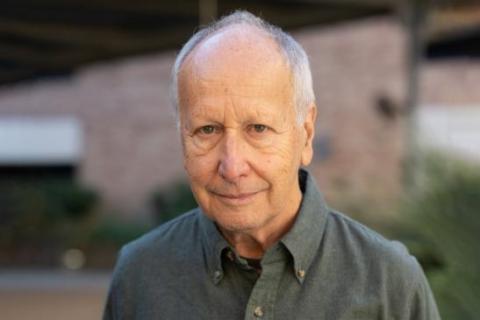
The German mathematician Gerd Faltings has won the Abel Prize, awarded by the Norwegian Academy of Science and Letters. Faltings, director emeritus of the Max Planck Institute for Mathematics, became a celebrity at the age of 29 for proving a conjecture that earned him the Fields Medal in 1986. His contributions have revolutionised arithmetic geometry, a branch of mathematics at the intersection of the two oldest: number theory and geometry.
260319_Abel_Marina Logares
Marina Logares
Senior Lecturer (PhD) in the Department of Algebra, Geometry and Topology at the Complutense University of Madrid
The news that the Abel Prize has been awarded to Gerd Faltings is fantastic! Although he is being awarded the prize for his influence on arithmetic geometry, I must say that his work has also influenced algebraic geometry and mathematical physics.
Faltings, a Fields Medallist (1986) and Shaw Prize laureate (2015), is particularly well known for his proof of Mordell’s theorem, which states that for polynomial equations defining curves of genus greater than one (for example, in the case of smooth plane curves, those defined by equations of degree at least 4), the number of rational solutions is finite. The study of these rational solutions falls within the scope of the theory of Diophantine equations. These equations are particularly beautiful because they are formulated in an extremely simple manner, yet their behaviour is surprisingly complex and profound. Diophantine equations help us understand the arithmetic structure of numbers and also arise naturally in applications such as cryptography. The Mordell-Faltings theorem now shows that these solutions are strongly conditioned by the geometry of the associated curve.
But the influence of Faltings’ work extends far beyond this: not only did he prove conjectures that seemed utterly out of reach (such as those of Mordell and Shafarevich), but he also built part of the mathematical framework necessary for the progress of others. The ecosystem of arithmetic geometry, to which Faltings made a decisive contribution, forms part of the conceptual framework that made possible, amongst other advances, Andrew Wiles’ proof of Fermat’s Last Theorem.
Moreover, Faltings’ influence, through his work on abelian varieties (algebraic and complex generalisations analogous to the shape of a doughnut), extends to areas such as algebraic geometry in relation to mathematical physics. A concrete example is his proof of Verlinde’s formula, which allows the dimension of the space of conformal blocks to be calculated; in the language of physics, this dimension is interpreted as that of the Hilbert space (the space of all possible states) of certain quantum field theories, such as Chern–Simons theory following its quantisation.
260319_Abel_Clara Grima
Clara Grima
Full Professor of Mathematics at the Escuela Técnica Superior de Ingeniería Informática (US) and researcher in Computational Geometry
To be honest, when I heard the news, I was really disappointed not to see the name of a female mathematician. I am convinced that many would be worthy of the award and, moreover, it would help raise the profile of women’s role in mathematics in the media. At least for a few days. And such visibility is increasingly necessary.
But there is no doubt that Gerd Faltings is one of the most important mathematicians working today. Proof of this is that he already won the Fields Medal forty years ago. The field in which he has made his greatest contributions is arithmetic geometry, a discipline that applies techniques from algebraic geometry to problems in number theory. Above all, arithmetic geometry focuses on Diophantine problems, the study of rational points on algebraic varieties.
One of his most notable (and, in my opinion, most beautiful) results is the proof of Mordell’s conjecture. This conjecture establishes a relationship between the rational solutions of a curve and its form, more specifically with the number of holes in its representation. Specifically, Mordell conjectured in 1922 and Faltings proved in 1983 that a curve of genus (number of holes) 2 or more cannot pass through infinitely many rational points.
This relationship between the topology of a curve and its rational solutions represents a major breakthrough in one of the fields that the great Gauss described as ‘the queen of mathematics’.
His contributions to Hodge theory are also fundamental; once again, this involves the use of tools from branches of mathematics that are, in principle, very distant from one another, to obtain results in another branch. Specifically, he obtains results in algebraic topology (cohomology of geometric varieties) using partial differential equations.
In summary, Faltings has made highly significant advances in areas of mathematics where results can be remarkably difficult to achieve, devising highly innovative approaches, using tools from other branches of mathematics, demonstrating the interconnection between disciplines that may seem very distant, and providing tools that have proven to be of great utility. A well-deserved prize.
260319_Abel_Jose Ignacio Burgos
José Ignacio Burgos
Research scientist at the Institute of Mathematical Sciences (ICMAT, CSIC-UAM-UCM-UC3M), specialising in arithmetic geometry
Gerd Faltings is one of the most influential mathematicians of the last 50 years. He has resolved numerous long-standing conjectures, such as Tate’s conjecture for abelian varieties, Shafarevich’s conjecture, Mordell’s conjecture and the Mordell–Lang conjecture. At the time, the proofs presented by Faltings surprised experts with their vision and technical skill, and opened up new avenues of research.
He received the Fields Medal in 1986 for his proof of the Mordell conjecture and has also received many other prizes and honours, such as the Shaw Prize in 2015 and the Cantor Medal in 2017.
But, in addition to proving impressive conjectures, Gerd Faltings has introduced numerous new techniques into what we know as arithmetic geometry, a discipline at the intersection of algebraic geometry and number theory. For example, his monograph Degeneration of Abelian Varieties, written jointly with Ching-Li Chai, is still widely used by numerous researchers, more than 30 years after its publication. He has also been a pioneer in fields such as Arakelov theory and p-adic Hodge theory.
The variety of topics on which Faltings has worked and made significant contributions is striking. As he himself states in his research profile as a member of the European Academy, Gerd Faltings researches “whatever he finds interesting”.
It can be said that Faltings’ ideas and work have shaped what we now know as arithmetic geometry. I believe that the awarding of the Abel Prize to Gerd Faltings is more than deserved and is a recognition of his talent and work.