
Sevilla University
If you are the contact person for this centre and you wish to make any changes, please contact us.
Professor of Genetics at the University of Seville and head of the Genomic Instability and Cancer group at the Andalusian Center for Molecular Biology and Regenerative Medicine (CABIMER)
Professor emeritus of Microbiology at the University of Seville
Researcher specializing in gender and media studies, professor in the Faculty of Communication at the University of Seville
Full Professor of Mathematics at the Escuela Técnica Superior de Ingeniería Informática (US) and researcher in Computational Geometry
President of the Spanish Society of Outpatient Paediatrics and Primary Care (SEPEAP), paediatrician with the Andalusian Health Service and associate professor of Paediatrics at the University of Seville
Professor of Biochemistry and Molecular Biology at the University of Seville, principal investigator at CABIMER (CSIC-US) in the Laboratory of Cellular and Molecular Neuroimmunology
Full Professor in the Department of Developmental and Educational Psychology at the University of Seville and at the Seville Institute of Biomedicine (IBIS)
Paediatric and foetal neurosurgeon at the Andalusian Health Service, professor at the University of Seville and director of the Applied Neuroscience group at the Institute of Biomedicine in Seville
Professor of Physiology at the University of Seville and head of the Cellular Neurobiology and Biophysics team at the Institute of Biomedicine of Seville (IBiS)
Lecturer in Microbiology at the University of Seville
Full Professor in the Department of Condensed Matter Physics at the University of Seville
Professor of Prehistory at the University of Seville
CSIC senior scientist, researcher in reproductive biology
Researcher in the Department of Atomic, Molecular and Nuclear Physics at the University of Seville.
Professor in the Department of Medical Physiology and Biophysics, Director of the Neuroimaging and Brain Networks Laboratory
Professor at the University of Seville and member of the Gene Expression in Eukaryotes group
Researcher at the Department of Physiology of the Faculty of Biology of the University of Seville
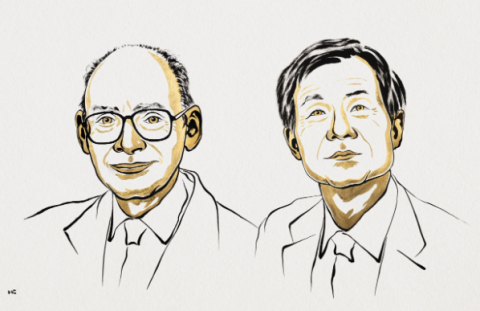
Some molecules, such as amino acids, exist in two forms that are mirror images of each other. However, living organisms contain only one of these mirror images. For a long time, the origin of this chemical asymmetry was a mystery to chemists. The Royal Swedish Academy of Sciences has awarded the Nobel Prize in Chemistry to Henri B. Kagan and Kenso Soai “for the discovery of nonlinear effects and autocatalysis in asymmetric organic synthesis,” which provided the solution to this enigma.

A study has analysed structural changes in the female brain during the three main hormonal transitions: puberty, pregnancy and the menopause. To do this, using longitudinal neuroimaging – which records images of the brain over time – the researchers compared women transitioning from one hormonal phase to another with participants currently in those hormonal phases – more than 1,000 women in total. The results, published in Nature Communications, show that the transitions of puberty and pregnancy lead to a reduction in cortical grey matter, whilst women going through the menopause did not show a significant decrease in either cortical grey matter or total brain volume.
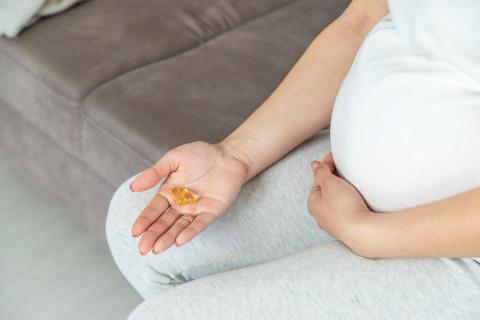
A study published in the journal Cell Host & Microbe analysed endometrial samples from 149 women aged between 20 and 45 who were undergoing treatment for infertility. The younger patients had a significantly higher abundance of a beneficial bacterium called Lactobacillus gasseri, the presence of which decreased with age. Furthermore, pregnant women had a higher abundance of these bacteria in the endometrium. In mouse models, older animals showed higher rates of embryo implantation when treated with L. gasseri derivatives. Despite these findings, the authors emphasise that further research is needed and warn women against self-medicating with over-the-counter L. gasseri products, as their effectiveness in treating infertility has not been validated.

To date, more than 6,000 exoplanets — planets orbiting a star other than the Sun — have been discovered, but no moon outside the Solar System — known as an exomoon — has ever been definitively identified. Now, a study published in Nature presents evidence of what could be an exomoon orbiting a brown dwarf — an object halfway between a star and a planet. By analysing radial velocity data from observations made by the European Southern Observatory’s (ESO) Very Large Telescope, a team has identified a signal indicating the presence of a satellite with a minimum mass of 0.9 times that of Jupiter and an orbital period of around 170 days. “Although it is unclear whether this exosatellite will meet the criteria—yet to be defined—for being considered an exomoon, it represents an important step towards that first indisputable detection,” the authors state.
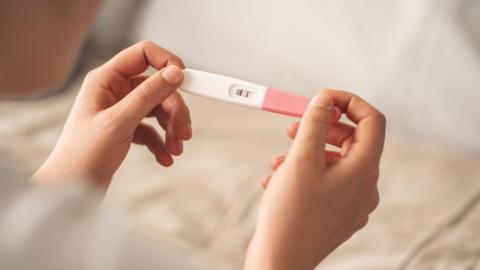
Between 1990 and 2023 in Spain, cases of infertility among women aged between 35 and 49 rose from around 975 cases per 100,000 women in this age group to 2,226 cases per 100,000, figures that are below the European average. Overall, this age-adjusted prevalence rose in all regions of the world during the same period. The study has been published in The Lancet Obstetrics, Gynecology, & Women’s Health.

A review published in The Lancet Psychiatry has examined the prevalence of major depressive disorder during pregnancy, the peripartum period—immediately before and after childbirth—and the postpartum period—up to twelve months after childbirth. The study, which used data from more than two million women and girls aged 10 to 59 from all regions of the world, showed that approximately one in 15 (6.8%) is affected by major depression during the year following childbirth and that the prevalence was highest during the first two weeks after childbirth (8.3%). The authors call for greater integration of screening, prevention, and treatment of this disorder during the peripartum period into current care models.
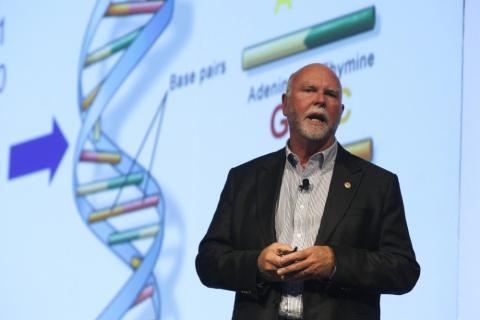
Craig Venter, the American biologist and entrepreneur who founded Celera Genomics to launch his own Human Genome Project in 1999 outside the public consortium, died Wednesday in San Diego at the age of 79, according to a statement from the J. Craig Venter Institute, which he led. Among other achievements, Venter completed the first full sequencing of a living organism’s genetic material and announced that he had succeeded in creating synthetic life.

The German mathematician Gerd Faltings has won the Abel Prize, awarded by the Norwegian Academy of Science and Letters. Faltings, director emeritus of the Max Planck Institute for Mathematics, became a celebrity at the age of 29 for proving a conjecture that earned him the Fields Medal in 1986. His contributions have revolutionised arithmetic geometry, a branch of mathematics at the intersection of the two oldest: number theory and geometry.

Spina bifida is a congenital malformation in which the spinal column does not close completely. A team in California (USA) has completed a phase 1 clinical trial testing, for the first time, a stem cell treatment combined with standard foetal surgery. The trial was conducted on six pregnant women with foetuses diagnosed with myelomeningocele, the most severe form of spina bifida. The six babies, born between 2021 and 2022, maintained the repair intact and had no serious adverse effects. The team will follow up carefully to ensure that the treatment remains safe and improves the children's quality of life. The results are published in The Lancet.
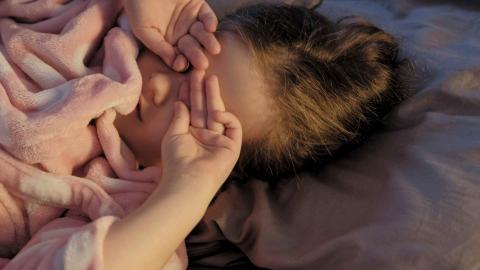
A team from the United States has analyzed nearly twenty studies on melatonin use in children between the ages of 0 and 6 in different countries. Although it appears that melatonin can help improve sleep onset in children with neurological conditions such as autism spectrum disorders, the data indicate that in recent years there has been an increase in sales of these products without a clear understanding of their actual effectiveness and potential long-term consequences for typically developing young children. The results are published in JAMA Network Open.