The absence of human activity during pandemic lockdowns altered the beaks of a bird species
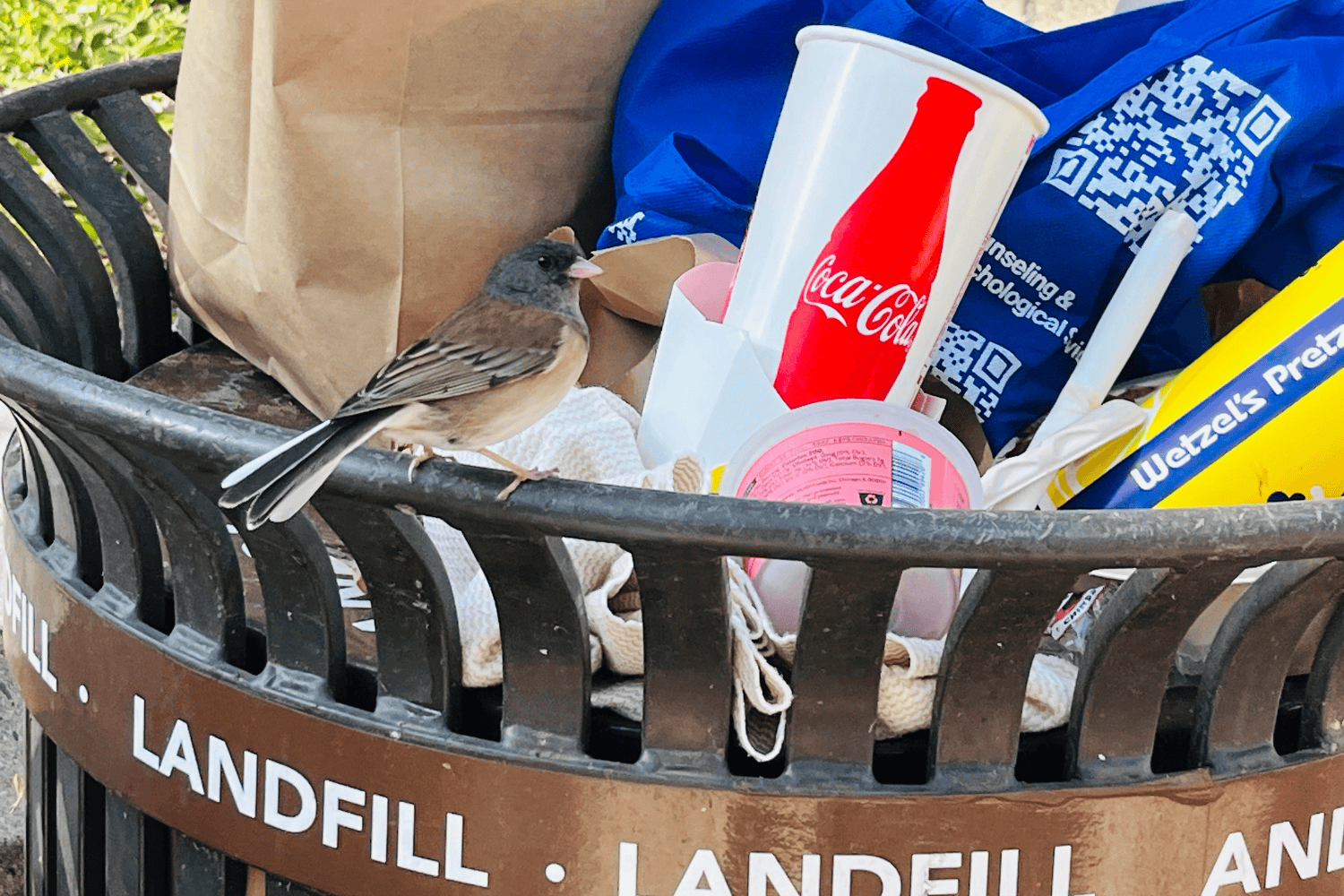
Restrictions on mobility and activity imposed during the covid-19 pandemic had an impact on the beaks of a species of bird, specifically the dark-eyed junco, which lived in urban areas of Los Angeles (USA). This is shown in a study published in the journal PNAS, which reveals how birds born during these lockdowns had beaks similar to their counterparts in the wild. With the return of human activity, the beak returned to its pre-pandemic shape. The authors argue that this change was mainly due to an adaptation to the food available, as the birds no longer had access to human food waste.
2025 12 15 Inmaculada Álvarez-Manzaneda Salcedo picos pájaros EN
Inmaculada Álvarez-Manzaneda Salcedo
Permanent professor in the Department of Ecology at the University of Granada
This study is experimentally robust, as it is based on data collected over seven years, before, during and after what the authors call the 'anthropause'. They define the 'anthropause' as the period during the covid-19 pandemic when our daily activities came to a standstill. In addition, the study is based on a large data set, with a total of morphological measurements of 626 dark-eyed junco adults and 1,067 chicks of known ages.
Many studies indicate that the morphology of birds' beaks is determined by their diet, and this study seems to demonstrate this by going one step further: what will happen when these urban birds no longer have access to the food scraps that, consciously or unconsciously, humans have made available to them and which have been a regular source of food for them? The most novel aspect of this study is the speed with which these changes are observed and, equally surprising, their reversibility when human activity is restored.
However, although the findings are of great interest and represent a fundamental first step, it would be desirable to analyse what would happen in species that are not so generalist, as well as in different geographical areas. It would also be relevant to analyse the diet of different individuals and even consider other morphological traits.
Birds provide us with many services, in addition to their song and beautiful plumage. They act as seed dispersers and pollinators, participate in nutrient recycling, fertilise the soil, control pests... But beyond these benefits, this article encourages us to admire their ability to adapt to an environment shaped by and for humans, an environment that is often hostile to them. This admiration should invite us to rethink our responsibility in the way we share and shape the spaces we inhabit alongside them.
Graciela Gómez - aves confinamiento EN
Graciela Gómez Nicola
Full Professor of the Department of Biodiversity, Ecology and Evolution at the Complutense University of Madrid
This scientific study invites us to reflect on how humans can influence the species that share the urban environment with us. The authors took advantage of the drastic reduction in human activity in the city of Los Angeles during the COVID-19 restrictions, known as the “anthropause”, to analyse changes in the morphology of the beaks of the dark-eyed junco, a species of passerine bird that is very common in North America. Using a robust research design, they compared the dimensions of the beaks of these birds in the city and in nearby natural areas at three key moments: before the pause, during lockdown and after the return to normal activity.
The researchers observed that juncos born and raised during 2020 and 2021, i.e. during the period of reduced human presence in the city, had beak dimensions that differed from those of their relatives born before or after the “anthropause” and were very similar to those of their wild counterparts. This change was apparently related to a significant decrease in their main food source, the organic waste available in the city. This forced the birds to change their diet, seeking more natural food and accessing green areas of the city that previously had a greater human presence. The beak is an essential tool for eating, so a change in diet may have favoured a beak shape more suited to this new type of food.
This study is one of the first to document a morphological change in urban birds in response to the “anthropause”. It is remarkable evidence of these birds' rapid ability to adapt to changes in their environment and food resources. The authors are cautious and do not rule out the influence of other factors, such as phenotypic plasticity, genetic variation or the migration of non-urban reed warblers to the city during lockdown. The findings are highly suggestive and represent an interesting contribution to ecology and evolution in urban environments, an emerging discipline that reminds us in this case how waste generation and the occupation of urban spaces influence biodiversity.
Carlos Camacho - aves pandemia EN
Carlos Camacho
Ramón y Cajal researcher at the Doñana Biological Station (EBD-CSIC)
This study analyses the extent to which human activity affects the morphology of urban bird populations. To do so, it draws on continuous monitoring of an urban population of black-capped chickadees, one of the most common passerine species in North America. The availability of standardised data collected before, during and after the COVID-19 pandemic on a university campus in Los Angeles allowed the authors to take advantage of the “anthropause” associated with restrictions as a natural experiment to separate the effect of human presence from that of the city itself in the absence of people. This design, which is rare in urban ecology, was complemented by a comparison with non-urban populations in the surrounding area.
The results show rapid and reversible changes in beak size and shape, a key feature for feeding. Birds born during the “anthropause” had beaks similar to those of non-urban populations, while, after normal campus activity resumed, the beaks regained their pre-pandemic urban morphology within a few years. These observations are interpreted as evidence of this population's responsiveness to changes in the environment associated with human presence, possibly related to the availability of food scraps or changes in access to different food resources.
The conclusions fit well with the accumulated evidence that many species respond rapidly to environmental changes related to urbanisation. This work adds a novel element by showing that these traits can not only appear rapidly, but also be reversed in a very short period of time when conditions change.
However, the study leaves some important questions unanswered. It is unclear what the adaptive advantage of having a proportionally smaller beak in the urban environment would be, if any. With the current design, it is also not possible to discriminate between possible underlying mechanisms, such as genetic adaptation through natural selection, phenotypic plasticity, or changes in population composition. The latter possibility is particularly suggestive given the rapidity with which the average beak size of the urban reed warbler population changed. Such a population change could be generated, for example, by an episode of immigration from non-urban areas (with individuals with relatively larger beaks) due to the temporary cessation of disturbances in the city during the pandemic, or by selective emigration of urban reed warblers with smaller beaks, potentially unable to access other trophic resources when food scraps are scarce.
Overall, the study clearly illustrates that the morphological traits of some urban populations can respond rapidly to changes in human activity. Taken together, these results reinforce the idea that cities are not evolutionarily static environments and that our daily activities can influence, even in the short term, the biology of the species with which we share urban space. The rapid response observed in these reeds highlights both the pressure we exert on urban biodiversity and the responsibility, and opportunity, we have to create cities that are more compatible with other species. To this end, it is essential to have sufficient support to maintain long-term systematic studies that allow us to document the responses of populations to environmental changes that sometimes occur rapidly and unpredictably.
Eleanor S. Diamanta and Pamela J. Yeh.
- Research article
- Peer reviewed
- Observational study
- Animals