Santiago Belda

Santiago Belda

Santiago Belda
Position

Distinguished Researcher in the Geodesy and Spatial Dynamics Group of the Department of Applied Mathematics of the University of Alicante

Geomagnetic anomalies in the Southern Hemisphere that pose a threat to satellites are a recurring phenomenon, according to research
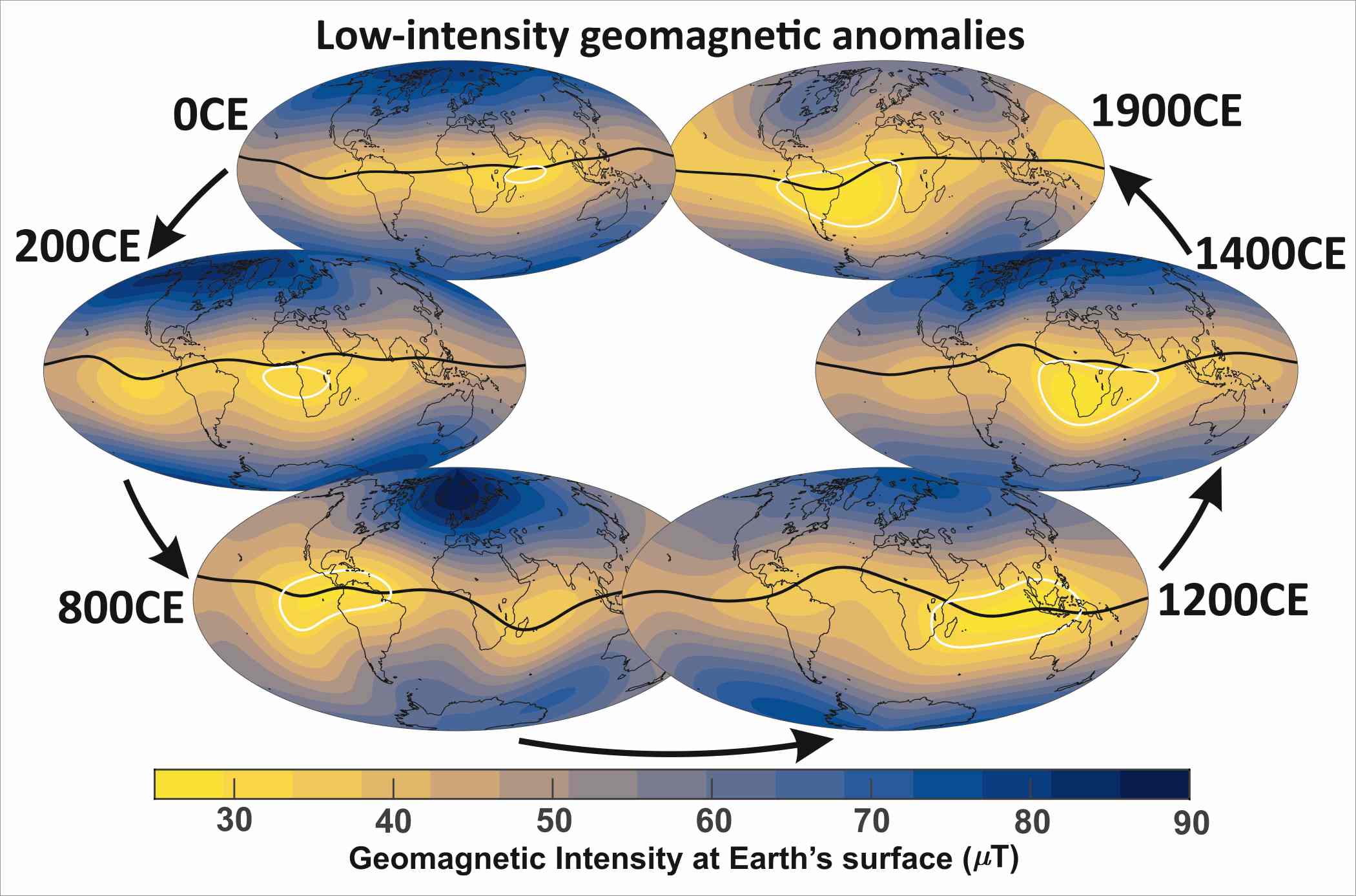
The geomagnetic field protects Earth from harmful cosmic radiation. Over the past two centuries, this field has weakened, coinciding with the growth of the South Atlantic Anomaly—a region of reduced magnetic intensity spanning South America and the South Atlantic Ocean—which poses risks to satellites and space missions. Research led by a Spanish team shows that this anomaly is a recurring event on timescales ranging from centuries to millennia, according to a reconstruction of the geomagnetic field over the past 2,000 years. The study, published in PNAS, shows that the current anomaly emerged after the year 1100 in the Indian Ocean and crossed Africa before reaching South America.

0

Earth's days are getting longer due to climate change

Climate change is influencing the length of the day, according to an analysis published in PNAS. As melting ice accelerates due to rising temperatures, sea levels rise and large masses move from the polar to the equatorial regions. This redistribution affects the Earth's rotation and results in longer days. During the 20th century, sea level variations were associated with changes in day length between 0.3 and 1 millisecond per century, but since 2000 this variation has increased to 1.33 (±0.03) milliseconds per century and the authors estimate that it will accelerate further in the coming decades.

0