Foundation for Climate Research (FIC)
If you are the contact person for this centre and you wish to make any changes, please contact us.
Biodiversity and Natural Resources Planner at the Foundation for Climate Research (FIC)
Climate change and meteorology consultant
Director of Research and Innovation at the Foundation for Climate Research and Associate Professor in the Department of Algebra, Geometry and Topology at the Complutense University of Madrid (UCM).
Climate change and meteorology consultant.
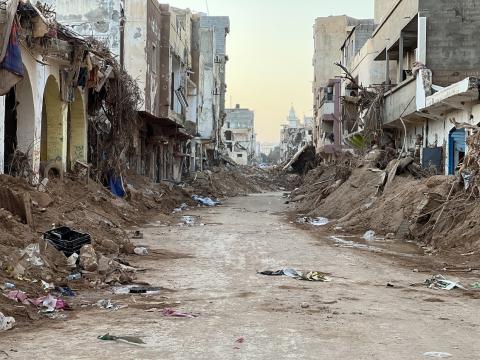
Las lluvias torrenciales caídas en Libia hace dos semanas fueron 50 veces más probables por el calentamiento global provocado por la acción humana. Algo similar ocurría con las lluvias caídas en Grecia, Bulgaria y Turquía, que fueron 10 veces más probables por el cambio climático, según concluye un estudio de atribución rápido de la Word Weather Attribution (WWA). La investigación apunta a que la tragedia en Libia se agravó por otros factores humanos, como construcciones en llanuras inundables y presas en mal estado. Los autores también analizaron las inundaciones registradas en España a principios de septiembre y concluyeron que precipitaciones tan intensas se esperan una vez cada 40 años.

An attribution study by World Weather Attribution (WWA) concludes that the heatwaves in Europe and North America this July would have been "almost impossible" without climate change. Over the past few weeks, southern Europe, parts of the United States, Mexico and China have experienced severe heatwaves with temperatures exceeding 45 °C. The WWA report notes that in China the heatwave was at least 50 times more likely due to the climate crisis.
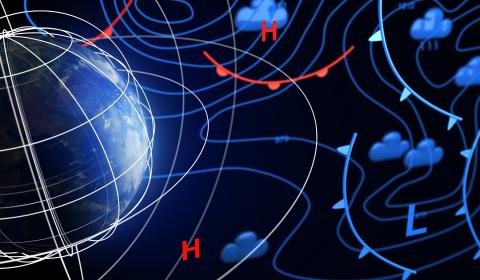
Two studies published in the journal Nature use artificial intelligence (AI) to try to predict the weather. One system, trained on nearly 40 years of global weather data, is capable of predicting global weather patterns up to a week in advance. The second, called NowcastNet, combines physics rules and deep learning for immediate prediction of precipitation, including extreme precipitation.

The World Meteorological Organisation (WMO) has declared the onset of El Niño conditions on Tuesday. "The declaration of El Niño by the WMO is the signal for governments around the world to mobilise preparations to limit the impacts on our health, our ecosystems and our economies," said WMO Secretary-General Petteri Taalas. According to the WMO statement, El Niño conditions have developed in the tropical Pacific for the first time in seven years, setting the stage for a likely rise in global temperatures and altered weather and climate patterns.
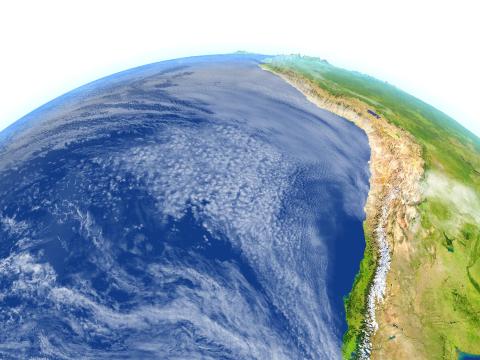
After three years in which the planet's climate has experienced a phenomenon known as La Niña, in 2023 it gives way to its opposite, El Niño. This has led the World Meteorological Organization to warn that this event, added to climate change, could cause the 1.5 °C limit to be exceeded in the next five years. But what are these "children", how do they affect Spain, how long will they last?
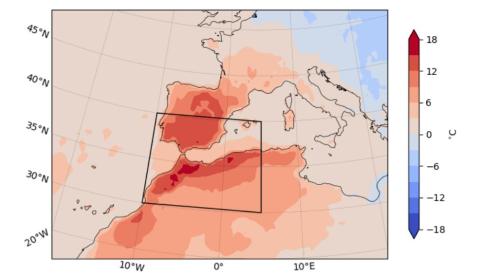
Climate change made the late April episode of record temperatures in the Iberian Peninsula, Morocco and Algeria 100 times more likely to occur, with temperatures up to 3.5°C higher than they would have been without the climate crisis. This is one of the conclusions of an attribution study conducted by World Weather Attribution.
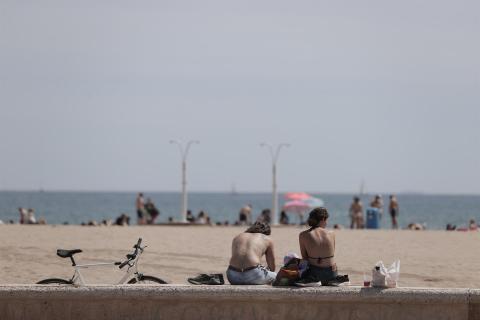
The current situation is only the beginning of what may come in the coming decades, which should lead us to increase efforts in mitigation and adaptation strategies: more green and shaded areas, energy efficiency in buildings and avoiding working outdoors in extreme temperatures.