Gregorio Marañón University Hospital
If you are the contact person for this centre and you wish to make any changes, please contact us.
Neurologist at the Centro de Ictus of the Gregorio Marañón General University Hospital
Head of the Department of Child and Adolescent Psychiatry and Director of the Institute of Psychiatry and Mental Health of the Hospital General Universitario Gregorio Marañón
Head of the Haematology and Haemotherapy Department at Gregorio Marañón University General Hospital
Endocrinology Specialist at the Endocrinology and Nutrition Service of the Hospital General Universitario Gregorio Marañón and Director of the SEEN-University of Barcelona-Editorial Panamericana University Expert Course in Transgender Medicine
Doctor at the Paediatrics Department of the Gregorio Marañón University Hospital and coordinator of the PedGAS-net Project -a national network for the study of invasive S. pyogenes infections-
President of the Madrid Medical Association, Professor of Medicine at the European University of Madrid, and Head of the Cardiology Department at Gregorio Marañón Hospital
Head of the Medical Oncology Department of the Gregorio Marañón Hospital and president of GEICAM
Specialist in Clinical Neurophysiology, founder and head of the Sleep Disorders and Epilepsy Unit of the Clinical Neurophysiology Service of the Hospital General Universitario Gregorio Marañón, currently retired

The mental health of young people has deteriorated over the last two decades and is entering a dangerous phase, according to a new Commission by The Lancet Psychiatry. Several global factors are involved, including inaction on climate change, intergenerational inequality, and adversity linked to the COVID-19 pandemic.

Although breast cancer mortality has reduced by more than 40% in most high-income countries, a Lancet commission warns that one million people will die from the disease by 2040, especially in low- and middle-income countries. The authors highlight some of the knowledge gaps that persist about the disease, such as the lack of knowledge about the number of patients living with metastatic breast cancer and their needs, or the costs associated with breast cancer - including physical, psychological, social and economic costs - which, according to the authors, are immense but underestimated, and not adequately reflected in global health indicators.

A study published in JAMA Network Open has followed 1,340 women with high-risk operable breast cancer. Analysing their lifestyles before, during and after treatment, the researchers conclude that those who followed a healthier pattern - including physical activity, no smoking, high fruit and vegetable intake, and low consumption of meat and sugary drinks - had a 37% lower risk of relapse and a 58% higher chance of survival than those who followed a worse pattern. Although the improvements in absolute risk were much smaller, the authors conclude that "lifestyle interventions may be a safe, inexpensive and feasible adjuvant strategy to delay and prevent recurrence and death from the world's most common cancer".

A study published today in the NEJM examines the risk of relapse in breast cancer patients who decide to pause endocrine therapy to try to become pregnant. The results show that temporarily stopping treatment does not confer an increased risk in the long term, but the authors warn of the need for further follow-up.

A phase 2 clinical trial has tested a type of immunotherapy based on oncolytic viruses in combination with chemotherapy for the treatment of triple-negative breast tumours. The results are published in the journal Nature Medicine.

Physical activity is associated with significant reductions in depressive symptoms in children and adolescents, according to a systematic review and meta-analysis published in JAMA Pediatrics that included 21 studies with 2,400 participants. The largest decreases in these symptoms were found in those aged 13 years and older.
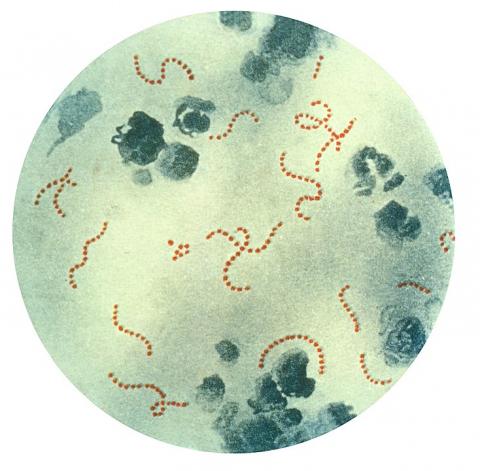
In recent weeks, the UK Health Safety Agency has detected an unusual increase in infections with Streptococcus pyogenes bacteria. At least 13 children under the age of 15 have died from this pathogen, which is responsible for mild infections but also for more serious conditions such as invasive disease. The Spanish Society of Paediatric Infectious Diseases has reported that there have been some deaths in Spain - the Community of Madrid has reported two deaths - and is analysing whether there has been an unusual increase in cases.

A study published in The Lancet Child & Adolescent Health shows that 98% of a cohort of trans adolescents in the Netherlands who started hormone treatment before adolescence continued to do so years later.