
IRB Barcelona
If you are the contact person for this centre and you wish to make any changes, please contact us.
ICREA researcher at IRB Barcelona
Molecular Modelling and Bioinformatics group lead at IRB Barcelona
Head of the Biomedical Cancer Genomics group at IRB Barcelona, ICREA research professor at IRB Barcelona and associate professor at Pompeu Fabra University
Principal Investigator at IRB Barcelona
ICREA research professor and head of the Comparative Genomics group at the Institute for Research in Biomedicine (IRB Barcelona) and the Barcelona Supercomputing Center (BSC-CNS).
Principal Investigator at IRB Barcelona
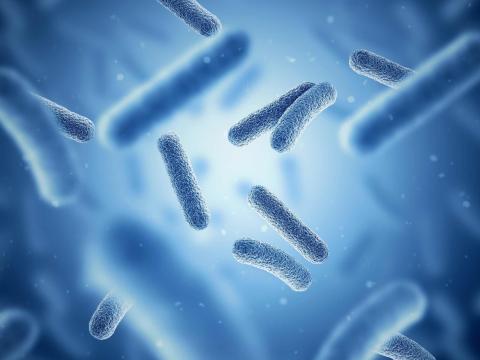
A team of researchers in South Korea has analysed the oral and faecal microbiomes of just over 507 volunteers and has concluded that, in patients with gastric and colorectal cancer, there is a greater transfer of microbes from the mouth to the gut. Furthermore, not only does this transfer differ between tumour types, but, according to their findings, an analysis based on oral samples is capable of detecting colorectal cancer with greater sensitivity than the standard faecal occult blood test. However, “before it can be used in practice, clinical trials would need to be carried out in real-world screening populations”, the authors explain. The study is published in the journal Cell Host & Microbe.
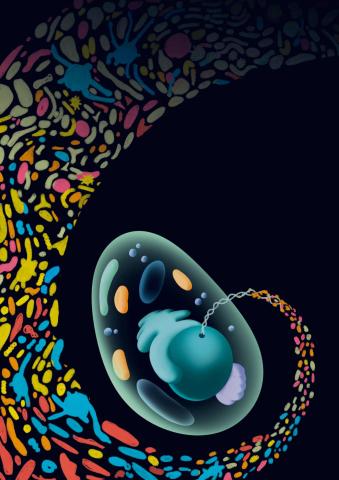
The origin and the process by which eukaryotic cells—the cells that make up animals, plants and fungi—first emerged remains one of the great unanswered questions in biology. The prevailing explanation, put forward by biologist Lynn Margulis, identified the union between an archaeon and a bacterium as the turning point. Now, a study carried out by IRB Barcelona and the Barcelona Supercomputing Center re-examines and expands on the current theory. The findings, published in the journal *Nature*, suggest that the process was longer and more complex than previously thought. At least two other different bacteria contributed to the development of eukaryotic cells, and giant viruses appear to have acted as vehicles for gene transfer. To explain the study, the Science Media Centre Spain organised a briefing with Toni Gabaldón, the lead researcher on the paper.
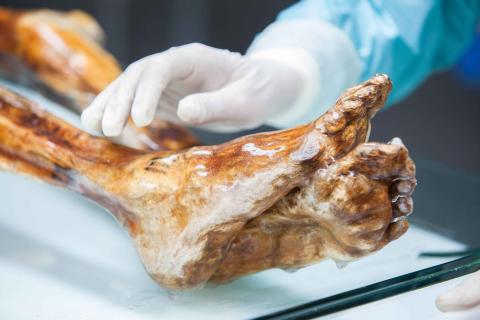
The so-called ‘Iceman’, Ötzi, who lived approximately 5,300 years ago, was discovered in 1991 in the Ötztal Alps, on the border between Austria and Italy. His mummified remains were preserved at -6°C in a museum to replicate the conditions in which they were found. Now, a team from Italy has discovered that he contains communities of both ancient and modern microorganisms, some of which may be metabolically active or capable of replicating under the current preservation conditions, although, for the moment, no damage has been detected. According to the researchers, this demonstrates that “the ‘Iceman’ is not a static relic, but a dynamic biological interface.” The results are published in Microbiome.
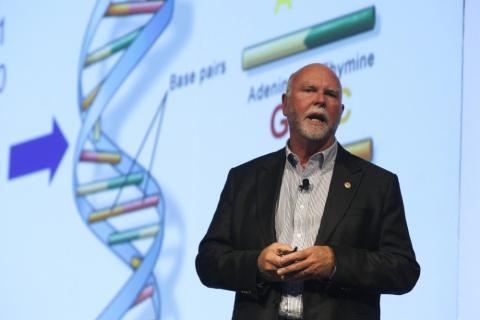
Craig Venter, the American biologist and entrepreneur who founded Celera Genomics to launch his own Human Genome Project in 1999 outside the public consortium, died Wednesday in San Diego at the age of 79, according to a statement from the J. Craig Venter Institute, which he led. Among other achievements, Venter completed the first full sequencing of a living organism’s genetic material and announced that he had succeeded in creating synthetic life.
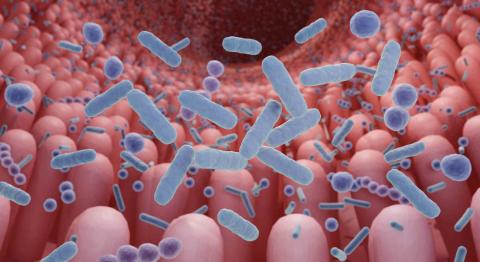
There is no solid scientific evidence that alterations in the gut microbiota cause autism, according to an opinion piece published in the scientific journal Neuron. The research supporting this hypothesis—observational studies and clinical trials in humans, as well as mouse models—has both conceptual and methodological shortcomings, the authors write.
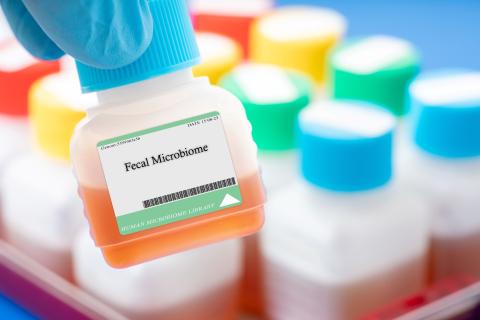
An international study has warned of the potential risks of widespread use of faecal microbiota transplantation without taking into account the region of the intestine where the transferred microbes arrive. The experiment, conducted on mice and human tissue samples, showed that the microbes from the transplant—mostly anaerobic microbes from the colon—colonised the small intestine, persisted there for months and modified that new environment, causing changes in the host's metabolism. According to the authors, whose study is published in the journal Cell, this may have long-lasting and unforeseen consequences, as well as imbalances in the intestinal ecosystem of patients.
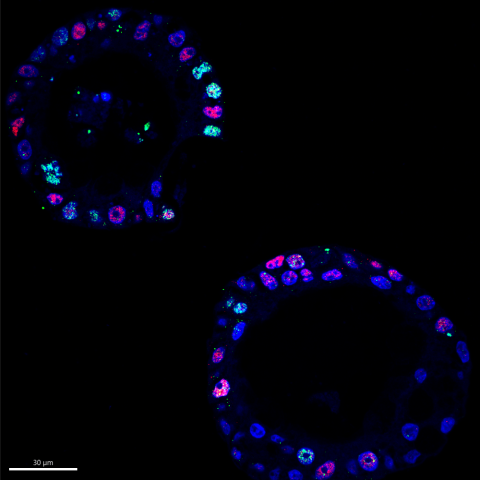
Extrachromosomal DNA circles are structures that appear floating in the nucleus of cells in some tumours and are associated with a poor prognosis. Now, an international team has studied the mechanism by which they could contribute to the aggressiveness of pancreatic cancer. The circles may contain an oncogene called Myc that promotes growth. Furthermore, their quantity increases or decreases to adapt to the environment. Although they were only observed in 15% of the cases studied, the discovery could open up new possibilities for treatment, according to the authors. The results are published in the journal Nature.

A team from the University of Iowa (USA) has found a relationship between specific species of microbiota bacteria and the severity of multiple sclerosis. Specifically, a lower ratio between the quantities of Bifidobacterium and Akkermansia was related to the disease and to a worse course of the disease, both in mice and in two cohorts of patients and people without the disease. According to the authors, who publish the results in the journal PNAS, the finding could be used to improve the diagnosis and treatment of multiple sclerosis.

A synthetic microbiome therapy, tested on mice, protects against the severe symptoms of a difficult-to-treat and potentially fatal intestinal infection in humans: Clostridioides difficile. Although inspired by the idea of human faecal transplants, the new approach does not require faecal matter. Instead, it uses fewer, but more precise, bacterial strains. The study is published in the journal Cell Host & Microbe.
‘Bacterial signatures’ from genital areas could serve as a forensic tool to identify perpetrators of sexual assault, even if there is no trace of sperm, according to a study published in the journal iScience, by the Cell group. After sequencing the DNA of bacteria from genital samples from 12 stable couples, the authors show that a transfer of bacterial species occurs during intercourse, allowing the identification of each person’s own genital microbiome or ‘sexome’.