Open University of Catalonia (UOC)
If you are the contact person for this centre and you wish to make any changes, please contact us.
Lead researcher of the AI and Data for Society group at the UOC
Lecturer in International Relations at the Faculty of Law and Political Science of the Universitat Oberta de Catalunya (UOC)
Lecturer in the Department of Health Sciences at the Open University of Catalonia (UOC), member of the NUTRALiSS Nutrition, Food, Health and Sustainability Research Group at the UOC, coordinator of the Lifestyle Working Group of the Spanish Diabetes Society
Lecturer of Psychobiology and Neuroscience at the Faculty of Psychology and Educational Sciences of the Universitat Oberta de Catalunya (UOC)
Science and Technology Studies Professor
Senior Researcher in Social Sciences, IN3/UOC
Academic Director of the Master's Degree in Business Intelligence and Big Data at the Open University of Catalonia (UOC) and Adjunct Professor at IE Business School
Researcher at the Behavioural Design Lab at the UOC eHealth Centre, member of the board of directors of the Public Health Society of Catalonia and the Balearic Islands, and vice-chairman of the National Committee for the Prevention of Smoking
Associate professor in the Faculty of Health Sciences at the Open University of Catalonia (UOC)
Co-director of the Cognition and Language Research Group
Researcher at the Urban Transformation and Global Change Laboratory (TURBA Lab) at the Internet Interdisciplinary Institute (IN3) of the Universitat Oberta de Catalunya (Open University of Catalonia)
Ph.D. in Law and Criminology, and lecturer at the Open University of Catalonia (Department of Law and Political Science).
Emeritus researcher at the Catalan Institute of Oncology (ICO), senior researcher at the Bellvitge Biomedical Research Institute (IDIBELL) and lecturer in the Faculty of Health Sciences at the Universitat Oberta de Catalunya (UOC)
Professor of Health Sciences at the Open University of Catalonia (UOC)

Large language models - Artificial Intelligence (AI) systems based on deep learning, such as the generative AI that is ChatGPT - are not as reliable as users expect. This is one of the conclusions of international research published in Nature involving researchers from the Polytechnic University of Valencia. According to the authors, in comparison with the first models and taking into account certain aspects, reliability has worsened in the most recent models, such as GPT-4 with respect to GPT-3.

The sperm of men infected with high-risk genotypes of the human papillomavirus (HPV) suffers more damage from oxidative stress and has a weaker immune response, which can lead to reduced fertility. This is one of the conclusions of a study published in the journal Frontiers in Cellular and Infection Microbiology. The research compared the semen of 20 adults infected with high-risk genotypes, seven infected with low-risk genotypes, and 43 adults without infections.

Using artificial intelligence (AI)-generated datasets to train future generations of machine learning models can contaminate their results, a concept known as ‘model collapse’, according to a paper published in Nature. The research shows that, within a few generations, original content is replaced by unrelated nonsense, demonstrating the importance of using reliable data to train AI models.

The President of the Government, Pedro Sánchez, announced last night at the welcome dinner of the GSMA Mobile World Congress (MWC) Barcelona 2024, the construction of a foundational model of artificial intelligence language, trained in Spanish and co-official languages, in open and transparent code, and with the intention of incorporating Latin American countries. For its development, the Government will work with the Barcelona Supercomputing Center and the Spanish Supercomputing Network, together with the Spanish Academy of Language and the Association of Spanish Language Academies.

Access to safe public spaces to meet, employment, education and public health are some of the main measures recommended to make cities more friendly to the mental health of young people and adolescents. The analysis, based on surveys of 518 people in several countries, is published in the journal Nature and is intended to serve as a guide for urban planning policies that reduce inequalities and take into account the needs of young people.

According to a survey conducted in Spain, with 403 respondents from the biomedical research field, four out of ten admit to having committed some type of misconduct in their work. The press regularly reports on scandals in science. Among the most recent cases, El País reported that the CSIC has opened a disciplinary proceeding against five individuals suspected of receiving money in exchange of false affiliations. These cases of misconduct may seem isolated, but they reflect broader dysfunction of the research system. In this guide, we provide keys to better understand how these cases arise and evolve, and to cover their nuances.

In a recent study of the experiences of biomedical researchers in Spain, 43% of respondents admitted to having intentionally committed some form of scientific misconduct. The most frequent kind of misconduct was false authorship of scientific articles: 35% of the 403 respondents said they had been involved in some instance of it, says the study published in the journal Accountability in Research. Ten per cent of respondents reported a lack of informed consent, and 3.6 per cent admitted to having been involved at least once in falsification or manipulation of data.

The European Commission will renew the authorisation of the pesticide glyphosate in the European Union for 10 years, subject to "new restrictions and conditions". Following EU procedure, the announcement was made after member states failed to reach the majority required to renew or refuse approval.
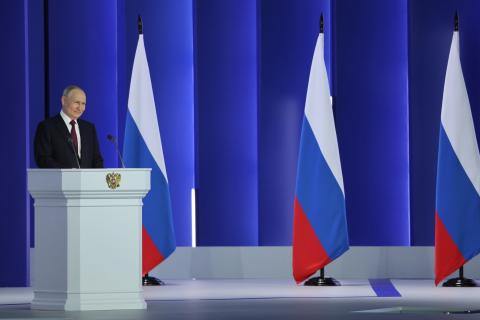
On Tuesday, Russian President Vladimir Putin announced that he is suspending Russia's participation in the New START treaty, a bilateral agreement signed with the United States that has been in force since 2011 and that limits and controls the nuclear armament of both powers.
A systematic review and meta-analysis published in JAMA Network Open examines whether there is an association between newborn exposure to SARS-CoV-2 and impaired neurodevelopment compared to those born before the pandemic. Neurodevelopment in the first year of life was not modified by being born or growing up during the covid-19 pandemic or by gestational exposure to SARS-CoV-2. However, the authors appreciated that, regardless of whether maternal infection was present, the pandemic was associated with a risk of delayed communication in these infants.