University of the Basque Country (UPV-EHU)
If you are the contact person for this centre and you wish to make any changes, please contact us.
Researcher at the Department of Sociology and Social Work of the University of the Basque Country (UPV/EHU)
Professor of the Department of Journalism at the University of the Basque Country (UPV/EHU) and principal researcher of the Gureiker group
Paleontologist at the University of the Basque Country UPV/EHU, director of the geology department and member of the former Anthropocene Working Group
Professor of Sociology and principal investigator of the Research Group on Social Determinants of Health and Demographic Change-OPIK at the University of the Basque Country (UPV/EHU)
Researcher in the geology department
Professor of Anatomy and Embryology at the University of the Basque Country, founding scientific director of the Achúcarro Neuroscience Centre in Bilbao and president of the Spanish Society of Neuroscience (SENC)
Researcher in the Department of Social Psychology and lecturer in Criminal Psychology at the University of the Basque Country (UPV/EHU)
Assistant Professor (PhD) in the Department of Didactics and School Organization at the Faculty of Education and Sport of the University of the Basque Country (UPV/EHU)
Geneticist and Ikerbasque and Ramón y Cajal researcher at the University of the Basque Country (UPV/EHU)
Professor of Organic Chemistry at the University of the Basque Country (UPV/EHU)
Professor of Fundamentals of Economic Analysis, Faculty of Economics
Researcher at the University of the Basque Country / Euskal Herriko Unibertsitatea
Professor of Medical Microbiology and researcher at the Faculty of Medicine and Nursing of the University of the Basque Country UPV/EHU
Specialist in Digestive System at Donostia University Hospital, coordinator of the Liver and Gastrointestinal Diseases Area at the Biogipuzkoa Institute and professor of Medicine at the University of the Basque Country (UPV/EHU)
Assistant professor of Journalism, researcher of the Gureiker group at the University of the Basque Country (UPV/EHU).
Doctor of Psychology, specialist in Clinical Psychology, Professor of Psychological Assessment and Diagnosis at the University of the Basque Country (UPV/EHU) and full member of the Spanish Academy of Psychology
Researcher and Lecturer in the Department of Analytical Chemistry at the University of the Basque Country (UPV/EHU)
Full Professor of the Department of Mathematics at the University of the Basque Country (UPV/EHU)
Postdoctoral researcher at the University of the Basque Country (UPV/EHU)
President of the Donostia International Physics Center (DIPC) Foundation and Professor of Condensed Matter Physics at the University of the Basque Country (UPV - EHU).
Ikerbasque research professor at the Department of Plant Biology and Ecology of the University of the Basque Country (UPV/EHU), Leioa, Spain and research associate at BC3. His research interests include ecology, evolution, conservation biology and biogeography. He is currently leading a research group in molecular ecology
Researcher at the Department of Applied Physics I and the Planetary Sciences Group of the Bilbao School of Engineering of the University of the Basque Country UPV/EHU
Researcher at the Department of Applied Physics and the Planetary Sciences Group of the Bilbao School of Engineering of the University of the Basque Country UPV/EHU
Permanent Senior Researcher, acreditated as Research Professor, in the Department of Genetics, Physical Anthropology and Animal Physiology at the University of the Basque Country (UPV/EHU).
Full professor of Journalism, researcher of the Gureiker group at the University of the Basque Country (UPV/EHU).
Demographer and Ikerbasque researcher, member of the Research Group in Social Determinants of Health and Demographic Change
Professor of Systems Engineering and Automatics at the University of the Basque Country (UPV/EHU)
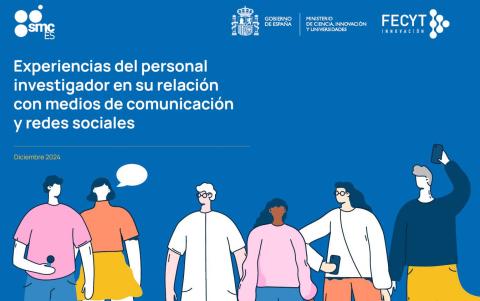
The report 'Experiences of researchers who interact with the media and social networks in Spain', carried out by FECYT’s Science Media Centre Spain (SMC) in collaboration with the research group Gureiker, from the University of the Basque Country, analyses data from a survey, the first of its kind in Spain, on the relationship with the media and social networks of the expert sources contacted by the SMC Spain from March 2022 to July 2024. The results show that scientists have a positive or very positive perception of their participation in the media (83.12%). However, 51.05% of respondents admit to having suffered an attack after communicating science. Women receive significantly more attacks than men: 56.86% of female scientists report attacks compared to 46.21% of male scientists. The social network X (formerly Twitter) is the most common avenue for this type of attack.

According to a Lancet Public Health commission on commercial gambling, stricter regulations are needed on a global scale to reduce its impact on health and wellbeing worldwide. The authors argue that the harms caused by gambling are a threat to public health, exacerbated by the rapid expansion and digital transformation of the industry. These harms include physical and mental health problems, increased risk of suicide, gender-based violence and financial problems.

The Twinning project is a UK-based initiative that organises soccer-based programmes, with the collaboration of professional clubs such as some Premier League clubs, to improve the mental and physical health of prisoners. Research has studied the behaviour of more than 670 of these participants and a group that did not participate, as well as collecting data related to the possible reintegration of those who were in this programme. According to the authors, who publish their research in the journal Nature Human Behaviour, ‘the results indicate that social bonding is associated with better behaviour in prison and a greater willingness of host communities to support reintegration efforts’.

The Royal Swedish Academy of Sciences has awarded the Nobel Prize in Physics 2024 to researchers John J. Hopfield and Geoffrey E. Hinton for discovering the foundations that enable machine learning with artificial neural networks. Hinton for discovering the foundational basis that enables machine learning with artificial neural networks. This technology, inspired by the structure of the brain, is behind what we now call ‘artificial intelligence’.
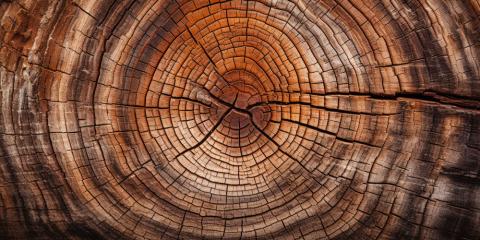
The Anthropocene began around 1952, according to a study based on geological records from 137 sites around the world, published in PNAS. The term ‘Anthropocene’ describes the period in Earth's history when human activities have drastically altered the planet; in March, an international scientific body dismissed it as an official geological epoch.

Using artificial intelligence (AI)-generated datasets to train future generations of machine learning models can contaminate their results, a concept known as ‘model collapse’, according to a paper published in Nature. The research shows that, within a few generations, original content is replaced by unrelated nonsense, demonstrating the importance of using reliable data to train AI models.

Access to safe public spaces to meet, employment, education and public health are some of the main measures recommended to make cities more friendly to the mental health of young people and adolescents. The analysis, based on surveys of 518 people in several countries, is published in the journal Nature and is intended to serve as a guide for urban planning policies that reduce inequalities and take into account the needs of young people.
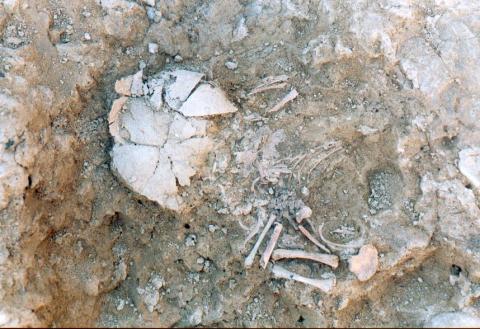
A team of researchers led by the Max Planck Institute for Evolutionary Anthropology in Germany has analysed nearly 10,000 ancient genomes and found six cases of people with Down's syndrome and one with Edwards' syndrome. Most of them died before or shortly after birth. The findings correspond to different periods up to 5,500 years old and several of them have been found in Navarra. According to the authors, "the care with which the burials were carried out and the objects found with these individuals indicate that ancient societies probably treated people with trisomies 18 and 21 as members of their communities". The findings are published in Nature Communications.
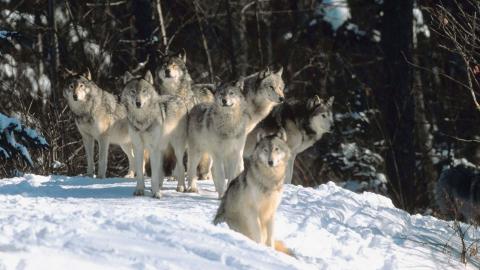
In a recent publication, we discovered that efforts to monitor genetic diversity in Europe are incomplete and need to be extended to account for potential climate change impacts on species of conservation interest.

A meta-analysis, pooling the results of 40 previous studies - involving more than 310,000 children and adolescents in total - concludes that treatment rates for mental disorders in these age groups are "generally low, especially for depression and anxiety". The research, published in JAMA Network Open, shows that the treatment rate for any mental disorder is 38%, ranging from 31% for anxiety, 36% for depression, 49% for conduct disorders and 58% for attention deficit hyperactivity disorder (ADHD).