University of the Basque Country (UPV-EHU)
If you are the contact person for this centre and you wish to make any changes, please contact us.
Researcher at the Department of Sociology and Social Work of the University of the Basque Country (UPV/EHU)
Professor of the Department of Journalism at the University of the Basque Country (UPV/EHU) and principal researcher of the Gureiker group
Paleontologist at the University of the Basque Country UPV/EHU, director of the geology department and member of the former Anthropocene Working Group
Professor of Sociology and principal investigator of the Research Group on Social Determinants of Health and Demographic Change-OPIK at the University of the Basque Country (UPV/EHU)
Researcher in the geology department
Professor of Anatomy and Embryology at the University of the Basque Country, founding scientific director of the Achúcarro Neuroscience Centre in Bilbao and president of the Spanish Society of Neuroscience (SENC)
Researcher in the Department of Social Psychology and lecturer in Criminal Psychology at the University of the Basque Country (UPV/EHU)
Assistant Professor (PhD) in the Department of Didactics and School Organization at the Faculty of Education and Sport of the University of the Basque Country (UPV/EHU)
Geneticist and Ikerbasque and Ramón y Cajal researcher at the University of the Basque Country (UPV/EHU)
Professor of Organic Chemistry at the University of the Basque Country (UPV/EHU)
Professor of Fundamentals of Economic Analysis, Faculty of Economics
Researcher at the University of the Basque Country / Euskal Herriko Unibertsitatea
Professor of Medical Microbiology and researcher at the Faculty of Medicine and Nursing of the University of the Basque Country UPV/EHU
Specialist in Digestive System at Donostia University Hospital, coordinator of the Liver and Gastrointestinal Diseases Area at the Biogipuzkoa Institute and professor of Medicine at the University of the Basque Country (UPV/EHU)
Assistant professor of Journalism, researcher of the Gureiker group at the University of the Basque Country (UPV/EHU).
Doctor of Psychology, specialist in Clinical Psychology, Professor of Psychological Assessment and Diagnosis at the University of the Basque Country (UPV/EHU) and full member of the Spanish Academy of Psychology
Researcher and Lecturer in the Department of Analytical Chemistry at the University of the Basque Country (UPV/EHU)
Full Professor of the Department of Mathematics at the University of the Basque Country (UPV/EHU)
Postdoctoral researcher at the University of the Basque Country (UPV/EHU)
President of the Donostia International Physics Center (DIPC) Foundation and Professor of Condensed Matter Physics at the University of the Basque Country (UPV - EHU).
Ikerbasque research professor at the Department of Plant Biology and Ecology of the University of the Basque Country (UPV/EHU), Leioa, Spain and research associate at BC3. His research interests include ecology, evolution, conservation biology and biogeography. He is currently leading a research group in molecular ecology
Researcher at the Department of Applied Physics I and the Planetary Sciences Group of the Bilbao School of Engineering of the University of the Basque Country UPV/EHU
Researcher at the Department of Applied Physics and the Planetary Sciences Group of the Bilbao School of Engineering of the University of the Basque Country UPV/EHU
Permanent Senior Researcher, acreditated as Research Professor, in the Department of Genetics, Physical Anthropology and Animal Physiology at the University of the Basque Country (UPV/EHU).
Full professor of Journalism, researcher of the Gureiker group at the University of the Basque Country (UPV/EHU).
Demographer and Ikerbasque researcher, member of the Research Group in Social Determinants of Health and Demographic Change
Professor of Systems Engineering and Automatics at the University of the Basque Country (UPV/EHU)
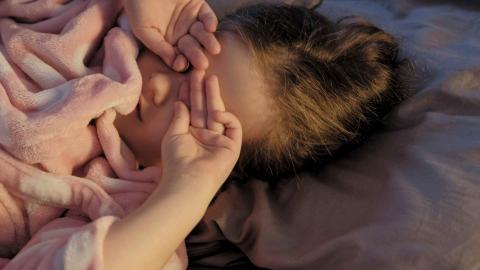
A team from the United States has analyzed nearly twenty studies on melatonin use in children between the ages of 0 and 6 in different countries. Although it appears that melatonin can help improve sleep onset in children with neurological conditions such as autism spectrum disorders, the data indicate that in recent years there has been an increase in sales of these products without a clear understanding of their actual effectiveness and potential long-term consequences for typically developing young children. The results are published in JAMA Network Open.

According to a study published in the journal JAMA Health Forum, the use of the benzodiazepine lorazepam by the character Victoria Ratliff in the series The White Lotus was associated in the United States with an increase in Google searches for this medication, including queries about how to obtain it online. The series generated 1.6 million more searches than usual over a 12-week period. Although the study reflects searches for information and not actual consumption, the abuse of anti-anxiety drugs is a fact: illegal sales of benzodiazepines have increased in the United States, and Spain leads the rankings in terms of consumption.

A team at Google DeepMind has developed AlphaProof, an artificial intelligence system that learns to find formal proofs by training on millions of self-formulated problems. According to the authors, the system “substantially improves upon previous-generation results on historical problems from mathematical competitions.” Specifically, in the 2024 International Mathematical Olympiad (IMO) for secondary school students, “this performance, achieved after several days of computation, resulted in a score equivalent to that of a silver medalist, marking the first time an AI system has achieved medal-level performance.” The results are published in the journal Nature.

In women suffering from post-traumatic stress disorder (PTSD) after experiencing sexual assault, the connectivity between two areas of the brain within the fronto-limbic system is altered, according to a study presented at the European College of Neuropsychopharmacology conference held in Amsterdam (Netherlands). The study, led by a researcher at Hospital Clínic in Barcelona, compared brain images of 40 women with PTSD following a recent sexual assault and 45 control cases. In 22 of these 40 women, communication between the amygdala—which helps process emotions such as fear—and the prefrontal cortex—which helps regulate those emotions—had almost completely disappeared.

Until now, perceived well-being followed a U-shaped curve depending on age, declining – due to worry, stress or depression – until people reached middle age, around 50, and then rebounding into old age. With malaise, the U is inverted and we talk about the ‘unhappiness curve’, shaped like a hump. Now, research published in PLOS One with data from the US and the UK claims that this age-related malaise is declining and that there is no longer such a hump. The reason for the change is said to be the deterioration of mental health among young people, especially those under 25. The study also includes data from 44 countries between 2020 and 2025, including Spain, and confirms that the malaise no longer takes the form of a hump, but decreases with age.
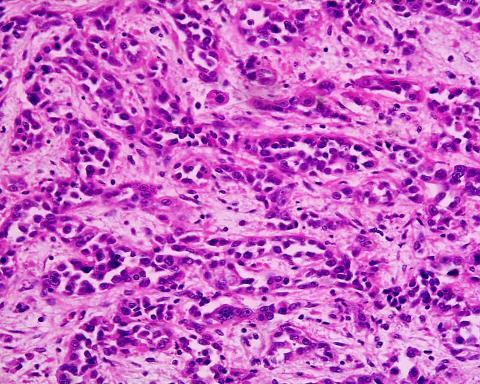
Research estimates that 15.6 million people born between 2008 and 2017 worldwide will develop gastric cancer at some point in their lives if current trends continue. In Spain, there would be 58,641 cases, or 1.24% of people in this age group. The team used data on gastric cancer from 185 countries in 2022 combined with mortality projections based on United Nations demographic data. The estimates, published in the journal Nature Medicine, show that 76% of cases could be attributed to Helicobacter pylori, a common bacterium found in the stomach.

A study evaluating the mathematical and linguistic performance of first- and second-year primary school students in France—more than 2.6 million children between 2018 and 2022—shows that the gender gap in mathematics appears within a few months of starting primary school. This gap increases with years of schooling, not with age, adds the research published in Nature.

The number of adolescents with anxiety problems seems to be increasing, especially in developed countries. An opinion article published in the journal Science proposes that maternal stress, quality of care and environmental conditions in the early years, together with current social and technological changes, may contribute to explaining this trend.

The report Participation of women scientists as expert sources in the media: motivations and obstacles, carried out by FECYT's SMC España with the Gureiker research group (UPV/EHU) analyses the data from a survey, a pioneer in Spain, on the factors that influence the media participation of scientists as expert voices. All the people contacted as information sources by the SMC Spain team were surveyed over a three-month period, starting in March 2024. Of the sources consulted, 43.91% were women and 56.09% were men. However, of the total number of people who accepted SMC's proposals and appeared as sources, 37.66% were women and 62.34% were men. The greater media exposure of male scientists benefits them for future interventions. In terms of barriers that prevent researchers from speaking in the media, lack of time due to family responsibilities affects female scientists (22.95 % of respondents) more than male scientists (10 %).

An artificial intelligence (AI) model led by the company Meta is capable of translating speech and text, including direct speech-to-speech translations, from up to 101 languages in some cases. According to the research team, this model - called SEAMLESSM4T - can pave the way for fast universal translations ‘with resources to be made publicly available for non-commercial use’. The work is published in the journal Nature.