Mitochondrial DNA mutations in oocytes do not increase with age
In oocytes, mitochondrial DNA mutations do not increase with age in women, says a study published in Science Advances. The study detected mutations in different cells of 22 women between the ages of 20 and 42, and found that the mutations were more numerous in blood and saliva cells of older women, but not in their oocytes.
250806 ovocitos rocío EN
Rocío Núñez Calonge
Scientific Director of the UR International Group and Coordinator of the Ethics Group of the Spanish Fertility Society
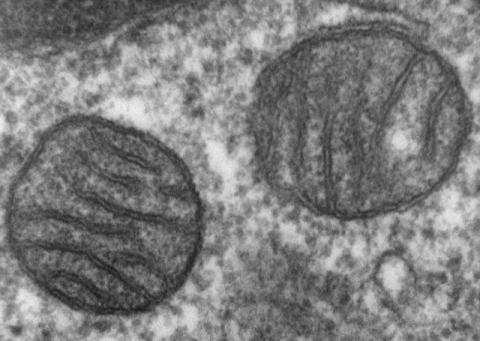
Mitochondria, known as the "powerhouses" of the cell, play an essential role in cellular health. Mutations in their DNA (mitochondrial DNA or mtDNA) have been associated with various diseases and have been widely studied in the context of female fertility due to their influence on oocyte quality.
Over time, human cells accumulate somatic mutations, and mitochondria, due to their nature, are particularly susceptible. This gives rise to a phenomenon known as heteroplasmy, where multiple variants of mtDNA coexist within the same cell.
This recent study led by Arbeithuber and collaborators analyzed these mutations using individual oocytes and somatic samples (such as blood and saliva) from the same women at different stages of their lives. To do this, they employed an innovative double-sequencing technique, which for the first time allowed direct observation of mutations in oocytes not selected through the fertilization process.
Thanks to this methodology, the researchers were able to distinguish between:
-
De novo somatic mutations,
-
De novo mutations in the germline, and
-
Mutations that were already present and segregated within the germline.
The main conclusion of the study is clear: mitochondrial mutations increase with age in somatic tissues but not in oocytes. This suggests a preservation or selection mechanism in the female germline that limits the accumulation of these mutations over time.
However, other studies have shown an increase in heteroplasmy detection with an individual's age, a phenomenon attributed to processes like genetic drift. For example, the study led by Kuiper et al. analyzed more than a thousand individuals and observed a longitudinal increase in the proportion of deleterious mtDNA variants with age.
Moreover, in previous research using mouse models, Arbeithuber and his team had already documented an increase in de novo mutations in both oocytes and somatic tissues with aging.
However, their most recent findings in humans, published as a preprint on bioRxiv in December 2024, confirm that while there is frequency-dependent selection in mitochondrial mutations, their accumulation is not associated with age in human oocytes.
These types of studies deepen our understanding of how mitochondrial genetic integrity is maintained in human reproduction and open new lines of research on fertility, aging, and mitochondrial medicine.
Filippo Zambelli - DNAmt ovocitos
Filippo Zambelli
Lead consultant at TRT consultancy, research consultancy service specialised in assisted reproduction and reproductive medicine
This new study brings important news about the DNA of the cell's "powerhouses", the mitochondria, and how it behaves in women’s eggs and how it relates to age. This research is particularly relevant in today’s european demographic context and especially in Spain, where a growing trend towards late motherhood is observed, together with the increasingly widespread use of assisted reproductive technologies worldwide. The good news is that, unlike what happens in other tissues of the body such as blood or saliva, where mitochondrial DNA (mtDNA) mutations increase with age, human oocytes do not accumulate more mutations as women age, at least between 20 and 42 years of age. This suggests that mtDNA in oocytes is protected against aging and its potential negative impact on cellular function. The researchers believe this is due to a process called “purifying selection,” a kind of quality control that eliminates problematic variants in eggs.
The study also adds on the understanding of a key concept in mitochondrial biology: the mitochondrial “bottleneck” in the germline. In this process, from the thousands of mtDNA copies that a mother carries, only a very small number are passed on to her eggs, as if everything is being filtered through a funnel. This process is fundamental for mtDNA inheritance. Researchers estimated that the size of this “funnel” is about 909 mtDNA units for all heritable mutations. However, for the more common mutations, the bottleneck is much tighter, indicating that common mutations are subject to a different kind of selective pressure. Another reassuring detail is that the size of this “bottleneck” does not change significantly with the mother’s age. All of this has been made possible thanks to an ultra-high-precision sequencing technology called “duplex sequencing”, and confirms previos findings on the bottleneck dynamics performed with lower-accuracy technique.
Overall, this study is reassuring for people trying to conceive childern at later ages, because, although chromosomal abnormalities increase with maternal age, at least they should not expect a higher level of mutations in their mtDNA due to their advanced age. However, it is important to consider the limitations when generalizing these findings: the study was based on a relatively small sample of 22 women, and only 8 in the older group, with a total of 80 oocytes analyzed, which limits the statistical power to detect subtle increases. Importantly, all participants were undergoing in vitro fertilization (IVF) treatments with controlled ovarian stimulation, and the oocytes used for the study were predominantly immature. This specific population and the hormonal stimulation process, as also acknowldeged by the authors, calls for future studies with larger and more diverse samples needed to confirm and expand upon these reassuring findings.
Francesca Chiaromonte et al.
- Research article
- Peer reviewed
- People