Drug identified as “near-universal” treatment for rare disease
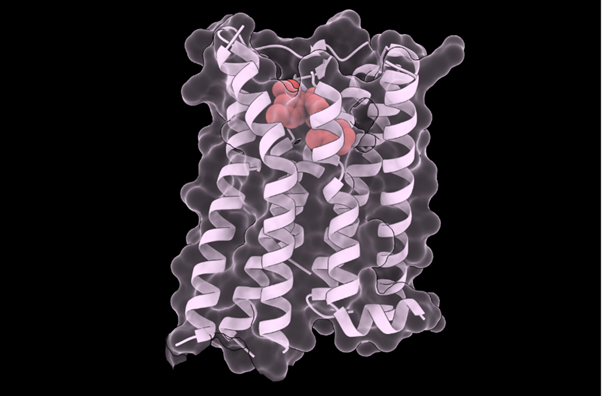
Most rare diseases are caused by mutations in DNA, but the same gene can mutate in different ways, which complicates treatment. Now, a team from the CRG in Barcelona has shown that an already approved drug is capable of stabilising almost all mutated versions of a human protein—specifically, the vasopressin V2 receptor, which is linked to a rare disease called nephrogenic diabetes insipidus. According to the researchers, who published their findings in Nature Structural & Molecular Biology, the study is the first proof of concept demonstrating that a drug can act as a ‘near-universal’ treatment, which could accelerate the development of therapies.
Francesc Palau - carabina CRG EN
Francesc Palau
Doctor of Medicine specialising in Paediatrics, Rare Diseases and Molecular Genetics, research professor at the CSIC and chair of the Scientific Advisory Board of the Únicas Centre, Sant Joan de Déu Children's Hospital
This is an important article because it provides results that could have significant therapeutic relevance. The study focuses on small “carabiner” or chaperone molecules that help improve protein folding conditioned by a mutation in a rare disease, in this case nephrogenic diabetes insipidus caused by pathogenic variants in the V2R gene. The study identifies a drug that improves folding regardless of the type of mutation, making it more “universal”.
The study and research are based on the hypothesis that the abnormal function of misfolded proteins can be recovered or improved, especially those caused by missense mutations (erroneous meaning: change of one amino acid for another). This field has been under investigation for some time. The biggest novelty is that the drug would be capable of acting on a significant number of mutations that cause this pathology. On the other hand, we are talking about the therapeutic strategy of drug repositioning, that is, the use of already approved drugs that are prescribed for specific disorders and that can be indicated for other rare genetic diseases.
The main limitation is that these molecules act on proteins carrying missense variants, which limits the possible pharmacological effect and therapeutic indication of these mutations. Genetic diseases are highly varied and have specific molecular pathologies. For some, a large number of mutations are missense, but for others this is not the case, which would reduce the scope of action of these drugs. Even so, it would be a major breakthrough to confirm that this drug or similar ones can have an effect on a wider variety of diseases with missense variants.
Pascual Sanz - carabina CRG
Pascual Sanz
CSIC research professor in the Department of Metabolism, Inflammation and Ageing at the Institute of Biomedicine of Valencia (IBV-CSIC)
In my opinion, the title of the press release does not reflect what is shown in the article. I think the idea has been overgeneralised, as the article clearly states that a pharmacological chaperone (Tolvaptan) [molecules capable of binding to proteins] is effective against mutations in the vasopressin V2R receptor. However, there is a world of difference between this and generalising that the same chaperone is functional at an almost universal level for rare diseases, as indicated by the title of the press release. In my opinion, the press release should indicate the specific relationship between the chaperone and the receptor, without generalising its use for other rare diseases.
Mighell et al.
- Research article
- Peer reviewed