First clinical trial of stem cell use to treat spina bifida during pregnancy
Spina bifida is a congenital malformation in which the spinal column does not close completely. A team in California (USA) has completed a phase 1 clinical trial testing, for the first time, a stem cell treatment combined with standard foetal surgery. The trial was conducted on six pregnant women with foetuses diagnosed with myelomeningocele, the most severe form of spina bifida. The six babies, born between 2021 and 2022, maintained the repair intact and had no serious adverse effects. The team will follow up carefully to ensure that the treatment remains safe and improves the children's quality of life. The results are published in The Lancet.
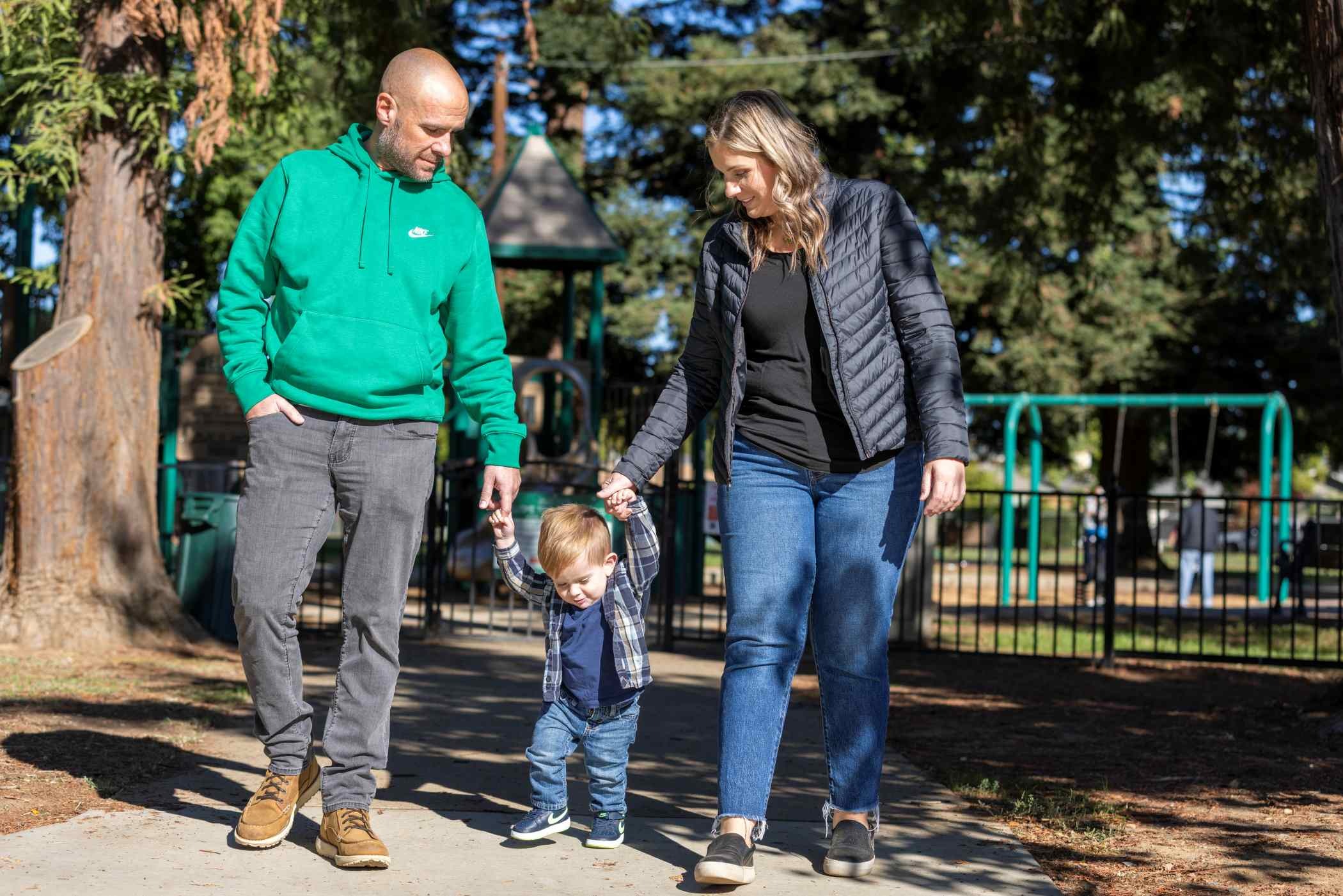
Jared and Lindsey with their son, Nixon. Lindsey and Nixon were the sixth patients in the CuRe trial. Credit: UCDavis.
260227 espina bífida javier EN
Javier Márquez Rivas
Paediatric and foetal neurosurgeon at the Andalusian Health Service, professor at the University of Seville and director of the Applied Neuroscience group at the Institute of Biomedicine in Seville
This is an excellent article. Spina bifida is the most serious malformation of the central nervous system compatible with life, so any advance that contributes to improving the situation of these children is of great importance.
In this study, the researchers take a new step in the early surgical treatment of these children, combining the release and mechanical protection of exposed brain tissue with a regenerative therapy that reduces or eliminates damage, promoting effective healing.
It describes in a simple and elegant way the complex process they have developed for the implementation of the clinical trial, which includes the production of mesenchymal stem cells, which have demonstrated regenerative potential, the surgical procedure performed, and the follow-up of a cohort of six patients who underwent open correction of their spina bifida malformation.
The available evidence already highlighted the usefulness of early correction of spina bifida, intrauterinely, in reducing neurological sequelae, gait, brainstem dysfunction and the onset of hydrocephalus. All of this contributes to a better overall outcome for these children.
This is also my experience with a long series of children treated in this way over the last 20 years, since we performed the first surgical treatment in Europe.
This new contribution not only helps to reduce the injury through early treatment that ‘prevents damage’, but also offers an opportunity to regenerate already damaged tissue, something that was not previously considered possible. This opens up greater possibilities for the improvement of these children and even their cure in selected cases.
[Regarding possible limitations] This is a treatment that must be performed by experienced neurosurgeons in advanced maternal-foetal care settings that support the process.
However, given that it is an allogeneic treatment [derived from another individual], once its effectiveness has been proven, we could quickly extend its inclusion in our operating theatres and patients, as it does not substantially change the procedure we perform.
Conflict of interest: the author has received support for research into advanced therapies, foetal therapy and other areas through public calls for proposals. No other conflicts of interest are declared.
Farmer et al.
- Research article
- Peer reviewed
- Clinical trial
- People