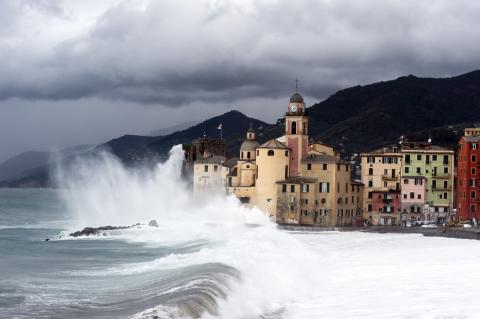
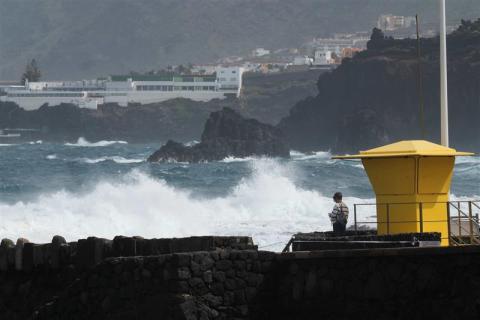
Rising sea levels are increasing the frequency of extreme weather events along coastlines
Rising sea levels have quadrupled the frequency of extreme events related to this phenomenon along coastlines since 1900. This is one of the conclusions of a study, which included Spanish participation, suggesting that climate change has already altered the risk of coastal flooding and highlighting the need to integrate these changes into adaptation and risk management strategies. More than 680 million people worldwide live in low-lying coastal regions, where small changes in sea level can significantly affect flood risk. The study is published in Nature Climate Change and aligns with another paper, published the same day in Science Advances, which states that since the 1970s, the number of days on which sea levels have exceeded annual averages has tripled.
María José Sanz - nivel del mar
María José Sanz
Scientific Director of the BC3 Basque Centre for Climate Change
The study published in Nature Climate Change is based on a robust and credible validation chain: 163 long-term tide gauge records reproduced using CMIP5 simulations combined with vertical land movement (VLM) and terrestrial water storage (TWS). The stratified resampling (5,000 samples) used to correct for the heavy concentration of tide gauges in Europe and North America is a genuine strength of the study. The conclusions are well supported for the relative sea level (RSL) signal, which is the true focus of the study.
Previous attribution studies had identified traces of human influence in individual components (thermostatic expansion, glacier loss) or in global mean sea level. This article extends that logic to the local RSL level and, for the first time on a global scale, to the frequency of extreme events—something previously demonstrated only for the isolated case of Hurricane Sandy. It also confirms the prior consensus that RSL, rather than changes in storm surge or tides, is primarily responsible for the observed trends in extreme levels.
The authors use the older generation of CMIP5 models (a decision justified by the absence of simulations with individual ice and glacier forcings in CMIP6). They also deliberately exclude the non-stationarities of storm surges and tides, which other studies have shown can be significant at the regional scale; semi-enclosed seas such as the Mediterranean and the Baltic are also excluded.
The most relevant conclusion is that the transformation of coastal flood risk is already underway and is not merely a projection for 2050–2100. This has direct implications for adaptation planning, infrastructure design, and the setting of insurance premiums. The authors’ additional suggestion that this evidence could contribute to climate litigation and claims for loss and damage is plausible, though more speculative: attribution at the local scale allows for the establishment of a physical causal relationship, but translating that causality into legal liability or the economic valuation of damages requires steps that go far beyond what the study itself demonstrates.
José Ángel Nuñez - nivel del mar
José Ángel Nuñez
Aemet spokesperson
Regarding the study in Nature Climate Change, what I can say is that satellite data confirm that sea levels are rising by 3 mm per year in our region, which amounts to 10 cm over the past 30 years. That may not seem like much, but on such flat beaches, it can mean a 10-meter retreat of the coastline.
When a storm hits, the higher baseline and the retreating coastline lead to more severe impacts.
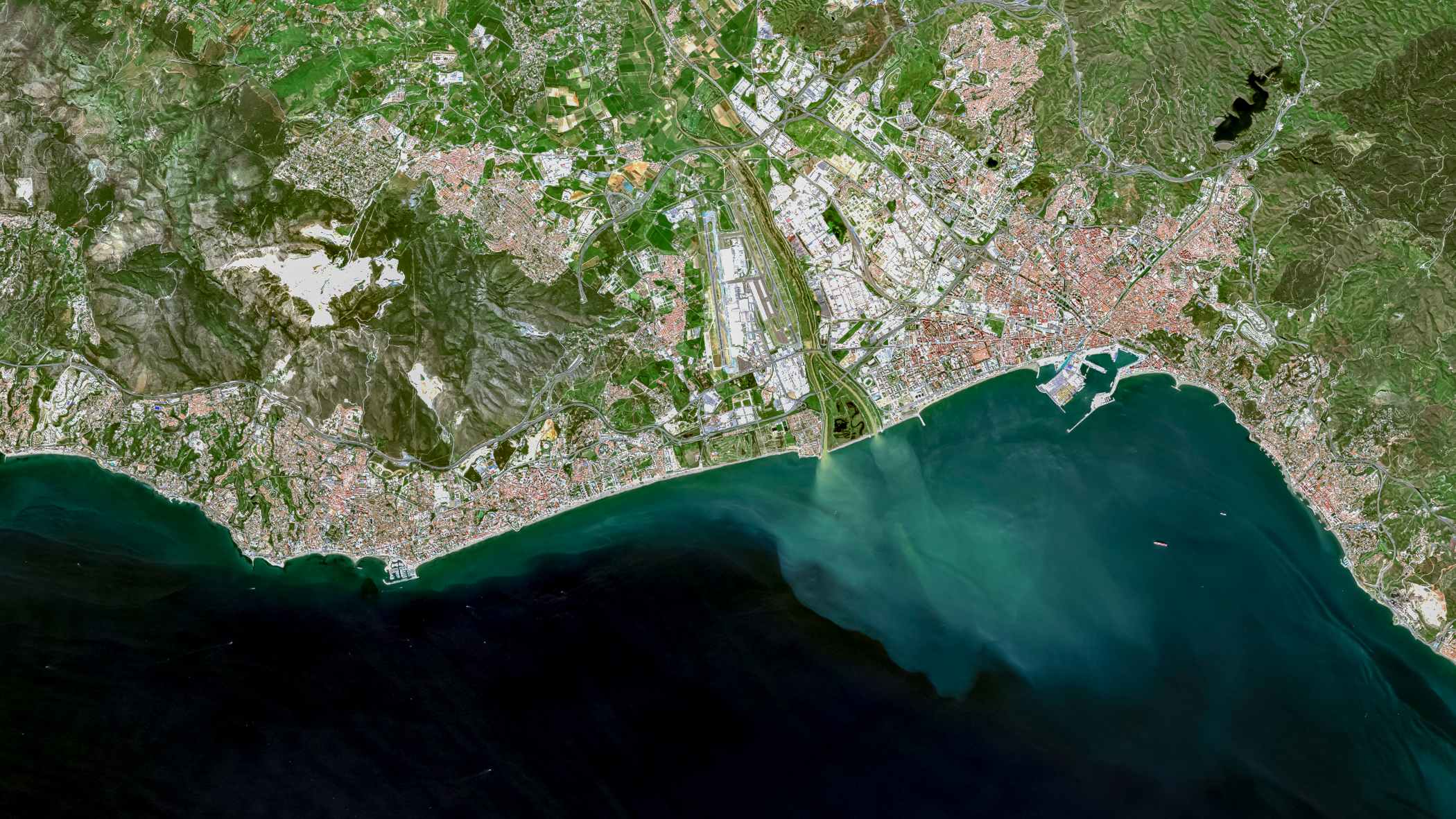
In addition to sea-level rise in a semi-enclosed sea like the Mediterranean, other factors such as reduced sediment input from rivers or structures like breakwaters and other barriers also play a role on a more local scale.
Sönke Dangendorf et al.
- Research article
- Peer reviewed
Daniel Gilford et al.
- Research article
- Peer reviewed