Public health recommendations for the migrant population in Ceuta
Among the migrants who have been in Ceuta for several weeks, there are confirmed or suspected cases of tuberculosis, chickenpox, scabies and gastroenteritis. Specialists in public health, epidemiology and infectious diseases explain to SMC España the basic recommendations that must be followed when providing care for this population.
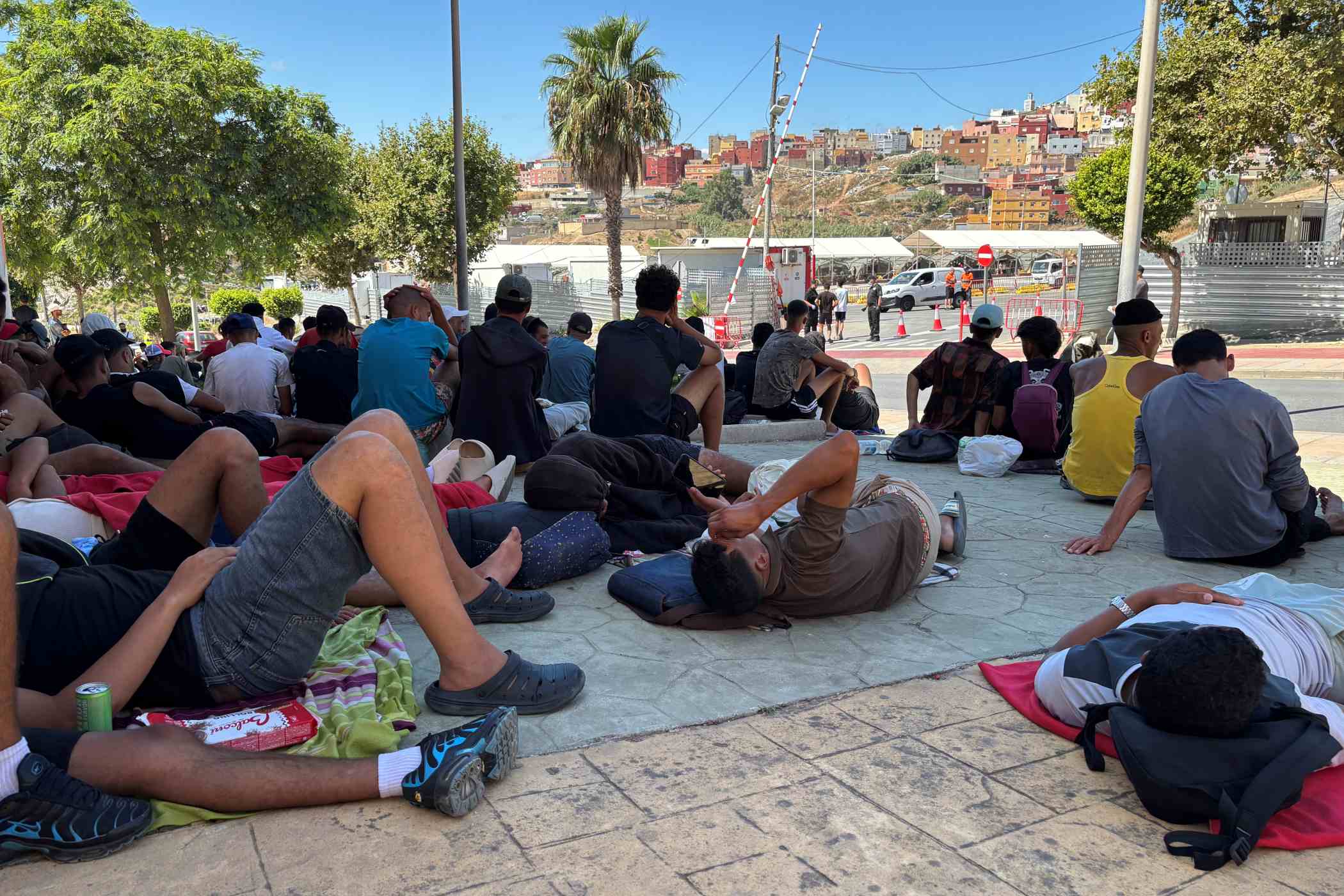
Several migrants gathered near the Loma Colmenar shelter – one of the facilities set up by the government to provide temporary accommodation for migrants – this Saturday in Ceuta. EFE/Laura Rincón.
José Miguel Cisneros - Ceuta recomendaciones EN
José Miguel Cisneros Herreros
Head of the Clinical Unit for Infectious Diseases, Microbiology and Parasitology at the Virgen del Rocío University Hospital and a researcher with the CIBERINFEC Bacterial Resistance and Antimicrobials Group and the Seville Institute of Biomedicine (IBiS)
What are the basic recommendations in a situation of this kind?
- “To address overcrowding and unsanitary conditions amongst migrants.
- Clinical assessment of migrants to diagnose and treat those who are ill and, where necessary (for example, in cases of pulmonary tuberculosis), to provide individual respiratory isolation”.
Are any special measures required in relation to the residents of Ceuta?
- “The general public should be properly informed about the situation, what these infections entail, and that they are not at greater risk of contracting them.
- Healthcare professionals and others caring for migrants are at risk of contracting these infections and must therefore protect themselves by wearing gloves and a face mask.
- The greatest risk of contracting these infections lies with migrants, as they are the ones living in overcrowded and unsanitary conditions”.
For diseases where contact tracing is required, how can this be carried out, bearing in mind that people are coming from other countries (some of which are in conflict)?
“Identifying the contacts of patients with pulmonary tuberculosis is, without doubt, the greatest diagnostic challenge. It requires, firstly, diagnosing migrants with this disease; secondly, identifying their contacts; and thirdly, administering tuberculosis chemoprophylaxis to them to prevent them from developing the disease.”
Is lockdown ever indicated?
“Lockdown of the population is indicated in situations where there is a risk of mass transmission of an infection, as was the case with COVID-19. This is not the case with this humanitarian crisis, in which respiratory isolation is indeed indicated for people – whether migrants or not – who are diagnosed with pulmonary tuberculosis, during the first few days of treatment, just as is done on a daily basis with the cases of tuberculosis diagnosed every day in our country.”
Pedro Arcos - Ceuta recomendaciones EN
Pedro Ignacio Arcos González
Epidemiologist and Director of the Emergency and Disaster Research Unit at the University of Oviedo
Overall assessment
"There is a potential risk to local public health, but its scale and nature remain unknown, despite three weeks having passed, due to the lack of comprehensive official data and adequate assessments.
The arrival of a large number of people whose epidemiological status is unknown, and who have been kept for weeks in overcrowded conditions on the streets, beaches, makeshift settlements and overcrowded reception centres—with serious deficiencies in hygiene, drinking water, sanitation and access to basic services—increases the ‘minimum pool of susceptible individuals’ for certain communicable diseases, which is one of the factors that facilitates the emergence of outbreaks.
The main risk is not so much that migrants automatically bring ‘exotic’ diseases in large numbers, but rather the living and hygiene conditions following their arrival, and the difficulty in carrying out health monitoring, which encourages an increase in bacterial, viral and parasitic gastrointestinal diseases transmitted via the faecal-oral route, as well as skin and parasitic infections such as scabies or impetigo, and respiratory communicable diseases, particularly tuberculosis.
The likelihood of outbreaks amongst migrants sharing living spaces is moderate to high, although the risk of transmission to the general population of Ceuta is low, but not zero (particularly for healthcare, security and humanitarian aid staff).
There is also a risk of the healthcare system and A&E departments becoming overwhelmed, which may delay care for the local population and lead to staff burnout.
For Ceuta’s resident population, the risk is medium-low provided that separate healthcare pathways, enhanced epidemiological surveillance and control measures are maintained. Widespread community transmission of serious diseases is unlikely in the short term, but not impossible if there are close contacts or failures in control measures.
The contextual summary is that there is indeed a real risk to public health, centred primarily on the consequences of overcrowding and unsanitary conditions among migrants, rather than on a massive influx of unknown pathogens. The magnitude of the actual risk will depend, to a large extent, on how long these precarious conditions persist and on the effectiveness of the healthcare and reception response.”
What are the basic recommendations in the face of a situation of this kind?
“The priorities:
- Identify all migrants (without this, it is impossible to continue with the healthcare process or carry out adequate epidemiological surveillance) and assess their state of health and epidemiological risk profile (including their vaccination status).
- Strengthen epidemiological surveillance in the city, both amongst migrants and the local population.
- Ensure adequate food, shelter, hygiene and sanitation, as well as healthcare.”
What sort of measures need to be implemented for the migrant population?
“Identify all migrants and assess their state of health and epidemiological risk profile, and ensure adequate food, shelter, hygiene and sanitation, as well as appropriate vaccination and healthcare.”
Are any special measures required in relation to the residents of Ceuta?
“Strengthen epidemiological surveillance and ensure they have the same access to healthcare services as before.”
For diseases where contact tracing is required, how can this be carried out, bearing in mind that people are coming from other countries (some of which are in conflict)?
“Their state of health and epidemiological risk profile (including their vaccination status) must be checked one by one, and the epidemiological profile of their country of origin must be taken into account.”
Is lockdown recommended in any circumstances?
“No, not at the moment.”
Joan Caylà - recomendaciones Ceuta EN
Joan A. Caylà
President of the Barcelona Tuberculosis Research Unit Foundation (fuiTB)
What are the basic recommendations in a situation of this kind?
“This is a public health emergency that has been affecting thousands of people for several weeks and is becoming entrenched. It would be advisable to resolve the problem as soon as possible through political agreements. It appears that these migrants could return to their countries of origin, to Spain, or remain, at least for a while, in Ceuta.
At present, the priority in Ceuta is to improve accommodation and food provision, and to enhance health checks to assess people’s state of health and, above all, to rule out infections. Improving vaccination coverage is important but would not be the top priority. No special public health measures are required for Ceuta’s residents, except in those cases (if any) where Ceuta residents have had contact with a case of an infectious disease. It is important to provide information to residents and non-residents alike, ensuring maximum transparency".
For diseases requiring contact tracing, how can this be carried out, bearing in mind that these people come from other countries (some of which are in conflict)?
“In accordance with the recommendations of the ECDC, CDC and WHO, all such individuals arriving from countries with significantly higher rates of tuberculosis than Spain should be systematically screened. It is likely that some cases of tuberculosis will be detected, which should be isolated and treated appropriately, and their contacts
(whether migrants or not) should also be screened. Should other infections be detected, the standard protocols should be applied.
Special attention should be paid to children, who also constitute a very significant population. In the event of possible cases of chickenpox, measles, etc., they should be isolated and the relevant protocols applied. Vaccination coverage needs to be improved.”
Is isolation ever recommended?
“Only in the case of patients with communicable diseases.”
Antoni Trilla - recomendaciones Ceuta EN
Antoni Trilla
Senior Consultant at the Department of Preventive Medicine and Epidemiology at Hospital Clínic in Barcelona, Professor of Public Health and Dean of the Faculty of Medicine and Health Sciences at the University of Barcelona
The social and health situation in Ceuta is complex. Measures must be taken based on best practice and health evidence, setting aside any political debate.
In Spain, anyone posing a risk of a communicable disease – as is the case here – which is of public health concern to everyone (citizens, residents, migrants), even if they are not registered on the local council’s register, do not have a health card or are in an irregular administrative situation, can (and must) receive healthcare, whether preventative (vaccinations) or therapeutic (treatment).
Vaccination against certain diseases – a measure now also being considered in Ceuta – must always be voluntary (except in very exceptional cases) and must be properly recorded in an official document or register.
The basic rule is to ‘detect, isolate and treat’ cases and identify potential contacts. Each disease has its own specific protocol in this regard, depending on how it is transmitted (a case of active tuberculosis is not the same as a case of scabies, for example).
Contact tracing, should it be necessary, will not be easy. From what we know of the situation in Ceuta, there are many factors that mean it will need to be carried out in a highly personalised manner and to the greatest extent possible.
The most commonly used preventive measures in public health are isolation (of cases), wherever indicated, and quarantine (of contacts, who are by definition not ill but have been exposed to a case).
The term ‘lockdown’ usually refers to a set of public health measures that may be considered in a situation such as the current one to limit the transmission of an infectious disease amongst specific individuals or population groups.
Measures must always be proportionate to the identified health risk and based on the available scientific evidence.
The residents of Ceuta should, if I may offer some advice, remain calm and follow the recommendations of their healthcare professionals and public health authorities in each case, which may include reminding them of the importance of being properly vaccinated against certain diseases.
Finally, the implementation of all these measures requires sufficient healthcare staff, both for preventive care and for the management of potential cases.