Pedro Sánchez announces that Spain will ban children under 16 from accessing social media
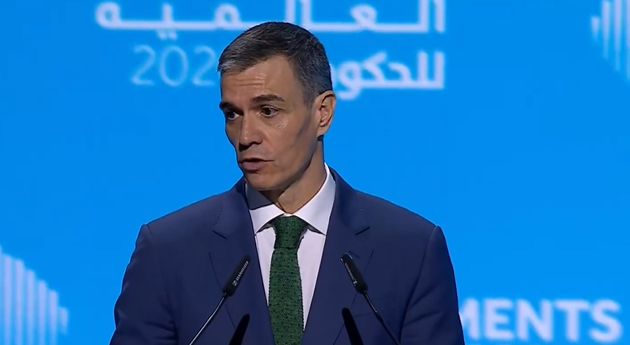
The Prime Minister, Pedro Sánchez, announced on Tuesday from Dubai that Spain will ban children under the age of 16 from accessing social media and will adopt other measures to increase control over digital platforms and ensure that their executives are held accountable for violations. Sánchez made this announcement in his speech to the plenary session of the World Government Summit and announced that next week the government will approve a series of measures, including this ban.
Paloma Llaneza - Pedro Sánchez redes sociales EN
Paloma Llaneza
Lawyer, systems auditor, security consultant, expert in the legal and regulatory aspects of the internet and CEO of Razona Legaltech, a technology consultancy firm specialising in digital identity
Any age verification system must also ensure the privacy of the person whose age is being verified. An example: a little while ago on Bluesky, I saw that I had a direct message, so I went to open it and was told that direct messages are not activated unless I verify my age. One of the options it gives me for age verification is to provide a credit card, but you can always steal your father's credit card, and besides, it means putting your credit card in the hands of a company whose security measures you don't know are good or bad.
The next option is biometric recognition, which will protect minors at the cost of all large corporations having their faces and those of all users scanned. People who work in facial biometrics will tell you that it's not actually your face that's scanned, but certain points, and that these physical graphs are stored cryptographically. But the truth is that once that facial recognition is stored, it can be recognised anywhere in the world, even if the photo isn't stored, because the data needed to recognise you again is stored.
The third option it gives me is to scan my national identity card, but the Spanish Data Protection Agency has already made it clear that scanning or photocopying your ID card, as they were doing in hotels, is excessive; all you can do is show it. How can I be sure that a Californian start-up like Bluesky will not be bought by a large corporation tomorrow and that all that data will not remain stored there? In other words, we have to find systems that allow age verification, but with the necessary anonymity, which may seem strange, but is technically possible. I don't think age verification is a bad thing, but of course, what methods should be used? That is the question.
If the method has to be the European Digital Identity Wallet (EUDI Wallet), which theoretically should be available in Spain by the end of this year and which many of us have been working on for a long time, it has the ability to generate a presentation, which can be a QR code, pulling real data from a person and saying that this person is over 16 years old, without saying who the person is or what their name is. It uses a technology called Zero Knowledge Proof, which means that someone, a trusted third party, attests that you are of legal age and the whole system works so that you can trust that information. This can work in Spain because minors can have a national identity card.
Age verification is a problem that we have been dealing with since the birth of the Internet, and now it can be done with very specific measures, which are not cheap, if we want to ensure the privacy of our citizens. It seems to me that if we are talking about digital sovereignty, the first thing is that no country should have access to the biometric data of our citizens.
And on the subject of the criminal liability of CEOs, I think we are aware that any measures we take will only come into force when the CEO sets foot on Spanish territory. Although it may be of little use in the short term, I find it very interesting, because a CEO will think twice when he or she will be personally liable with their own assets for what happens in any country in the world. It is not the same to be held civilly liable as it is to be held criminally liable. In fact, the case of Pavel Durov with Telegram in France is significant.
José César Perales - Pedro Sánchez redes sociales EN
José César Perales
Professor in the department of Experimental Psychology at the University of Granada
With regard to the proposal to ban access to social media before the age of 16 in Spain, this would be somewhat in line with what Australia has already implemented and what France wants to implement, although in France the age limit has been set at 15. In the United Kingdom, they are considering doing something similar, and it is possible that other European Union countries will also take similar measures.
In my view, this is a largely arbitrary measure, firstly in terms of age, because setting 14, 15 or 16 years old is a decision. Of course, a limit has to be set somewhere, but it seems that this is probably a considerably high age and that, at present, the available evidence regarding the damage that access to and use of social media can do to the mental health of adolescents does not justify setting any threshold, let alone a fairly conservative threshold such as 16 years of age.
In reality, the quality of the evidence on the impact of social media use on mental health is quite low. In other words, there is no unanimous agreement that such an impact exists. The studies that do exist are, for the most part, correlational, and there is fairly widespread agreement that these correlations are modest in magnitude. But more importantly, when the possible contribution of third variables or the possibility that the direction is not unidirectional from social media to mental health but rather in the opposite direction, i.e., from mental health to social media use, or bidirectional, is adequately controlled for, the magnitude of these relationships is further reduced.
At best, what we do know is that the impact of social media use on adolescent mental health, if causal, would be very modest and comparatively much smaller than the impact of other factors. For example, there is fairly solid research on the impact of academic pressure on adolescent mental health, and we know that the size of that effect is probably an order of magnitude greater than the size of the effect attributable to social media. So, on the one hand, a drastic measure is being taken on a fairly weak evidence base, and to a large extent, that is because it is a popular measure.
It is a measure that I believe most of the population, today believes to be positive and, therefore, relatively easy to take, with few political costs, because it is a decision with which the majority of the population would agree, and relatively easy in the sense that it is easier to take a decision regarding the prohibition of access than decisions that would probably be much more effective and that have more to do with the regulation of social media itself. Today, the large companies that offer these services have few limitations when it comes to the design of social networks or devices.
Probably, if we understood well the mechanisms through which mental health and social media use are linked, regulating issues related to the design of devices and social media, increasing algorithmic transparency or influencing the way these algorithms are designed would be much more effective than what is currently being attempted.
Will this have any kind of positive impact on mental health? I don't think so. If we then seriously evaluate the effect of these measures, we will see that the impact is very modest. Furthermore, there are possible negative effects on specific communities or groups, for whom a large part of their social capital resources are channelled through social media. I am thinking, for example, of minorities based on sexual orientation, gender identity, people with disabilities, etc., who find social support and important resources on social media.
I think it is a hasty measure, taken with little quality evidence, whose effects we do not yet fully understand, but which is relatively easy to take in political and popular terms.
Josep Maria Suelves - Pedro Sánchez redes sociales EN
Josep Maria Suelves
Researcher at the Behavioural Design Lab at the UOC eHealth Centre, member of the board of directors of the Public Health Society of Catalonia and the Balearic Islands, and vice-chairman of the National Committee for the Prevention of Smoking
Firstly, limiting the time minors spend on social media and, in general, connected to mobile devices, can be a valuable goal from a health perspective, as we know that this time is taken away from other important activities such as rest or sports, for example. We also know that these networks contribute to the spread of unhealthy behaviour patterns. The most extreme cases range from incitement to suicide to eating disorders and, eventually, cases in which someone may become socially isolated as a result of their participation in these networks.
However, prohibiting access may be difficult to enforce as long as adequate control of minors' access cannot be guaranteed. I mean that access to tobacco and alcoholic beverages is also prohibited for minors, and yet minors experiment with tobacco, alcohol and electronic cigarettes before the age of 18. So, if measures to ensure compliance with that prohibition are not guaranteed, it could be more cosmetic than effective.
Secondly, and very importantly, I believe that, in addition to limiting access, steps should be taken to ensure that the design of this type of technological platform is not one whose main objective is precisely that uncontrolled use. As we have done in the case of tobacco, for example, reducing the appeal may be even more important than prohibiting its consumption.
Just as we have introduced measures in the packaging of cigarette packets that make them less attractive, or limited the use of flavours that we know are particularly appealing to young people who are not yet accustomed to smoking, ensuring that those responsible for these social networks do not make them excessively attractive with measures such as infinite scrolling could be more important than outright prohibition.
260203_María del Mar Sánchez Vera_redes
María del Mar Sánchez Vera
Full Professor in the Department of Teaching and School Organization. Member of the Educational Technology Research Group.
What Pedro Sánchez announced today leaves too many questions unanswered. These are far-reaching proposals (legal, technical and social), but without knowing the regulatory texts, it is difficult to assess them.
In any case, the attempt to demand real accountability from digital platforms and their algorithms is, in principle, good news. However, the key will be in the mechanisms: how the algorithms are audited, who does it, with what technical criteria and with what legal guarantees.
On the other hand, combating hate speech is necessary and has an obvious democratic basis. The problem arises with the questions it raises: who decides what is hate speech and what is not? With what criteria? And under what controls? This opens up a delicate area where the line between protecting rights and limiting freedom of expression can become blurred. Therefore, we will have to see what mechanisms are proposed.
Finally, there is not much information about the ban on social media for children under 16. It seems that the approach of delegating responsibility to platforms follows the Australian model. The information we have about what has happened in Australia is that the system is not working as successfully as was assumed. The law has been criticised for not regulating other areas (such as online betting) and for the haste with which it was drafted. The Australian Psychological Society declined to make any contributions due to the short deadline given. We will have to see what approach Spain takes.
In Australia, the obligation falls on the platforms, which must prevent access by minors through age verification (which seems to be what is being considered in Spain). There, the rule affects apps such as Facebook, Instagram, TikTok, Snapchat, X, YouTube, Reddit, Twitch, Kick and Threads, which have to block minors under 16 or face fines of millions of pounds. It does not affect other applications such as WhatsApp or Telegram. Once the law was implemented, young people began using various strategies to get around the ban. They use VPNs, AI applications to ‘age’ themselves, or simply use a photo of their parents. One of the main complaints is that young people have not been heard throughout the process.
I think it is important to note that, reviewing the scientific literature, there is no consensus that social media itself causes mental health problems. The APA indicates that social media use is not inherently beneficial or harmful to young people and that the effects of social media depend on what adolescents can do and see online, their pre-existing strengths or vulnerabilities, and the contexts in which they grow up. This does not mean that social media is a safe or appropriate space for children, but rather that establishing a debate or regulation based solely on age is insufficient.
What we do know works is regulation combined with education, and that has not been addressed in today's announcement. There is no proposal for educational measures to accompany these regulations. Adequate civic and educational training is necessary. We know that regulation based solely on age does not usually work and that a sudden disconnection from these spaces can also cause problems. It is particularly worrying that adolescents who depend on social networks to connect and express themselves, and who use these media for inclusion, end up in unregulated digital spaces, where there is even less protection.
Let us remember that in Spain the age is set at 14 years old and yet there are still minors under that age on the platforms. While we wait to see the specific content of the proposals and their regulatory development, it is advisable to maintain a cautious and critical view. The regulation of digital platforms and the protection of children and adolescents in the digital environment is a complex challenge that does not allow for simple solutions based solely on age. It will be necessary to wait and see how the measures develop, what their real scope is and what guarantees they provide before we can judge their viability and possible effects.