Researchers analyse the impact of colorectal cancer screening campaigns on people aged 45 to 49
In the US, the incidence of colorectal cancer increased in people aged 45-49 years in the period 2019-2022, after advancing the screening age from 50 to 45 years, according to a study published in JAMA. The use of mailed faecal tests made it possible to reach people in this age group, without affecting screening rates in people over 50, says another paper published in the same journal.
250804 cribado colorrectal rafael EN
Rafael Marcos Gragera
Epidemiologist at the Catalan Institute of Oncology and professor of medicine at the University of Girona
Both studies show an increase in the incidence of colorectal cancer in young adults in the United States and establish an ecological correlation with the decrease in the recommended age for initiating screening, which fell from 50 to 45 years. This expansion in the age range has allowed for the detection of asymptomatic cancers in people between 45 and 49 years of age, who previously did not undergo screening. This increase in diagnoses is mainly concentrated in local-stage tumors, that is, in early stages and with a better prognosis, suggesting a direct effect of earlier screening.
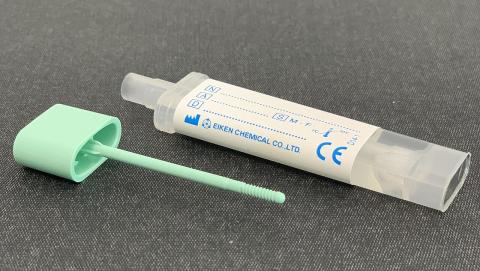
The editorial shows that mailing simple tests (such as the FIT test) significantly increases the participation of young people in screening programs. Furthermore, this has not negatively affected the participation of older adults, allaying one of the main fears that existed.
As the authors comment, potential limitations include the lack of individual-level information on colonoscopy use and the potential impact of the pandemic, in addition to having only four years of data after the initial screening recommendation.
A recent study on colorectal cancer incidence in Spain, led by Dr. Galceran and based on data from population-based registries, was recently published in the journal Clinical and Translational Oncology. The period analyzed spans from 1993 to 2016.
The main results indicate that no overall increase in colorectal cancer incidence is observed in the 20-49 age group. However, when broken down by more specific age subgroups, a significant increase in incidence was identified among men aged 20 to 29 years starting in 2006 (with an annual increase of 10.05%) and among women in the same age group throughout the period 1993-2016 (with an annual increase of 4.90%). In Spain, the target population for population-based colorectal cancer screening continues to be those aged 50 to 69 years, so the increase observed in young adults cannot be attributed to a screening effect. The most plausible hypotheses point to environmental and lifestyle factors, such as the adoption of a Western diet, increased obesity, sedentary lifestyle, and the increasing use of antibiotics, especially during early life. Among these factors, the rising prevalence of obesity is considered one of the most cited causes of the increased incidence in young adults. Other potential risk factors include alcohol consumption, processed meat consumption, and inflammatory bowel diseases.
The aforementioned article concludes that more prospective cohort studies are needed to better understand the causes of the increased incidence of colorectal cancer in young adults and its interactions with the environment, the microbiome, and the host.
The main recommendations derived from these studies include the need to increase public awareness about the importance of participating in colorectal cancer screening programs. In Spain, participation in these organized programs remains low, hovering around 40%, well below the desirable threshold for achieving a significant population impact. Furthermore, it is recommended to promote healthy lifestyles, which involves reducing sedentary lifestyles, combating obesity, and promoting a balanced diet, moving away from unhealthy dietary patterns that could be contributing to the increased incidence in young adults.
250804 cribado colorrectal pablo EN
Pablo Fernández Navarro
Scientific researcher at the Cancer and Environmental Epidemiology Unit of the National Epidemiology Centre, Carlos III Health Institute, member of CIBERESP and co-coordinator of the Cancer Epidemiological Surveillance Sub-programme - VICA of CIBERESP
These studies, published in JAMA, analyse the impact of advancing the recommended age to start colorectal cancer screening in the US from 50 to 45 years. Among their main contributions, the authors highlight that using already validated strategies, such as mailing fecal immunological tests (FIT), managed to increase participation in screening among adults aged 45 to 49, without reducing coverage among those over 50 years of age. These results are situated in the context of an increase in the incidence of colorectal cancer in young people, observed since the 1990s in many high-income countries. In the case of Spain, an international study published in The Lancet Oncology did not show an increase in the incidence of this tumor in people under 50 years of age. However, this study used relatively old data that may not reflect the current reality. Recently, preliminary results from a study led by the Granada and Tarragona cancer registries point to an increase in incidence among adults between 20 and 35 years of age.
It is important to note that the studies published in JAMA observe that increases in participation in early detection programs occur primarily among people with private insurance and university degrees, which, if confirmed, could widen social inequalities if specific strategies are not designed to reach the most vulnerable groups. Data from the US offer clues for reflecting on possible adjustments to European and Spanish colorectal cancer screening programs, especially for those over 45 years of age. In practice, these results support measures that make screening available to the entire population, such as mailing FITs, while keeping an eye on equity.
250804 cribado colorrecta j maria EN
Josep M. Borràs
Scientific coordinator of the National Health System Cancer Strategy, director of the Catalan Oncology Plan and Professor of Preventive Medicine and Public Health at the University of Barcelona
The data from both studies are an example of a very rapid, almost urgent, analytical response to a change in colorectal cancer screening recommendations in the US, extending it to 45-49 years of age. The rapid availability of the data explains why their data base is very preliminary. The survey to evaluate screening in this age group shows an increase in tests performed, but the authors themselves comment that it is not possible to determine whether colonoscopies (which are the most frequently occurring) were indicated for preventive or clinical reasons. The COVID context may also have affected this, and the data on tests performed are lower than those reported in the survey, suggesting a certain bias in the survey. The data point to an increase in testing in the 45-49 age group, but it only affects people with a high level of education, which may impact the deterioration of equity, which should be assessed. Therefore, the data suggest an impact on this age group due to the increased incidence of the change in recommendations, but they are still too preliminary to provide a clear answer. It will take time to determine the real impact and on which social groups.
Regarding Spain, it is worth mentioning that in the international study published this year using data from 180 cancer registries worldwide by the International Cancer Agency (IARC), Spain is one of the countries that does not show this increase in incidence in young ages. Therefore, this study would not be applicable here. Obviously, this does not mean that it cannot happen in the future, and we will have to closely monitor the data from our country's population registries in case this phenomenon of an increase in young people is observed.
Elizabeth J. Schafer et al.
- Research article
- Peer reviewed
- People
Jessica Star et al.
- Research article
- Peer reviewed
- People