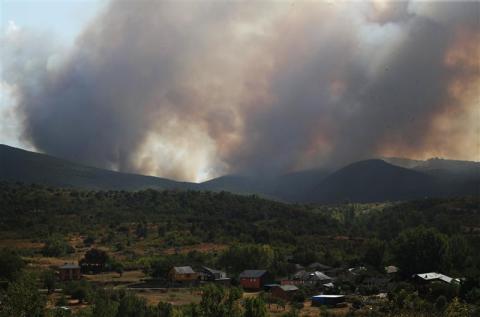
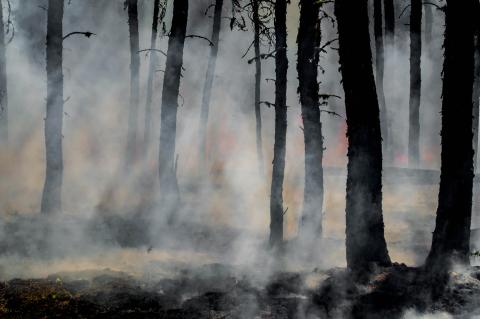
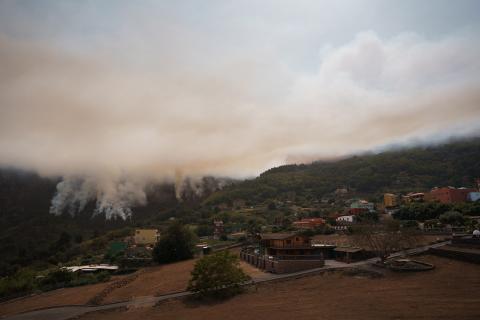
Wildfire disasters have intensified since 2015
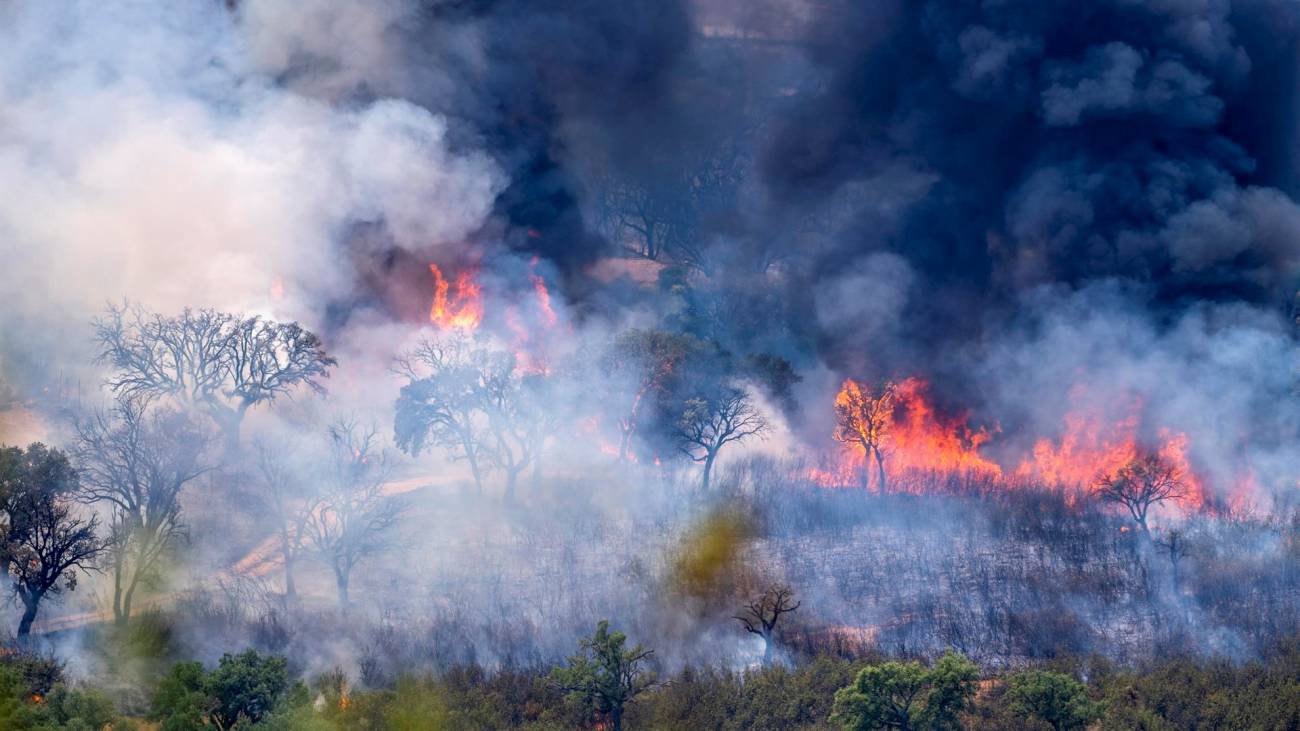
The frequency of fire-related disasters increased significantly from 2015 onwards, according to a study analysing data from reinsurance companies between 1980 and 2023. Forty-three per cent of the 200 most damaging events, in terms of both human and economic damage, occurred in the last decade, the authors estimate in the journal Science. The risks were highest in the Mediterranean and in temperate coniferous biomes, and their frequency coincides with increasingly extreme weather conditions, they add.
251002 incencios eduardo EN
Eduardo Rojas Briales
Lecturer at the Polytechnic University of Valencia and former Deputy Director-General of the FAO
Is the study based on solid data and methods?
"Yes, partly. However, it includes regions with very different climates (boreal or temperate coniferous forests, Mediterranean forests, subtropical forests/Australia, etc.) as well as other socio-economic factors that may mask the results, such as population density (California or Greece vs. inland areas of northern Portugal in 2017 or 2025, along with inland areas of north-western Spain in 2025). The comparison with economic damage is very urban-biased and even cyclical, given the fluctuation of the property market. Overall, this is a very North American article whose conclusions are debatable in other parts of the world.
It does not mention the fact that international forest fire statistics confirm a decline in the global area burned, which contradicts this study, although this reduction is occurring in developing countries."
How does it fit in with previous work? What new insights does it provide?
"The most innovative aspect of the article is the use of a wide variety of information sources, such as insurance and real estate damage claims, in an attempt to link them to climate change and the severity of fires.
It cites the extinction paradox identified 20 years ago in a European research project (FIREPARADOX), according to which the more that is invested in firefighting, the more severe the fires will become in the short term due to the uncontrolled growth of forest biomass and its horizontal and vertical continuity. He recalls the wise use of controlled fire by both North American and Australian indigenous peoples."
Are there any important limitations to consider?
"Wildland-urban interface (WUI) fires have specific characteristics that need to be analysed separately from those that occur in much less populated areas. Attempting to analyse them together creates a high degree of confusion and obscures the issues. For example, the type of material used to build houses also has an impact, which is very different between the USA and the Mediterranean."
How relevant is this study in practice in Spain?
"It overlooks a key factor in Mediterranean conditions that is decisive, and which is often ignored from an environmental perspective, namely the abandonment of the land and its management — whether agricultural, livestock or forestry — together with the demographic decline of large rural areas. The dramatic rural abandonment that has taken place in the northern Mediterranean is not clearly reflected in “changes in land management”. Nor does the reference to the use of exotic species contribute much in the case of the European Mediterranean, and it also lacks scientific evidence. Here, it is not correct to talk about indigenous fire, although it is correct to talk about its recovery.
The statement (p. 56) that disasters tend to occur more in highly populated and wealthy areas does not coincide with the experience in the Iberian Peninsula, despite being frequently cited in the article, especially in the worst recent years (2017, 2022, 2025).
Another additional aspect is the express environmental regulations and social perception against cutting down trees, clearing land or carrying out controlled burning by a predominantly urban population and increasingly also by the tourism sector —which is often the last activity to remain in depopulated areas—, which ultimately exacerbates rural abandonment. As indicated above, analysing highly depopulated areas and purely peri-urban areas using the same methodology is not advisable for drawing solid conclusions."
251002 incendios víctor EN
Víctor Fernández-García
Lecturer in the Department of Engineering and Agricultural Sciences at the University of León
Scientists had already demonstrated that the severity and intensity of fires are increasing worldwide. They had also shown that climate change creates conditions more conducive to extreme fires. However, evidence on the evolution of the impacts of fire on human lives and on the generation of socio-economic losses at the global level was more limited due to constraints in the available data.
The study by Cunningham and colleagues addresses this issue in an excellent and highly relevant paper. These authors, who are internationally renowned in the field of pyrogeography, demonstrate how the frequency of catastrophic fires has increased. To do so, they used a comprehensive database comprising information on loss of life and economic losses, with information from reinsurance companies and public data.
Globally, the results shown in the study are compelling: fires causing 10 or more deaths have increased 3.1-fold from 1980 to 2023, a change far greater than the increase in population. For the same period, the frequency of fires causing major economic losses has increased 4.4-fold.
The study also shows how economic losses and loss of life are disproportionately concentrated in certain areas of the planet. Risk models highlight the Iberian Peninsula as one of the areas most susceptible to this type of disaster due to climatic, economic and demographic factors and the intensity of the fires. Other regions with a Mediterranean climate also present a high risk. This is the case for the other countries around the Mediterranean Sea, as well as California, the Cape region in South Africa, and parts of central Chile and southern Australia.
The authors emphasise the link between these major disasters and climate change, showing a clear relationship between them. To do so, they have used drought and fire weather risk indices, which have increased significantly over the last two decades.
The study provides further evidence that the risks associated with fires are increasing dramatically in some areas. This should have consequences for the development of prevention policies and landscape management, promoting strategies to mitigate the social, ecological and economic risks associated with extreme fires.
Calum X. Cunningham et al.
- Research article
- Peer reviewed