
Autonomous University of Madrid
If you are the contact person for this centre and you wish to make any changes, please contact us.
Researcher at the Department of Biochemistry of the UAM, specialist in the role of microRNAs in tumor immunology.
Lecturer in the Department of Chemistry and researcher specialising in attosecond science, ultrafast processes in laser-matter interaction, atomic and molecular physics at the Autonomous University of Madrid
President of the Spanish Primatology Association (APE), coordinator of the Primatology Research Group and co-director of the Master’s Degree in Applied Ethology and Animal-Assisted Interventions at the Autonomous University of Madrid
Researcher at the Institute for Advanced Research in Chemical Sciences (IAdChem) and in the Department of Organic Chemistry at the Autonomous University of Madrid (UAM), director of the Biohybrid Materials and Systems Chemistry research group.
Professor of Biochemistry and Molecular Biology at the Autonomous University of Madrid and deputy director of the Centre for Molecular Disease Diagnosis at the Centre for Molecular Biology (CBM-UAM-CSIC).
Senior Lecturer Department of Theoretical Physics UAM Madrid
Senior Scientist at the CSIC and researcher at the Centro de Biología Molecular Severo Ochoa
Professor of Research Methods in Education at the Autonomous University of Madrid
Researcher at the UAM-CSIC Institute of Theoretical Physics and in the Department of Theoretical Physics at the Autonomous University of Madrid
Senior Lecturer in the Department of Biology at the Autonomous University of Madrid
Head of the psychiatry department at the Fundación Jiménez Diaz, psychiatry professor at the Universidad Autónoma de Madrid
Lecturer and researcher in Preventive Medicine and Public Health at the Autonomous University of Madrid
Professor of Preventive Medicine and Public Health at the Autonomous University of Madrid, researcher at CIBERESP and IMDEA-Nutrition
Lecturer at the Autonomous University of Madrid specialising in Exercise Physiology and Physical Activity and Health, Director of the Exercise Physiology and Nutrition Research Group and Vice-Dean of Employability, Postgraduate Internships and Physical Activity and Sports Sciences
Professor of Prehistory at the Autonomous University of Madrid.
Professor ad honorem of the CSIC at the Severo Ochoa Centre for Molecular Biology
Doctor in Physical Activity and Sport Sciences and researcher in the Exercise Physiology and Nutrition research group at the Autonomous University of Madrid.
Research professor at the Institute of Theoretical Physics (UAM-CSIC)
Director of the Dermatology Department of the Hospital de la Santa Creu i Sant Pau and professor at the Autonomous University of Barcelona
Pre-doctoral researcher in Ethics and Governance of Artificial Intelligence in the Department of Political Science and International Relations at the Autonomous University of Madrid
Researcher at the Institute for Food Science Research (CSIC-UAM)
Researcher at the Department of Pharmacology, the Faculty of Medicine of the Universidad Autónoma de Madrid and at the Nephrology and Hypertension Laboratory of the Instituto de Investigación Sanitaria-Fundación Jiménez Díaz in Madrid
Head of the Pathogenic Mechanisms of Alzheimer's Disease research group and researcher at the Severo Ochoa Molecular Biology Centre
Senior Researcher at the Severo Ochoa Center for Molecular Biology (CBM-CSIC-UAM)
Professor and Vice-Dean of Research and Transfer at the Faculty of Teacher Training and Education of the Universidad Autónoma de Madrid.
Professor at the Department of Psychiatry of the School of Medicine of the Universidad Autónoma de Madrid and member of CIBERSAM
Nutritional epidemiologist at CIBERESP and IMDEA Food, professor at the Autonomous University of Madrid, and assistant professor at the Harvard School of Public Health
Professor and researcher in the Department of Theoretical Physics at the Autonomous University of Madrid and at the Institute of Theoretical Physics (IFT UAM-CSIC), scientific coordinator of the entire NASA Fermi-LAT Collaboration between 2023-2025 and coordinator of the ‘Dark Matter and New Physics’ working groups of the Fermi-LAT gamma-ray collaborations (2014-16 and 2020-2022) and CTAO (2018-2020) collaborations
Assistant Professor in Zoology at the Autonomous University of Madrid
Assistant Professor in the Department of Biological and Health Psychology at the Faculty of Psychology UAM
Lecturer in Financial Economics at the Autonomous University of Madrid
Researcher at the Computer Linguistics Laboratory of the Autonomous University of Madrid (UAM) and director of Business & Language Analytics (BLA) of the Institute of Knowledge Engineering (IIC)
Professor in the Department of Preventive Medicine and Public Health at the Autonomous University of Madrid
Researcher in the department of preventative medicine and public health, Faculty of Medicine, Autonomous University of Madrid and CIBERESP
Principal investigator at the Severo Ochoa Molecular Biology Centre
Doctor in Physical Activity and Sport Sciences and researcher in the Exercise Physiology and Nutrition research group at the Autonomous University of Madrid.
'Ramón y Cajal' researcher specialising in energy poverty at the Department of Geography, Autonomous University of Madrid
Doctor in Physical Activity and Sport Sciences and researcher in the Exercise Physiology and Nutrition research group at the Autonomous University of Madrid.
Head of the African Swine Fever Virus Laboratory at the Severo Ochoa Molecular Biology Center (CBMSO)
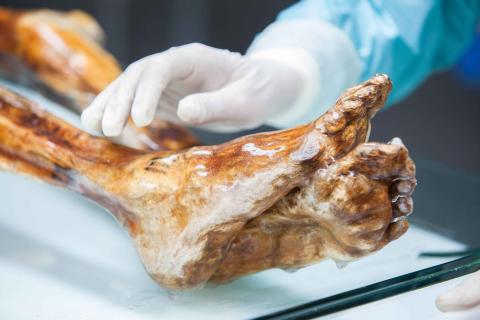
The so-called ‘Iceman’, Ötzi, who lived approximately 5,300 years ago, was discovered in 1991 in the Ötztal Alps, on the border between Austria and Italy. His mummified remains were preserved at -6°C in a museum to replicate the conditions in which they were found. Now, a team from Italy has discovered that he contains communities of both ancient and modern microorganisms, some of which may be metabolically active or capable of replicating under the current preservation conditions, although, for the moment, no damage has been detected. According to the researchers, this demonstrates that “the ‘Iceman’ is not a static relic, but a dynamic biological interface.” The results are published in Microbiome.

A team from the University of California (USA) has published an article questioning the scientific evidence supporting bans on social media for teenagers. Among other reasons, they argue that studies conducted to date on restricting social media use have focused on adults. Furthermore, as one of the authors points out in a press release, these restriction experiments "show weak, negligible, and mixed effects, with 40% of experimental studies reporting harmful effects (e.g., lower life satisfaction and increased loneliness) or no effect from social media restrictions." Some of the authors, whose article is published in Frontiers in Developmental Psychology, declare having ties to companies in the social media industry.
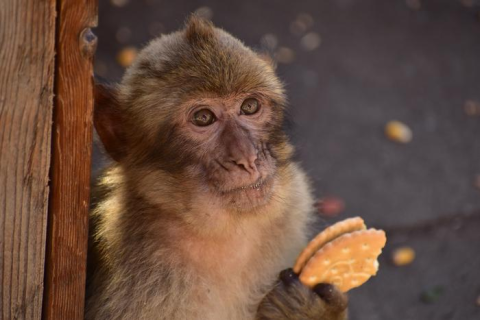
The deliberate consumption of soil—known as geophagy—is a common practice among animals, either to supplement their diet or as a protective mechanism against intoxication and other digestive issues. For the first time, a research team with Spanish participation has documented this behaviour in Barbary macaques in Gibraltar, particularly during the summer, when tourist numbers peak. This has led the authors of the study, published in the journal Scientific Reports, to hypothesise that the purpose of geophagy is to mitigate the digestive discomfort caused by food provided by visitors.
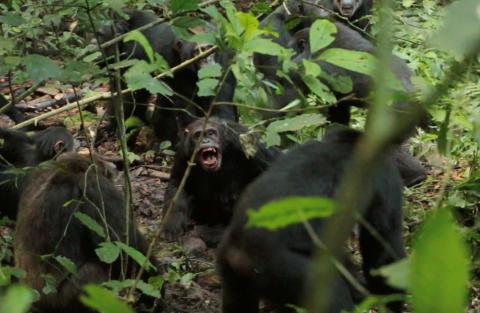
Permanent splits in chimpanzee groups are extremely rare—an event that occurs once every 500 years, according to genetic evidence. The journal Science reports on the split of the largest known group of wild chimpanzees following 30 years of observations. This involves the Ngogo chimpanzees in Kibale National Park (Uganda). The group shifted from cohesion to polarization in 2015 and eventually split into two distinct groups in 2018. From that point on, violence escalated, and members of one group killed at least seven males and 17 infants from the other. In the 1970s in Gombe (Tanzania), another case of this type was documented, but the chimpanzees had been fed by humans-
Artificial intelligence (AI) chatbots that offer advice and guidance on everyday matters may be reinforcing harmful beliefs in their users through flattering responses. This is one of the conclusions of a study published in the journal Science, which analysed 11 large AI-based language models from companies such as OpenAI, Google and Anthropic. The research shows that this flattery is both frequent and harmful: it can undermine users’ ability to be self-critical and influence responsible decision-making.
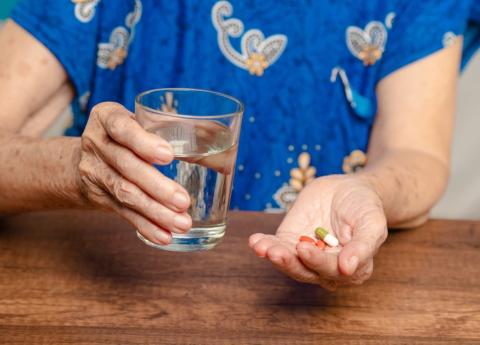
A clinical trial (COSMOS) involving 958 healthy adults with an average age of 70 tested the ability of a multivitamin supplement, together with cocoa extract, to slow ageing. The results, published in Nature Medicine, show that the supplement slightly slowed two of the five biological markers of ageing measured after two years of daily use. The two markers affected were PCPhenoAge and PCGrimAge, whose rate of increase was reduced by 2.6 months and 1.4 months respectively. The slowing effect was greater among participants who initially showed more accelerated ageing. Cocoa showed no effect.
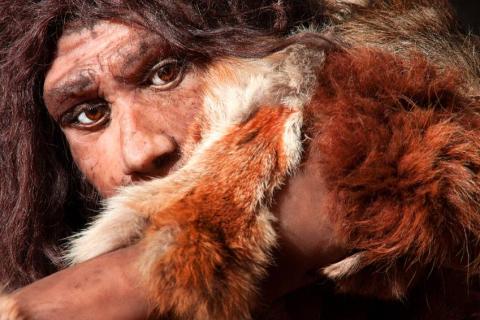
When Neanderthals and modern humans had offspring together, little Neanderthal DNA from the X chromosome entered the human gene pool. A study published in the journal Science traced ancient gene flow and found a relative excess of 62% modern human ancestry on Neanderthal X chromosomes. This suggests that the couples who had children were mostly Neanderthal men and modern human women, although the authors cannot rule out the possibility that demographic processes played a significant role.
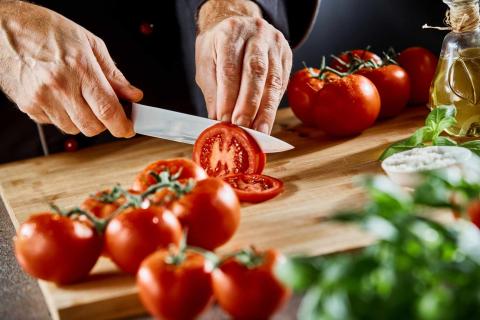
Adopting a healthy diet at age 45 can add between two and three years to life expectancy in men, and between 1.5 and 2.3 years in women, according to a study based on data from more than 103,000 people in the United Kingdom. The positive impact is greater for men who follow a diabetes risk reduction diet (DRRD) and for women who follow a Mediterranean-style diet (AMED), says the article published in Science Advances.

Device-independent quantum key distribution (DI-QKD) is a key step toward the quantum internet, as it provides the highest level of cryptographic security allowed by quantum mechanics. For it to have practical applications in a communication network, it must be achieved between nodes that are sufficiently far apart. An article published in Science demonstrates DI-QKD for the first time between two single-atom nodes connected by 100-kilometer-long fibers. This distance would be sufficient to achieve cryptographic security at a metropolitan scale.

The American Psychiatric Association has unveiled the new features of the forthcoming Diagnostic and Statistical Manual of Mental Disorders (DSM) in five articles published in The American Journal of Psychiatry. Among the highlights are the proposed change of name — it will become the Diagnostic and Scientific Manual — and the intention for it to be more dynamic, incorporating biomarkers for diagnosis and integrating the socioeconomic, cultural and environmental determinants of health. According to the authors, the aim is to enable a more personalised and inclusive clinical practice, aligned with scientific rigour. The most recent update was published in 2022 with the DSM-5-TR, and specialists are currently unaware of the date of the next edition, as they reported during a briefing with journalists.