
Pompeu Fabra University
If you are the contact person for this centre and you wish to make any changes, please contact us.
Professor of Endocrinology in the Department of Medicine and Life Sciences at Pompeu Fabra University, Emeritus Head of the Endocrinology and Nutrition Service at Hospital del Mar in Barcelona and President of the Advisory Council on Diabetes in Catalonia of the Generalitat de Catalunya
ICREA research professor senior and researcher in Bioengineering Systems-MELIS at Pompeu Fabra University
Postdoctoral researcher at the Institut de Biologia Evolutiva (CSIC- Universitat Pompeu Fabra).
Lecturer in Art Theory and History in the Department of Humanities at Pompeu Fabra University
Ramón y Cajal Researcher at the Law & Philosophy Group of the Universitat Pompeu Fabra (UPF) and member of the scientific council of the Center for Animal Ethics of the UPF
Professor of Public Health in the Department of Medicine and Life Sciences (MELIS) at Pompeu Fabra University, researcher at the Centre for Occupational Health Research (CISAL) at IMIM-PSMar, and scientific director of the Ibero-American Observatory on Occupational Safety and Health
Author of a PhD thesis on rhythm cognition in humans and rats, research support technician in the Language & Comparative Cognition group, Centre for Brain and Cognition
Director of the Master's in Scientific, Medical, and Environmental Communication, and of the Center for Studies in Science, Communication, and Society at UPF Barcelona School of Management
Principal investigator at the Institute of Evolutionary Biology (CSIC-UPF)
Emeritus Professor of Biology at Pompeu Fabra University (Barcelona)
Professor of Systems Biology at the Pompeu Fabra University of Barcelona
Researcher at ISGlobal and Professor of Preventive Medicine and Public Health at the Universitat Pompeu Fabra in Barcelona
Head of the Occupational Health Service at the Parc de Salut MAR Hospital del Mar (Barcelona), associate professor at Pompeu Fabra University, and senior researcher at the Center for Occupational Health Research (CiSAL-UPF)
ICREA professor, researcher at the Universitat Pompeu Fabra (UPF), director of the Transcriptomics of Vertebrate Development and Evolution group at the Center for Genomic Regulation (CRG) in Barcelona.
Coordinator of the Translational Synthetic Biology research group and ICREA research professor at Pompeu Fabra University (UPF)
Associate Professor and researcher in the Sociodemography research group (DemoSoc) of the Department of Political and Social Sciences and the Centre for Gender Studies (CdGE) of the UPF
Head of the Microbiome Research Group, Department of Medicine and Life Sciences, Pompeu Fabra University
Head of the Biomedical Cancer Genomics group at IRB Barcelona, ICREA research professor at IRB Barcelona and associate professor at Pompeu Fabra University
ICREA research professor responsible for the Complex Systems Laboratory at Pompeu Fabra University and the Institute of Evolutionary Biology (UPF-IBE) and researcher at the Santa Fe Institute in New Mexico (United States)
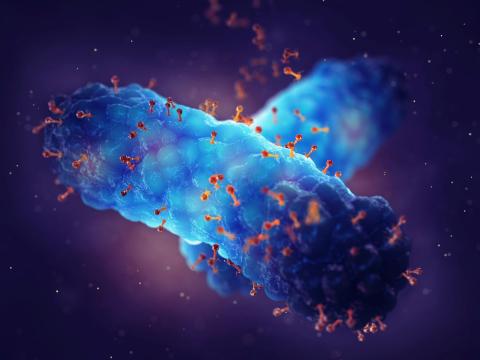
A team of researchers has designed complete and functional genomes for bacteriophages — viruses that feed on bacteria — from scratch using generative artificial intelligence (AI), and has tested them against bacteria that had developed resistance to this type of virus. The study, published in the journal Science, represents a step forward towards generative systems capable of designing complete biological systems. The authors also state that it raises important questions regarding biosafety and biosecurity.

In 2025, a six-year-old Chinese girl named Mei (not her real name) became the first person in the world to undergo gene-editing therapy targeting the brain. She had a developmental delay associated with a rare genetic syndrome, Snijders-Blok-Campeau syndrome. According to Science, her parents had raised $860,000 to partially fund the treatment at Xinhua Hospital in Shanghai (China), led by Zilong Qiu, one of the neuroscientists competing to apply base editors — a version of CRISPR — in children with rare diseases. Now, Science and Retraction Watch have exclusively revealed that Mei died from a severe immune reaction seven days after receiving the treatment, a story that had been kept hidden. The entry on clinicaltrials.gov has not been updated since 2025; and when Qiu and his team published animal studies related to the trial in the journal Nature in early 2026, according to the journalistic investigation, they omitted any reference to Mei and her family.
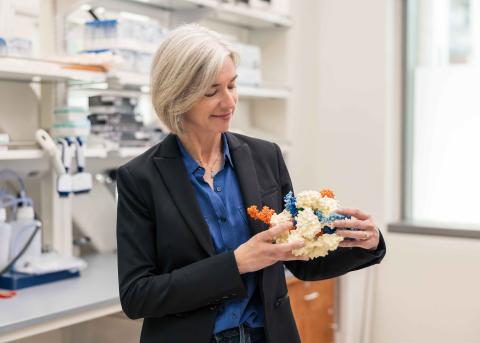
The range of CRISPR tools for genome editing can extend beyond nature-inspired designs thanks to proteins designed using artificial intelligence. A new study by Nobel laureate Jennifer Doudna’s team, published in Science, describes the design of synthetic RNA-guided nucleases, with sequences substantially different from those found in nature, which match or exceed the activity of their natural counterparts whilst offering novel properties.

In December 2025, the European Commission proposed new rules for the placing on the market of genetically modified microorganisms (GMMs). Tomorrow, European Union health ministers will vote to adopt the position of the Council of the European Union (EU) on this proposal. The Commission, the Council, and the European Parliament must agree on the final version of the legislative text.
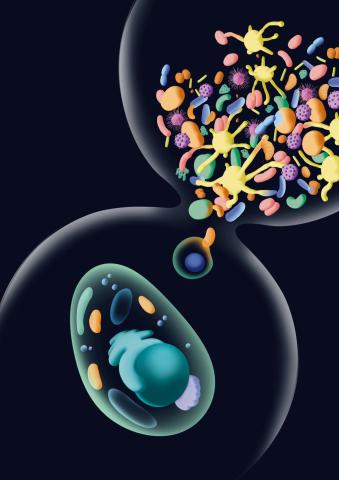
The origin and the process by which eukaryotic cells arose remains one of the great unanswered questions in biology, with Lynn Margulis’s theories regarding the incorporation of a bacterium that would later become the mitochondrion marking a major turning point. Now, Spanish research carried out by IRB Barcelona and the Barcelona Supercomputing Center challenges this view. Without denying the role of mitochondria, it suggests that the process was longer and more complex than previously thought, stretching over hundreds of thousands of years. At least two other different bacteria contributed to the development of eukaryotic cells, and giant viruses appear to have acted as vehicles for genetic transfer. The findings, published in Nature, suggest a much more protracted and gradual process of exchange between microorganisms.

Formaldehyde is a preservative used on human tissue; inhaling it has harmful health effects and it is considered a human carcinogen. A study published in Occupational & Environmental Medicine shows that airborne concentrations of this compound in most pathological anatomy departments of the UK’s National Health Service (NHS) are rarely monitored and regularly exceed the occupational exposure limits set by the European Union (EU): seven out of 10 departments exceeded the eight-hour maximum exposure limit set by the EU.
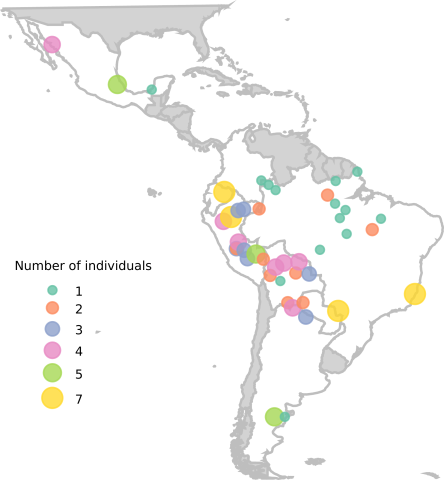
An international team led by the Institute of Evolutionary Biology (IBE), a joint center of the Spanish National Research Council (CSIC) and Pompeu Fabra University (UPF), has compiled the largest genetic database of Native American populations to date, including 128 new complete genomes. The research identified more than one million genetic variants not previously observed in other populations, revealing a unique genetic diversity. According to the authors, who published their work in Nature, “these results demonstrate the need to better represent these populations in genomics.”

Premature births, babies born with birth defects, bad luck, satellite and telecommunications failures… Eclipses are attributed with a wide variety of consequences that have no scientific basis and are largely rooted in cultural traditions and deep-seated misconceptions. With the help of expert sources, in this article we explain why some people believe in them, what the main risks are and how to counter them.

In the ephemeral pools along the coasts of the Caribbean island of Curaçao lives Choanoeca flexa, a tiny unicellular aquatic organism belonging to the choanoflagellates, important for being close relatives of animals. As the pools evaporate and refill, C. flexa can switch between unicellular and multicellular forms in three different ways: by division, by aggregation, or by combining both, mechanisms that were previously thought to be mutually exclusive. The discovery, published today in Nature, may challenge current understanding of the origins of multicellular life.

A study published in the European Heart Journal shows that people with type 1 and type 2 diabetes have a higher risk of sudden cardiac death than those without these diseases. In addition, their life expectancy is lower. The research analysed data from 6,862 cases of sudden cardiac death in Denmark in 2010, and concluded that the incidence of these deaths is 3.7 times higher in people with type 1 diabetes than in the general population, and 6.5 times higher in people with type 2 diabetes. Those under the age of 50 were at the highest risk.