Evidence found that humans made fire 400,000 years ago
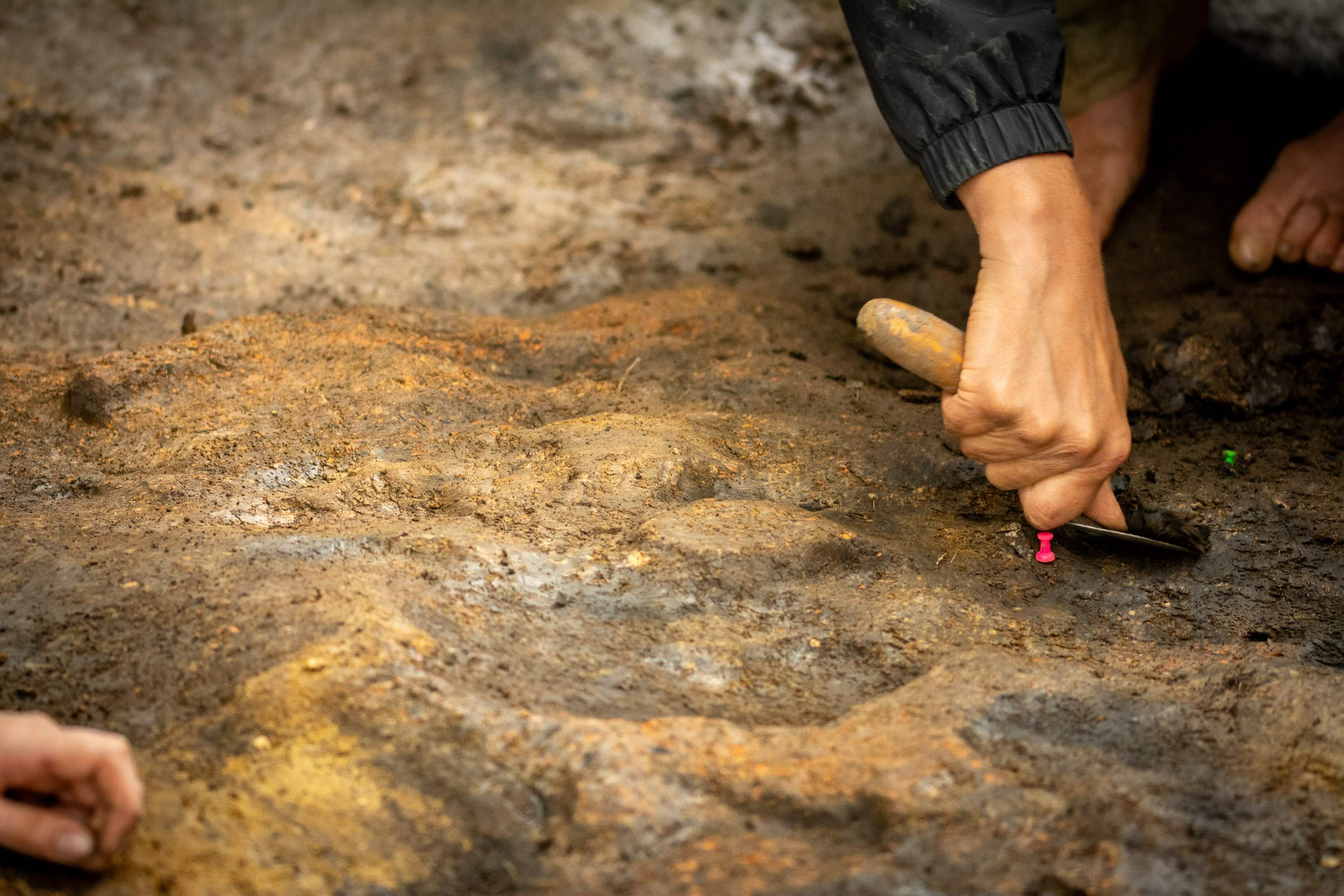
A research team led by the British Museum presents evidence in the journal Nature that humans were making fire – deliberately and not just taking advantage of natural fires – 400,000 years ago in Barnham (United Kingdom). The remains analysed, including burnt sediments, heat-damaged flint axes and pieces of pyrite, are much older than those recorded to date, which dated the deliberate use of fire to around 50,000 years ago in northern France.
251210 fuego juanma EN
Juan Manuel Jiménez Arenas
Full Professor in the Department of Prehistory and Archaeology
Head of ProyectORCE
To propose today that fires as ancient as the one published by Ashton and colleagues—dated to 400,000 years ago—were caused by humans and not by natural factors, such as lightning strikes, requires collaboration between various disciplines and the application of complex and precise techniques that allow us to affirm, without a doubt, an anthropogenic origin. And that is precisely one of the strongest points of this work: the combination of different methodologies, which gives it great solidity.
First, the visible evidence was analysed: the colouring of the sediments due to high temperatures; the presence of stone tools with evidence of exposure to fire; and, above all—because this is what sets this study apart—the appearance of two fragments of pyrite.
For fire to exist, fuel (material capable of burning), an oxidiser (oxygen) and a source of ignition (sufficient energy to initiate combustion) are required. At sites of this age (400,000 years), it is most common to find remains of fuel, such as charcoal, ashes or burnt bones. However, it is much more difficult to find evidence of the elements capable of generating the energy needed to start a fire. At Barnham, this aspect is documented by the presence of pyrite. The name of the mineral itself provides a clue to one of its traditional uses: in classical Greek, πῦρ (/pyr/) means “fire”. Pyrite has been used since time immemorial as a flint stone and, when struck against flint, produces enough heat to ignite certain plant materials. Although we have evidence of much older fires—such as those at the Cueva Negra del Estrecho del Río Quípar site in Caravaca de la Cruz (Murcia), dating back nearly 900,000 years—these could have been of natural origin. This does not mean that humans did not use them; they did, but there are doubts about their ability to control the entire process. Thus, they probably took advantage of natural fires, “transported” them and used them in their settlements. In the case of Barnham, this mystery is solved: the presence of pyrite indicates that humans 400,000 years ago had the necessary knowledge to generate fire ex novo. Until the publication of this research, this ability had only been confirmed 50,000 years ago.
This evidence is compelling in itself. A few decades ago, finding burnt elements at a site of this age would have been sufficient to confirm their human origin. Today, this is no longer the case: it is necessary to resort to a wide range of methods and techniques. Consequently, the research team decided to go beyond what the eye can see and resorted to highly resolutive techniques to define anthropogenic fires at the Barnham site and distinguish them from natural fires recorded at the same site. Soil micromorphology, which allows the composition of stratigraphic facies to be studied at a microscopic level with great precision, and physical and chemical analyses, which have made it possible to estimate temperatures above 700 °C and establish that human dwellings were recurrent.
The implications of the study are numerous, and some have been highlighted by the British Museum team. Between 500,000 and 300,000 years ago, multiple transformations took place: human groups with larger brains, new ways of carving stone, an increase in big game hunting as a means of obtaining resources, cooking food, etc., all of which, according to the authors, is linked to growing social complexity, which leads us to propose something truly thought-provoking: the Ju/'honsai—who live in the Kalahari Desert and until relatively recently maintained a hunter-gatherer lifestyle—often gather around the fire to share invented stories, rumours, gossip and conversations that stimulate the imagination. It is therefore possible that this type of social exchange has been with us for 400,000 years.
This work, however, has overlooked an aspect that, in my opinion, may be relevant: the possible contribution of fire to settlement in climatically colder regions thanks to its ability to generate heat and protection.
This study does not present any significant limitations that should be taken into account.
251210 fuego susana EN
Susana Rubio-Jara
Professor in the Department of Prehistory, Ancient History and Archaeology
The use of controlled fire in archaeological contexts is not often observed, which is why the evidence found at the Barnham site in the United Kingdom is another exceptional case.
The implications of the use of fire, such as heat, the cooking of plant or animal matter, protection from predators, or interaction between hominins for its production, are elements that bring us closer to understanding the behaviour and adaptation of hominins to their environment.
The studies used by the authors to determine the use of fire at Barnham are solid, however, sites with indirect evidence of fire use have been cited, rather than direct evidence, such as those found at the Acheulean site of Valdocarros (Madrid) by Stancampiano et al., 2023, dating back some 250,000 years, where the presence of several hearths was documented through the analysis of lipid biomarkers in the sediment.
Andreu Ollé - fuego UK EN
Andreu Ollé Cañellas
Researcher at the Catalan Institute of Human Paleoecology and Social Evolution (IPHES-CERCA), associate professor at Rovira i Virgili University, and co-director of the Atapuerca project
The study presents various lines of evidence regarding the presence of fire at the site, along with multidisciplinary and complementary analyses.
Firstly, the study fits in well with information we already had for Western Europe. There are other sites with similar chronologies (such as Menez-Dregan or Terra Amata in France, the Aroeira cave in Portugal, or Cansaladeta in Tarragona) where we have evidence of the use of fire around 400,000 years ago. However, this contrasts with the lack of evidence at other well-documented sites of similar chronology, such as Atapuerca.
The main novelty of the article is the proposal that the pyrite fragments found at Barnham are related to the intentional production of fire. This had not been observed at other sites with evidence of fire. Therefore, based on this discovery, the idea that around this date we already had a “structural use of fire” is reinforced.
It is therefore very likely, as the article suggests, that the Barnham discovery shows us the beginning of the socialisation of fire, its controlled and widespread use.
On a personal level, based on what I have learned from experimental archaeology and ethnographic observations, I believe that producing fire by friction with plant materials is easier than that involving interaction with iron oxide, but the evidence presented in the article is solid and should be taken into account.
I do not see any significant limitations to consider.
This is a relevant study because it provides solid evidence of a crucial aspect of human evolution, namely the control of fire. At the methodological level, for Palaeolithic archaeology, it proposes a solid set of analyses to be reproduced in other contexts where evidence of the presence of fire has been detected.
Conflicto de interés: “Tengo una relación profesional con Nick Ashton [último autor del estudio comentado], con trabajos firmados en común”.
Rob Davis et al.
- Research article
- Peer reviewed