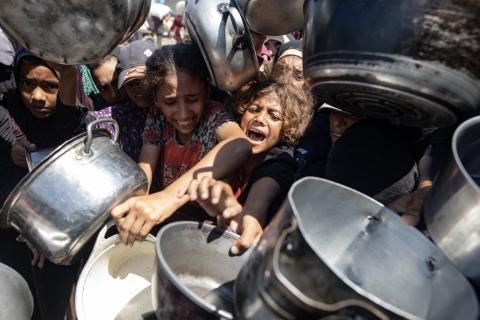
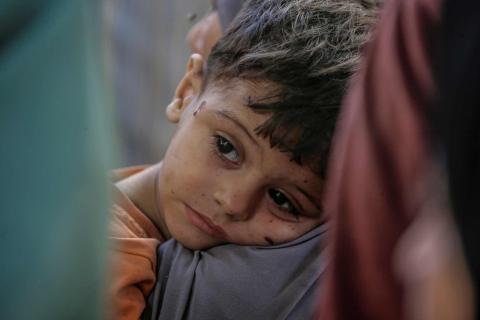
Peaks in child malnutrition in Gaza coincide with periods of aid blockades by Israel
More than 54,600 children under the age of five in Gaza are in need of medical care for acute malnutrition, according to estimates from a study published in The Lancet, which shows that the prevalence of malnutrition decreases during a ceasefire and increases during Israeli blockades of access to food, water, or medicine. For example, after four months of severe aid restrictions—between September 2024 and January 2025—malnutrition increased from 8.8% to 14.3%, with a higher incidence in Rafah and among children between 24 and 59 months of age. The study, conducted by UNRWA, is based on data from more than 219,000 children between the ages of six and 59 months from various locations in the Gaza Strip, collected between January 2024 and August 2025.
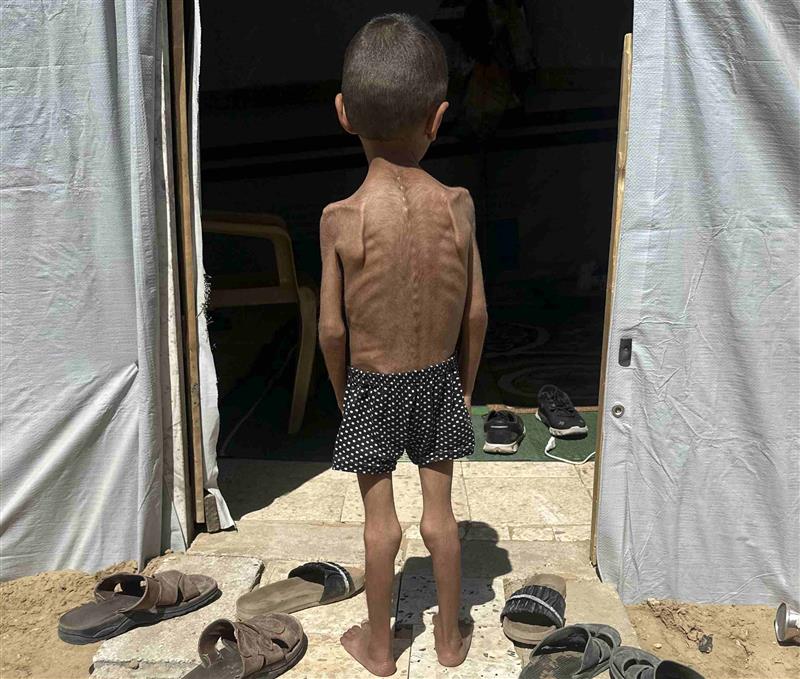
Five-year-old boy Osama al Raqab from Gaza on 21 April 2025. EFE/Ahmad Awad.
251009 desnutrición gaza juan EN
Juan Alguacil
Physician and Professor of Public Health at the University of Huelva
This scientific study is essential and necessary . The fact that a United Nations agency (UNRWA), whose main objective is to provide humanitarian assistance and essential services such as education, health, and protection, conducts relevant research studies that end up being published in the world's most prestigious medical journal is, in itself, a message that should give many public (and private) health administrations pause for thought.
The results of the study are difficult to believe, not from a scientific point of view, but from a moral and human point of view. How has the international community allowed almost 55,000 children under the age of five to reach a state of malnutrition that requires therapeutic nutrition and urgent medical care? And almost 13,000 with severe acute malnutrition. All of this is preventable, as it has been caused by insufficient food supplies. But looking ahead, the outlook remains bleak. The affected children require regular treatment with therapeutic foods that are still unable to enter the Gaza Strip and, in extreme cases, need hospitalization in an area where almost all hospitals have been destroyed. Beyond serving as evidence to support the accusation of genocide, as the consequences will drag on into future generations (if they survive), these data should make us all ashamed.
251009 desnutrición gaza pedro EN
Pedro Ignacio Arcos González
Epidemiologist and Director of the Emergency and Disaster Research Unit at the University of Oviedo
The study is highly relevant because child malnutrition in Gaza, due to Israel's blockade on food aid since October 2023, has caused more than half a million people to suffer from famine and an additional 1.14 million to be at a catastrophic level of nutritional insecurity (CIF Phase 4), making this famine in Gaza the most severe currently after that in South Sudan.
The nutritional surveillance study uses comprehensive reliable sources and was conducted in 16 health centers of the United Nations Relief and Works Agency for Palestine Refugees and 78 medical posts in school shelters and tent camps in the five governorates of Gaza, where more than 219,000 children between six and 59 months of age have been examined using mid-upper arm circumference (MUAC) as a measurement parameter. This system has been widely used in the field since the late 1950s by numerous organizations such as OXFAM, AICH, WFP, FAO, and Doctors Without Borders, and has been extensively validated by numerous studies, making it the system of choice for rapid emergency nutritional assessment in populations between six and 59 months of age. The study shows the extent and increasing intensity of acute malnutrition levels in recent times in Gaza, and its findings are essential for guiding emergency nutritional intervention programs, especially in supplementary, complementary, and therapeutic nutrition.
251009 desnutrición gaza rafa EN
Rafael Castro Delgado
Doctor of Medicine, Full Professor of Emergency Medicine at the University of Oviedo, emergency physician (SAMU-Asturias), researcher at the Asturias Health Research Institute, coordinator of the Pre-hospital Care and Disaster Research Group, and director of the Pre-hospital Care Research Network and advisor to WHO technical working groups related to emergencies and disasters
The study is based on high-quality data and appropriate methodology, given the limitations of the war context. The fact that it is longitudinal, covering more than 1.5 years, and includes multiple data collection points lends strength to the study, allowing us to estimate that the data reflect real trends in malnutrition among the preschool population.
Compared to previous studies on child malnutrition in Gaza, this study provides longitudinal, high-quality information on the effects of war and humanitarian restrictions on the prevalence of acute malnutrition. A notable novelty is the ability to link increases and decreases in malnutrition to specific events (blockades, aid deliveries, ceasefires), showing differences according to age and geographical location, which allows for a more detailed understanding of the dynamics of hunger in conflict contexts.
The limitations are well defined, such as the selection bias of including only children who attended the centers included in the study, but the results are still highly relevant for practice and for analyzing the impact of conflict on child malnutrition. This underscores the need for rapid and sustained humanitarian aid interventions, continuous monitoring and prioritization of vulnerable groups, as well as international coordination to ensure food and health security in contexts of protracted conflict.
Isabel Portillo - boqueo malnutrición Gaza
Isabel Portillo
Screening Coordinator at Osakidetza -Basque Health Service, researcher in the Cancer Biomarkers group at the Biobizkaia Health Research Institute, and secretary of the Board of Directors of the Spanish Epidemiology Society
The data are detailed, and the method used in this case is an observational study with the methodology for measuring child malnutrition standardized by both UNICEF and WHO. Screening has been carried out systematically with vaccination, visits to an UNRWA center for malnutrition and/or other diseases. Despite the difficulties in its development (displacement, UNRWA's capacity for care), it presents a solid methodology with statistical analyses adjusted for period, population, sex, and age.
Malnutrition and its measurement in countries with low socioeconomic status or in armed conflict and displacement has been carried out by NGOs and international agencies such as UNICEF and WHO for decades. In this case, what is new is the relevance of this conflict in child malnutrition due to the conflict, forced displacement, and, fundamentally, the blockade of humanitarian aid, as it decreases when aid is allowed to pass and increases significantly in the last months of the study.
Limitations: working conditions in clinics and forced displacement may skew the prevalence, which is acknowledged by the authors, as well as recruitment bias, which has not been population-based.
The main recommendation is to continue epidemiological surveillance of all cases, achieve a ceasefire, and allow humanitarian aid to pass through, given that child malnutrition, which is higher in older children (priority is given to younger children), is a risk of morbidity and mortality that can be avoided in the short and medium term, in addition to long-term sequelae.
Masako Horino et al.
- Research article
- Peer reviewed
- Observational study
- People