A Spanish study published in Nature reimagines the origin of our cells as a story of microbial alliances
The origin and the process by which eukaryotic cells arose remains one of the great unanswered questions in biology, with Lynn Margulis’s theories regarding the incorporation of a bacterium that would later become the mitochondrion marking a major turning point. Now, Spanish research carried out by IRB Barcelona and the Barcelona Supercomputing Center challenges this view. Without denying the role of mitochondria, it suggests that the process was longer and more complex than previously thought, stretching over hundreds of thousands of years. At least two other different bacteria contributed to the development of eukaryotic cells, and giant viruses appear to have acted as vehicles for genetic transfer. The findings, published in Nature, suggest a much more protracted and gradual process of exchange between microorganisms.
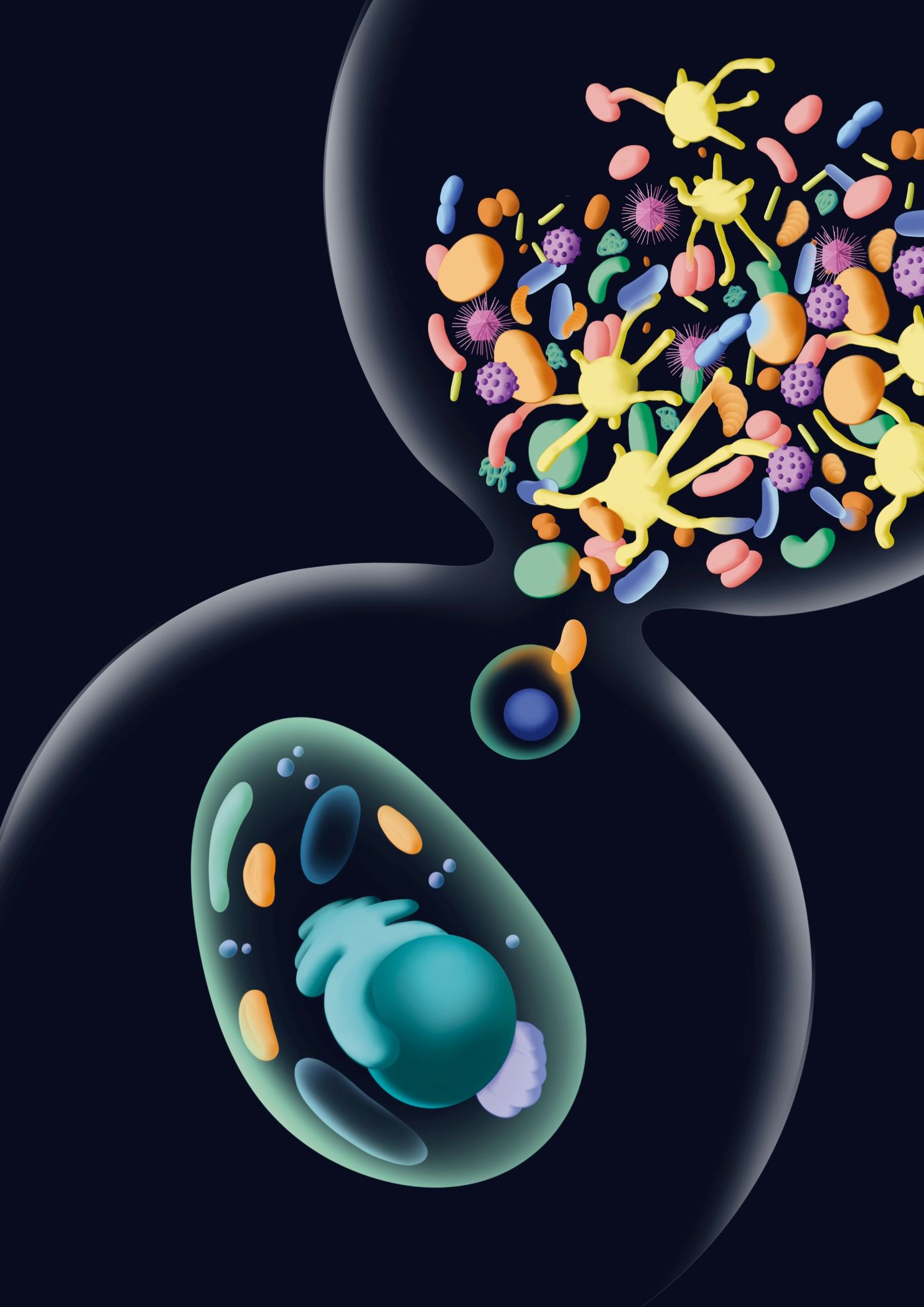
The complex microbial ecosystem that facilitated eukaryogenesis is represented by the metaphor of an hourglass: the past represents the complex microbial ecosystem that gave rise to the ancestral cell that engulfed the mitochondria and, subsequently, to the last common eukaryotic ancestor. / Illustration: Laura Fraile BSC/IRB
Alex de Mendoza - eucariotas Nature EN
Alex de Mendoza
Researcher in evolutionary eukaryotic epigenomics at Queen Mary University of London (United Kingdom)
This is a high-quality study that tackles a hot topic: identifying the sources from which the cell that eventually gave rise to all modern eukaryotes—including animals, fungi and plants—derived its genetic material.
The study’s greatest contribution is the identification of several bacterial sources, beyond the two expected ones—the Asgard archaea and mitochondria. Here, three other major ‘donors’ of genes are proposed, with a contribution similar to that of mitochondria in numerical terms.
Personally, the part I like best is the previously underestimated contribution of giant viruses, which are exceptional in that they have far more genes than other viruses, and with functions more akin to those of cellular life. This implies that the process of eukaryote formation was not a monogamous relationship between two organisms, but rather something more like a ménage à trois involving different organisms at different times (including viral diseases!), creating a picture of the hybrid origin of our ancestral genome. It is interesting because the message of this article conflicts with another paper also in Nature this year which argues the opposite. Obviously, methodological differences will underlie the differing conclusions, as determining what happened over a billion years ago is no easy task, but I personally believe this study is robust.
Alfonso Martínez Arias - eucariota Nature EN
Alfonso Martínez Arias
ICREA research professor senior and researcher in Bioengineering Systems-MELIS at Pompeu Fabra University
The work is sound, original and interesting. The origin of the eukaryotic cell is a mystery that has only been partially solved. The theory of the union between mitochondrial ancestors and archaea, pioneered by Lynn Margulis, opened the door to exploring the problem with unorthodox ideas. Instead of classical gradual transformations, she proposed the existence of phenotypic jumps resulting from fusions between organisms. Over the years, data has accumulated in support of this theory, but the complexity of the eukaryotic cell suggests that this ancestral fusion cannot account for that complexity.
This study presents solid and provocative evidence of several cycles of invasions and parasitic acquisitions that appear to predate the invasion that would give rise to mitochondria. Perhaps these invasions and fusions paved the way for subsequent ones. The putative role of viruses in these early evolutionary processes is particularly interesting, as they are known to have been involved in later ones.
The work is important not only because it adds significant data on the origin of a structure as complex as the eukaryotic cell, but also because it supports the notion of non-gradual, non-classical Darwinian processes in the emergence of complex structures and organisms.
Iñaki Ruiz - eucariota Nature EN
Iñaki Ruiz-Trillo
Principal investigator at the Institute of Evolutionary Biology (CSIC-UPF)
My overall assessment of the article is very positive. It is a technically sound piece of work, based on a large-scale phylogenomic analysis, which represents a significant contribution to the debate on the origin of eukaryotes.
One of its main merits is that it challenges the overly simplified view of eukaryogenesis as a single event resulting from a binary interaction between an archaeon and the future mitochondrion. Furthermore, it stands out for the enormous number of genomes analysed. In this respect, the work fits well with previous proposals suggesting the involvement of multiple microbial partners during the transition to eukaryotes, including possible contributions from groups such as Myxococcales or Planctomycetes.
However, I believe that some of the article’s more ambitious conclusions should be interpreted with caution.
The study detects phylogenetic signals consistent with gene contributions from various bacterial groups, in addition to the alpha-proteobacteria associated with the origin of mitochondria. This reinforces and expands on previous observations. What is novel about the work is the scale of the analyses and the integration of these results into a broader framework that also incorporates a possible role for viruses.
However, these results do not necessarily imply that we can precisely identify which specific ecological partners were involved in eukaryogenesis. The main reason is that horizontal gene transfer is extremely common in bacteria. Added to this are gene loss, gene duplication, the extinction of entire lineages, and the dynamics of pan-genomes. Consequently, the evolutionary history of a gene may differ considerably from the evolutionary history of the cell that carries it.
Therefore, when a eukaryotic gene shows affinity with extant bacterial groups such as Planctomycetota or Myxococcota, we must be cautious. What we are likely observing is a relationship with a gene reservoir associated with those groups, not necessarily direct evidence that these lineages represent the original donors or that there was a specific biological interaction with them. In other words, these genes could, despite their descent from Myxococcales, have been part of the alpha-proteobacterial cell population that gave rise to mitochondria. The combination of fluid chromosomes, open pangenomes and massive horizontal gene transfer can explain much of the observed patterns without the need to invoke specific ecological associations. Put another way, the same signals could emerge from complex networks of gene exchange within microbial communities where genes circulated amongst numerous organisms over long periods of time.
This raises another conceptual question: what exactly do we mean by LECA?
Traditionally, there has been a tendency to imagine LECA [Last Common Eukaryotic Ancestor] as a well-defined individual cell, and I believe the authors view it in this way. However, an alternative view is to consider LECA as a diverse population, possibly with a pan-genomic structure, in which different individuals shared a common core of genes but maintained variable accessory repertoires.
If this view is correct, reconstructing the history of LECA gene by gene may prove problematic. Perhaps the most relevant question is not ‘from which bacterium does this gene originate?’, but rather ‘what gene pool was available in the ancestral populations that gave rise to eukaryotes?’. The focus would thus shift from a specific ancestral cell to a dynamic ancestral population.
From this perspective, the results of the article would not so much be a demonstration of exclusive associations with certain bacterial groups as a confirmation that eukaryogenesis took place within a context of intense genetic connectivity within complex microbial communities.
In summary, I consider the article to be an important contribution because it reinforces an increasingly accepted view of eukaryogenesis as a gradual, population-based and ecologically complex process. However, we must be cautious when interpreting the bacterial groups identified as specific actors in that process. Horizontal gene transfer, the dynamics of pan-genomes and the gene loss accumulated over billions of years limit our ability to accurately reconstruct who interacted with whom at the origins of eukaryotes.
Brett J. Baker - eucariota Nature EN
Brett J. Baker
Associate Professor in the Departments of Integrative Biology and Marine Sciences (Institute of Marine Sciences) at the University of Texas at Austin (United States)
The potential contribution of NCLDV to LECA from Asgards is the most compelling aspect of the study to me. Although, we have not yet seen NCDVs that infect Asgards, or any archaea for that matter, I think there’s a lot to learn there.
In my view one big shortcoming of the study is that the findings seem to be skewed by a lack of representation in the databases being used. For example, they use GTDB from 2022 for the genomic sampling of prokaryotes. This is an issue in that the number of Asgard genomes has more than doubled in the last year alone, see Appler et al Nature 2026, which has a expansion of Asgards from Heimdall, which are closely related to eukaryotes.
Edward M. Marcotte - eucariotas Nature EN
Edward M Marcotte
Full Professor of Biochemistry at the University of Texas at Austin (United States)
The paper is technically rigorous and of good overall quality.
The work agrees with an emerging picture of the single-celled ancestor of all modern complex organisms (dubbed LECA, the last eukaryotic common ancestor) as a swimming microbe with thousands of genes and much of the complexity of modern cells already present by around 1.5 to 1.8 billion years ago. The authors here show that LECA's genes arose from multiple earlier ancestors, a combination of genes from different branches of the microbial tree of life and even from viruses. This work and that from other groups is giving us a picture of the earliest steps in the evolution of modern complex organisms.
[Regarding possible limitations] As with any attempt to look so back into deep time, even if the big picture is correct, I expect the details to continued to be refined, changing on the margins with future analyses. In particular, especially as the worldwide community continues to discover ever more branches of microbial life, we can expect better and better estimates of the ancestry of modern genes.
I work in the same general area, and as it happens, my group is also publishing a paper this past week reporting the proteome & interactome of LECA, the last eukarotic common ancester that the paper you sent also studies. Our paper published 1 week ago in Cell Genomics. It describes determining the protein-coding genes (the proteome) present in LECA and then addresses the question of how these proteins were organized into "molecular machines", capturing the physical organization of the basic biochemical machinery in this critical ancester of all modern complex life. We then apply this information to learn about current day organisms, including discovering new genes affecting e.g. bone density or birth defects, based on these ancestral proteins and interactions.
In contrast, the paper you sent from Toni Gabaldón's group also first defines the genes in LECA but then turns to the question of where these genes came from, i.e. asking about their ancestry--did they arise from bacterial ancestors or archaeal ancestors, and can these origins be more precisely determined? Thus, our 2 papers are quite complementary, with both papers sharing the same first goal (defining the protein-coding genes in LECA) then using those to ask different questions. I'm unable to directly compare our results without having access to all of the data (& some time to study them), but at least the general methods for determining the genes in LECA look fairly comparable (they cite our bioRxiv preprint as a relevant method for their paper), and we both determine similar overall numbers of gene families that our groups date back to LECA, with the Gabaldón group estimating about 7,751 - 12,907 LECA gene families ("orthogroups") and our paper estimating 6,429 - 10,091 LECA orthogroups, both giving ranges that depend on the stringency of the analysis. So, at a high level the first parts of our papers appear to be very concordant.
So, while both groups describe LECA's genes, our work uses that as a launching point to study modern genes and diseases, while the work of Bernabeu, Manzano-Morales, Marcet-Houben, and Gabaldón use that to look back in time even more deeply to study where LECA's genes came from.
Bascompte - Eucariota
Jordi Bascompte
Professor of Ecology in the Department of Evolutionary Biology and Environmental Studies at the University of Zurich (Switzerland)
The origin of the complex cell is undoubtedly one of the most important transitions in the history of life on our planet. Without it, the subsequent evolution of multicellular animals such as plants, insects, amphibians, reptiles, and mammals, including humans, would not have been possible. It is also one of the most abrupt and enigmatic transitions. This work contributes to our understanding of this transition by providing very strong evidence that there were multiple events of incorporation of genetic components from various prokaryotes even before the famous endosymbiotic event between the host cell, an archaeon, and the prokaryote that gave rise to mitochondria.
These new results open the door to a more detailed understanding of this important evolutionary milestone. They confirm that the problem remains relevant today and open the door to future developments that will allow us to understand what kind of innovations in the process of genetic regulation were able to cope with this origin of the eukaryotic cell from multiple organisms. Essentially, how life was able to move from one operating system to a very different one, from a network of genetic regulation to a network of networks.
Peretó - Eucariota
Juli Peretó
Professor of Biochemistry and Molecular Biology at the University of Valencia
Gabaldón's group has published a robust study, using a large amount of data and advanced phylogenomic methods, that allows for the reconstruction of the proteome of the last common ancestor of eukaryotes (LECA), as well as the analysis of the contributions of other lineages to its chimeric genome.
Beyond the contributions of the two widely recognized partners in the origin of the eukaryotic cell (an archaeon ancestral to modern Asgard bacteria and an alpha-proteobacterium, the precursor of mitochondria), there must have been many other horizontal gene transfers from bacteria and viruses along the path of LECA genome construction. The authors identify at least two waves of gene transfer to the archaeal host, prior to the emergence of mitochondria.
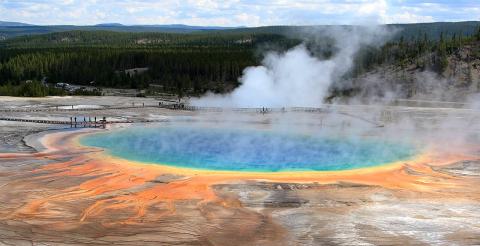
Furthermore, this study offers hypotheses about the ecological context of the microbial mats in which these encounters, resulting in eukaryotic complexity, must have occurred.
The contributions of Gabaldón and his colleagues reinforce the idea that eukaryogenesis followed a genetically hybrid evolutionary mode (much more complex than the binary archaea-bacteria encounter) marked by a prolonged timescale, consistent with their earlier ideas about a late origin of mitochondria.
Arnau - Eucariota
Arnau Sebé Pedrós
ICREA research professor at the Centre for Genomic Regulation (CRG) in Barcelona
What they do
The authors address one of the fundamental problems in biology: understanding the origin of the eukaryotic cell. To do this, they use phylogenetic methods applied to current genome data from eukaryotes, prokaryotes, and giant viruses, with the aim of tracing the origin of different genes associated with typically eukaryotic functions and structures, such as the cytoskeleton, chromatin, and the endomembrane system.
Main message
The most important result is that the study reinforces an idea already suggested in a previous article by Toni Gabaldón: that the mitochondria (the energy factory of the eukaryotic cell) was a relatively late addition. This contradicts a more classical view in which the early acquisition of mitochondria would have been the main driver of the evolution of eukaryotic complexity.
Main Novelty
Beyond dating the origin of mitochondria to symbiosis with an alpha-proteobacterium, the study also suggests that horizontal gene transfer from other bacteria (and from giant viruses) was a key factor in explaining the origin of some eukaryotic genes. In this sense, the work proposes a more complex and gradual view of the origin of the eukaryotic cell, in which different microbial interactions would have contributed to forming the gene repertoire of the first eukaryotes. This is perhaps the most novel message of this article.
Consistency with other recent results
Finally, the results are largely in agreement, regarding the late origin of mitochondria, with two other studies recently published in Nature: Kay et al. 2025 and Tobiasson et al. 2026. The main difference is that here the authors suggest a greater importance of horizontal gene transfer from bacteria and giant viruses.
Overall, I think it's an excellent article, which perfectly exemplifies how massive sequencing and comparative analysis of genomes across the tree of life are transforming our ability to gradually reconstruct the great evolutionary transitions of the past.
Snel - Eucariota
Berend Snel
Professor at the University of Utrecht (Netherlands)
The question of the origin of the eukaryotic cell is a question of great fundamental importance. As has been stated, “basic divergence in cellular structure, which separates the bacteria and blue-green algae from all other cellular organisms, represents the greatest single evolutionary discontinuity to be found in the present-day world”.
This large question has -more or less since the discovery of asgardarchaea in metagenomic sequence data- turned into a very active research field with a lot of debate and disagreements. The contribution from Moises et al surveys an enormous amount of diverse genomes using a novel computational approach to ask the question which genes the common ancestor of eukaryotes posses and where (i.e. from which species) did they come from. This paper clearly shows that in contrast to previous models other bacteria and even perhaps viruses contributed to genes of the eukaryotic ancestor. Previous studies have sometimes considered these other potential gene donations as phylogenetic noise, i.e. the real signal is say the bacterial mitochondrial ancestor and the observed signal of that other bacterial group is just noise. But they very convincingly show these signals of other bacteria. They convincingly show multiple waves of horizontal gene transfer.
In addition, by timing when during eukaryogenesis these genes were donated they come up with a novel scenario on how subsequent syntrophies across a microbial mat might have shaped the genome, metabolism and cell biology of the proto eukaryote. For now, this is “just a hypothesis” but unlike some other hypotheses in the field, this one is based on large scale of analysis of genomic data. Moreover, by positing a hypothesis they guide a path forward on how to turn genomic data into syntrophy scenarios or falsify previously proposed hypotheses.
Conflict of interest: "I have collaborated and published with the lead author of the paper (Toni Gabaldón)."
Ratcliff - Eucariota
William C Ratcliff
Professor and researcher in the Department of Biology at the Georgia Institute of Technology (United States)
This is a really important paper. I know Toni Gabaldón's group well (no COI, met him at a meeting once and that is it), and they have a strong reputation in this area. The analyses look carefully done, and the consistency of the results across multiple datasets is reassuring.
The conventional story of eukaryogenesis tends to center on a single symbiotic event: an Asgard archaeon takes up an alphaproteobacterium, that bacterium becomes the mitochondrion, and everything follows from there. What this work shows is that the reality was far messier and more interesting. The proto-eukaryotic lineage was acquiring genes from multiple unrelated bacterial groups over what was likely a very long period of time, and the mitochondrial endosymbiosis, while important, was just one episode in a much longer history of interactions. We tend to overweight the mitochondrion in how we think about eukaryotic origins, and this paper is a corrective to that.
There's a beautiful logic to it, too. If the Asgard archaea was capable of establishing a symbiotic relationship with one bacterial lineage, internalizing much of its genome, there's no reason to expect that would be the only such interaction. These organisms were embedded in complex microbial communities, and the signatures of those ecological interactions are still legible in eukaryotic genomes billions of years later. It also raises the question of whether some of these genes came from earlier endosymbionts which were lost, perhaps prior to the start of the symbiosis leading to the mitochondrion. We tend to forget about ecology when looking through the long lens of ancient genomic reconstruction, and this work is a nice reminder that it mattered enormously.
The virus finding is particularly exciting. The idea that Nucleocytoviricota were shuttling genetic information between disparate lineages and into the proto-eukaryotic line reinforces a growing recognition that viruses play a critical role in long-term evolutionary dynamics. The boundaries between lineages (perhaps particularly for this lineage!), seem to be far more porous than we generally appreciate.
Taken together, the paper makes a compelling case that eukaryogenesis was not a phase transition crossed via a single event, but a gradual process of genetic assembly from a diverse microbial environment, and it shows us how much we still have to learn about how that process unfolded.
Muro - Eucariota
Enrique M. Muro
Tenured principal investigator at the Institute of Organismic and Molecular Evolution, Johannes Gutenberg University Mainz (Germany)
Bioinformatics continues to illuminate the "black hole of biology" from which the eukaryotic cell emerged in all its complexity. In this work, the authors follow in the footsteps of Margaret Dayhoff, the mother of bioinformatics, who, among other foundational contributions, provided the first solid evidence for an alphaproteobacterial origin of the eukaryotic mitochondria. It was then that Lynn Margulis's endosymbiotic theory gained the relevance it holds today.
The presented article is technically rigorous and sound. The initial hypothesis that more prokaryotes were involved was circulating within the scientific community, but this work adds much more evidence and implicates different bacterial groups, including giant viruses, as mediators in the gene transfer that led to the emergence of the first eukaryote. The most relevant consequence of this discussion is that there may have been a gradual acquisition through successive evolutionary events. My group's line of research, which combines computational biology and physics, suggests that something more happened: a synergy where the whole exceeded the sum of its parts. At that moment, the biological transition occurred, which we believe happened abruptly at the genetic level.
Certainly, work like this demonstrates humanity's biotechnological capabilities. Just 25 years ago, it would have seemed implausible that evidence of this kind could be presented (bear in mind that the origin of the eukaryotic cell occurred billions of years ago—nine zeros in the number of years). Sequencing and bioinformatics are achieving this, and paleogenomics accomplishes something similar, reconstructing the history of populations and even extinct species. It happened so long ago that searching through those sequences feels like searching through coffee grounds. But the authors show us that our biotechnological capacity is still valid to find answers through that route.
Bernabeu et al.
- Research article
- Peer reviewed