Record-breaking heat in June and July fuelled the wildfires in Spain and France, as shown by Copernicus data
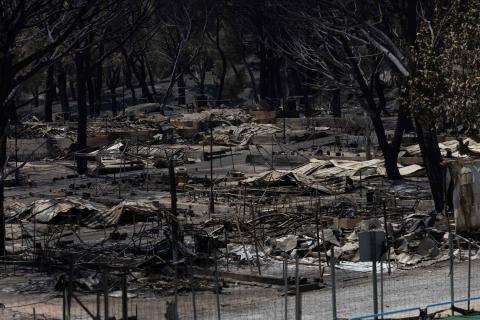
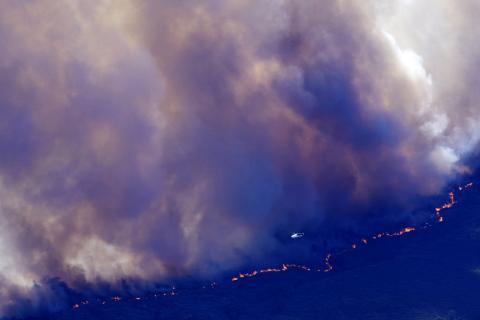
Western Europe experienced its hottest June–July on record, according to data from the Copernicus Climate Change Service (C3S). July saw the third and fourth heatwaves since May, marking an exceptional spell of extreme heat this summer. Across much of the region, the drought observed in May and June also persisted and intensified, with exceptionally low rainfall and soil moisture in France, Spain, parts of Germany and the United Kingdom. These hot and dry conditions in Western Europe led to the spread and intensification of last month’s extreme wildfires in countries such as Spain and France, according to the report.
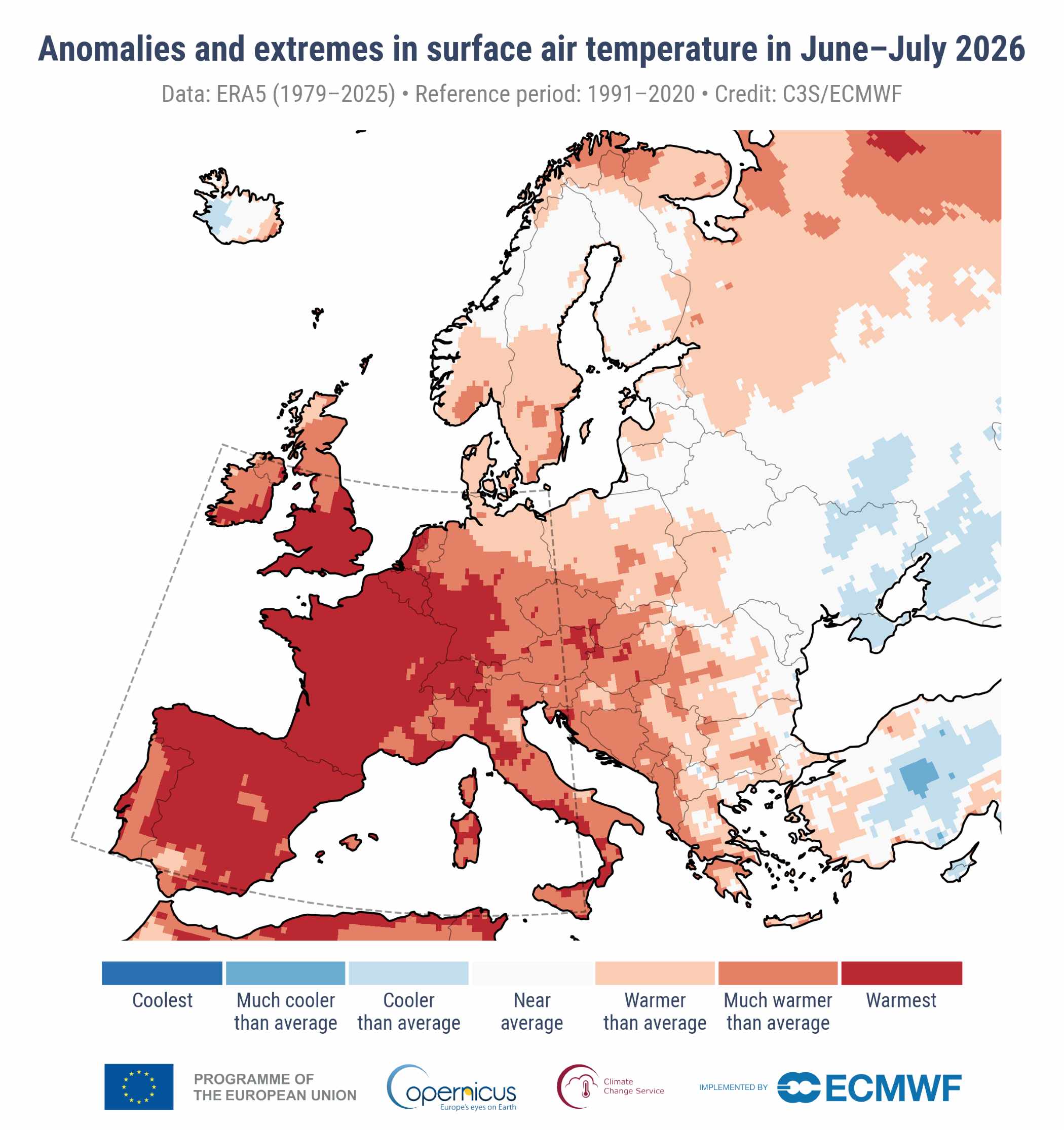
Credit: C3S/ECMWF.
Víctor Resco de Dios - calor record Copernicus
Víctor Resco de Dios
Lecturer of Forestry Engineering and Global Change, University of Lleida and researcher at Agrotecnio
Some climatologists believe that climate change is accelerating, and these figures could support this hypothesis. As heatwaves intensify, the atmosphere becomes drier, leading to the desiccation of vegetation and creating conditions of atmospheric instability that exacerbate the severity of the fires. With regard to wildfire activity, it is worth noting that this is not an unprecedented situation in terms of the area burnt or emissions. The half a million hectares that have burnt in Europe are above the average (197,347 hectares), but below the record for the last 20 years (611,945 hectares), according to data from the Copernicus system.
Furthermore, as far back as 1948, a fire broke out in the Landes region of Gascony (France) that engulfed 20,000 hectares in a matter of minutes, as a result of neglect during the Second World War and the drought of those years. What has changed is the frequency of these extreme events and the fact that, for the first time, a forest fire has threatened one of Europe’s major capitals, namely Madrid. We have also experienced one of the deadliest fires in Spain in recent years, with 14 fatalities in Los Gallardos (Almería). It is striking how severely mega-fires have affected protected areas: between 80 and 100 per cent of the area burnt in the fires near Madrid occurred in protected areas, and the same was true for 72 per cent of the area burnt in Los Gallardos according to EFFIS. In the fires near Bordeaux (France), 76 per cent of the area burnt was within protected areas. We have also seen more than 100 houses go up in flames in a village near Oslo (Norway) due to a forest fire.
Climate change is creating conditions that are increasingly conducive to the development of mega-forest fires. The good news is that through vegetation management and urban planning, we can largely mitigate the problem. Be that as it may, we must be clear about one thing: what seems extreme to us today will, in a few decades’ time, seem particularly mild if we continue to fail to take the necessary adaptive measures.