‘Science’ retracts controversial article on bacteria that used arsenic to grow, published in 2010
The research article A bacterium that can grow by using arsenic instead of phosphorus was one of the big science stories because it discussed the possibility of arsenic-based life. However, it has been the subject of criticism until now. After nearly 15 years of debate and failed attempts by other groups to replicate the findings, Science has now decided to retract the article, despite finding no evidence of fraud or misconduct on the part of the authors, who disagree with the decision.
César Ángel Menor - bacteria arsénico
César Menor Salván
Astrobiologist and lecturer of Biochemistry at the University of Alcalá
The controversy surrounding this article has been going on for more than fifteen years, since it began during the review process prior to publication. When the original article was published, many people expressed doubts and the work, which had a major media impact as it seemed to demonstrate that exotic life using arsenic alongside phosphorus was possible, was subjected to harsh scientific criticism.
The basis of the criticism was that the authors did not really demonstrate that arsenic could replace phosphorus in key molecules such as nucleic acids, and that ‘arsenic-based life’ was not possible. Rather, what they saw were bacteria that were particularly resistant to arsenic-rich environments, which would be toxic to other organisms, but not the incorporation of this element as a substitute for phosphorus. The doubt was reasonable: arsenic is similar to phosphorus in some of its chemical forms, particularly arsenates, which are very similar to phosphates, so, on paper, arsenic could perhaps act as a ‘substitute’ for phosphorus under certain conditions.
In fact, we conducted experiments on how arsenic could accompany or affect prebiotic phosphorylation, i.e., the incorporation of phosphate into organic molecules in conditions prior to the origin of life, and we observed that not only did arsenic not replace or accompany phosphorus, but its presence could inhibit phosphorylation. In other words, arsenic could have been toxic even to the origin of life itself.
We always thought that arsenic-based life was chemically impossible and used this article as an example of bad science; I have even used it in class as a case study for students, in exercises where they had to evaluate why the work reached incorrect conclusions.
And now, finally, the article has been retracted, a decision with which I do not agree. Clearly, there was no misconduct or lack of professionalism on the part of the authors of the original article; it was simply a matter of errors in the interpretation and discussion of the experimental data, which is common in science and is not a bad thing; on the contrary, it shows that the discussion of scientific results works and that science moves forward, leaving behind erroneous ideas or incorrect interpretations.
The truth is that the retraction is welcomed by some (I have colleagues who think it was long overdue) and disputed by others. The retraction is as controversial as the article itself and has hurt NASA quite a bit, where they have fought hard for a long time to avoid it. That is why I think (unlike many of my colleagues) that the retraction is excessive, as it carries a negative reputational burden that is perhaps unfair.
Josefa Antón - bacteria arsénico
Josefa Antón Botella
Professor of Microbiology and Director of the Molecular Microbial Ecology Group at the University of Alicante
I'm not surprised that this has ended up this way, as the original paper has sparked a lot of controversy. I remember when the article that has now been retracted was published, a journalist asked me about it and I commented that they would probably have to repeat the work because it seemed too groundbreaking a discovery to be believed based solely on the experiments of a single group. I understand that the authors disagree with the retraction based on Science's change in rules. It's a shame that such an amazing discovery has ended this way... but that's science, and without reproducibility, there's nothing you can do.
Antonio Ventosa - bacteria arsénico
Antonio Ventosa
Professor emeritus of Microbiology at the University of Seville
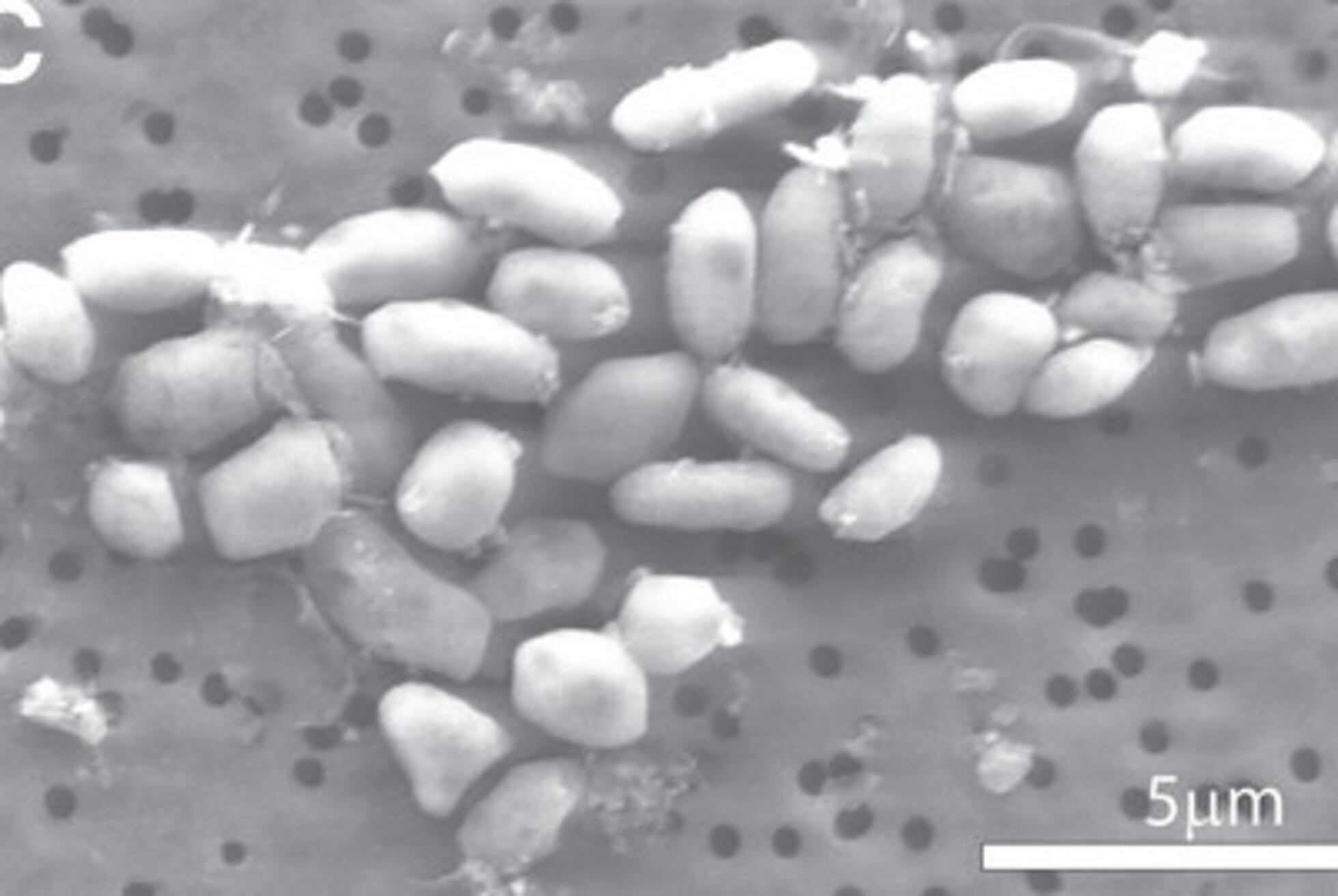
At the end of 2010, Felisa Wolfe-Simon and her team published an article online in the prestigious scientific journal Science, titled “A bacterium that can grow by using arsenic instead of phosphorus.” This bacterium, identified as a member of the Halomonadaceae family, was isolated from an extreme environment, Mono Lake in California, characterized not only by its high salinity and alkaline pH, but also by its high content of arsenic and other metals. The bacterium was able to grow in the presence of high levels of arsenic, which is extremely toxic to cells, a characteristic possessed by some microorganisms and not so surprising, but the authors also claimed that it used arsenic instead of phosphorus, incorporating it into its nucleic acids and other biomolecules.
This publication was highly controversial and the subject of much debate due to its relevance to biology in general and its implications in other fields, such as astrobiology. In fact, it was not until well into 2011 that Science published it in print, along with several comments and critiques from other researchers. This publication sparked a wide-ranging debate among the scientific community, with particularly harsh criticism of the study's results and its hypothesis and conclusions, which were considered to be based on insufficiently verified results.
Despite the enormous metabolic, physiological, and evolutionary diversity and plasticity that we know living beings in the microbial world possess, no similar results have been published by other research groups in the last 15 years to support this hypothesis, nor have they been able to reproduce and confirm the conclusions of these researchers, thus calling this study into question.
Although Science admits that no fraud or misconduct by the authors of the article has been detected at the experimental level, the editors of this renowned scientific journal admit that the experimental data in the article do not support the conclusions that the authors indicated in the original publication and, therefore, after a long debate and deliberation by the editors of Science, they have decided to retract this scientific article. The authors, except for one who has already passed away and another who did not wish to join the rest of his colleagues, claim that this decision represents a change in the criteria of the journal Science, considering the criteria established by its Committee on Publication Ethics (COPE), and have published a note explaining the reasons for their objection to the decision taken in 2025 by Science. Once again, the controversy is served.
Escosura - bacteria arsénico
Andrés de la Escosura Navazo
Researcher at the Institute for Advanced Research in Chemical Sciences (IAdChem) and in the Department of Organic Chemistry at the Autonomous University of Madrid (UAM), director of the Biohybrid Materials and Systems Chemistry research group.
The letter that the journal Science has just published retracting the article by Wolfe-Simon and colleagues is important because it closes a controversy that has lasted 15 years, since the original publication in 2010. To provide a brief historical overview, the article described a type of bacteria (GFAJ-1) living in California's Mono Lake that was capable of growing by incorporating arsenic instead of phosphorus into its DNA. The work raised doubts from the outset, as revealed by the fact that the print version was published (in 2011) accompanied by eight comments from other scientists who were experts in the field, expressing varying degrees of doubt about the discovery.
In response to the doubts and criticism raised in the scientific community, the authors agreed to share the bacterial samples so that other laboratories could investigate them, and approximately two years later, in 2012, the journal Science itself published two articles that clearly refuted the results and conclusions of Wolfe-Simon's team. The first of these, published by Julia Vorholt's team, proved that these bacteria are actually highly resistant to arsenic and can grow in the presence of very low levels of phosphate. High resistance to arsenic is not in fact a unique property of these bacteria; other organisms, including eukaryotes, can live in this extremely arsenic-rich environment. On the other hand, Rosemary Redfield's team demonstrated the inadequate purification of the DNA analyzed in the original article. By avoiding contamination of the bacterial DNA, Redfield and her colleagues found only traces of arsenic in it.
What is surprising about this case is the long time that has elapsed since the first articles refuting Wolfe-Simon's work and her final retraction. The journal cites as the reason for this delay that there were never any indications of scientific misconduct on the part of the authors, and that only when the standards established by the Committee on Publication Ethics (COPE) were expanded to also take into account cases where the data does not support the conclusions of a paper did they proceed to retract the paper. From a scientific point of view, this assumption is quite obvious. It is true that the article has sparked intense scientific debate and stimulated further research on these extremophile microorganisms, as the authors argue in a letter also published by the journal, in which they express their disagreement with the decision. It is worth asking, however, whether all this debate has really been productive, and also about the excessive media coverage of some scientific organizations and certain lines of research. It should not be forgotten that the article by Wolfe-Simon and colleagues was announced with great fanfare at a press conference held by NASA, which now seems clearly excessive.
If results appear to lead to conclusions that radically change the paradigm of a branch of knowledge, to such an extent that it becomes necessary to modify textbooks, then the system must question those conclusions even more rigorously than is usual in science. However, the expectations created and excessive media coverage can hinder such critical analysis. This is probably what happened on this occasion. Both the journal and the authors acknowledge in their letters that things could have been done differently.
- Editorial
- Letter