Scientists

Scientists

For science to make the news in a rigorous and attractive way, good sources are needed. Because access to scientific knowledge is a citizen's right.

¿Qué me ofrece?

Help science make headlines with rigour and context. We’ll ask you for feedback on current events in your field and you can participate in the briefings we’ll organise. Need to prepare for an interview? Use our resources on science communication.

Icono
Cómo trabajamos

We’re on the lookout for controversial information about science and we will contact you for your analysis in your area. Do you want to be part of our sources? Contact us. We will not pass your contact details on to anyone else. You can find out more about how we work here.   

Título qué me ofrece
What we offer you
Título cómo trabajamos
How we work

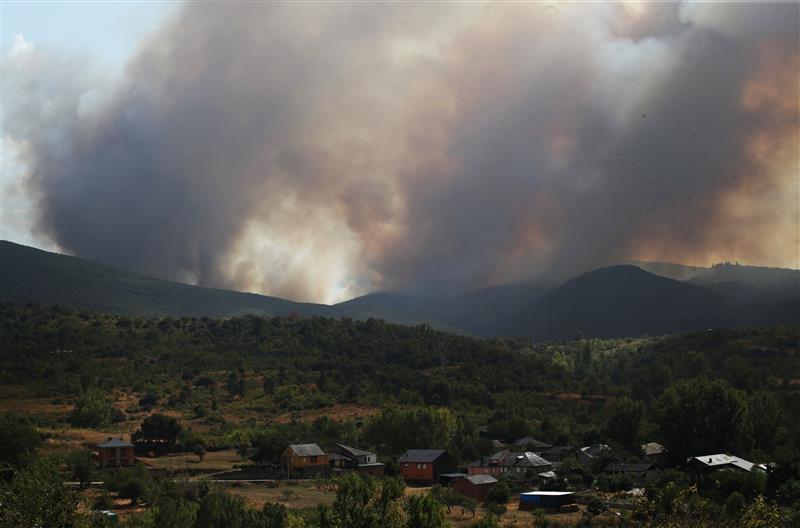
The wildland-urban interface, which is vulnerable to fires, has grown by 35% since 2000

The interface between wildland and urban areas - areas that are at risk of devastating fires - has grown by 35.6 per cent between 2000 and 2020, says a study based on satellite data. The increase has accelerated since 2010 due to growing urbanisation, reaching 1.93 million square kilometres worldwide, adds the study published in Science Advances.

0

The cascading effects of the Valencia floods: how public health faces the challenges of the disaster

Most disasters do not occur in isolation, often triggering new challenges before the community has been able to recover. Floods in Valencia pose risks of infections and intoxications, challenges to mental health and to the supply of drugs and food, which affect the vulnerable population the most and must be addressed in a coordinated manner. In the face of such events, the overall strengthening of a country's healthcare system is critical.

1

In women, drinking more than one and a half glasses of milk a day is associated with an increased risk of heart disease

Women who drink more than 300 millilitres of milk a day (i.e. more than one and a half glasses) have a higher risk of ischaemic heart disease and acute myocardial infarction than those who drink less than this amount, according to a study based on data from more than 100,000 adults in Sweden. The results show that, from 300 millilitres upwards, the risk is higher the more milk is ingested–but only in women, not men. Drinking fermented milk, such as yoghurt and kefir, has no correlation with these risks, according to the paper published in BMC Medicine.

0

CO2 emissions caused by private flights increased by 46 % between 2019 and 2023

Private flights are used by approximately 0.003 % of the world's population, but the CO2 emissions they released in 2023 were equivalent to 1.8 % of those of all commercial aviation. These are the conclusions of a study published in the journal Communications Earth & Environment, which estimates that emissions from private flights increased by 46 % between 2019 and 2023. Almost half of them covered a distance of less than 500 kilometers.

0

Disasters, nature and responsibility: rethinking journalistic language in the aftermath of the Valencia floods

The devastating floods in Valencia have reminded us of the crucial role of language in journalism: in the maelstrom of information following the catastrophe, numerous articles have resorted to the expression “natural disaster”, as if the tragedy were a sort of inescapable sentence dictated by nature. The idea that nature acts with intent or malice in causing suffering is a concept that distorts our understanding of these events.

1

What to expect from the Baku Climate Summit

Next Monday sees the start of COP29 in Baku, the capital of Azerbaijan, a summit marked by Donald Trump's victory as president of the United States on Tuesday. His denial of climate change and his commitment to fossil fuels during his previous term in office will weigh down a meeting from which no major agreements are expected and from which experts are calling for greater ambition. 

0

Astrocytes, like neurons, would also store memories

Until now, memories have been explained by the activity of neurons that respond to learning events and control recall. A study published in Nature changes this theory by showing that non-neuronal cells in the brain called astrocytes - star-shaped cells - also store memories and work in concert with clusters of connected neurons called engrams to regulate the storage and retrieval of memories.

0

What impact will Donald Trump's victory have on climate change?

For the second time, Donald Trump has won yesterday's US presidential election. The Republican leader returns to the White House four years later, after a first term in office with climate policies that ran counter to scientific evidence. Among other controversial measures, he abandoned the Paris Agreement and repeatedly denied the existence of climate change. 

0