Serial mice cloning cannot be sustained indefinitely
Repeated cloning cannot be sustained indefinitely in mammals, according to the findings of a twenty-year study on mice conducted in Japan. Serial cloning of mice led to an accumulation of lethal DNA mutations that affected birth rates from the 27th generation onwards, with the 58th generation being the last, according to the article published in Nature Communications, showing that sexual reproduction is necessary to prevent large-scale genetic mutations.
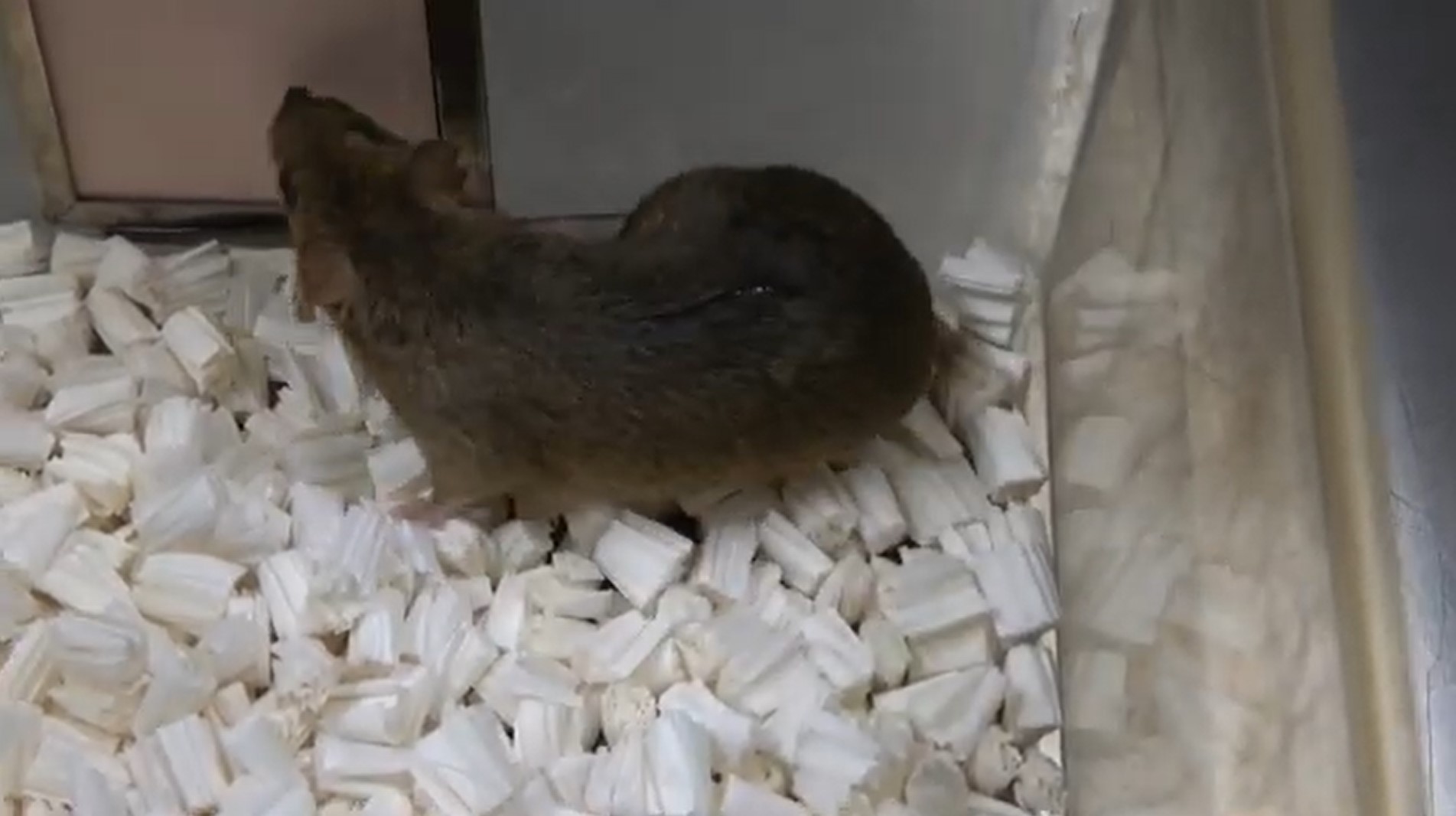
260324_Montoliu_ratones clonados
Lluís Montoliu
Research professor at the National Biotechnology Centre (CNB-CSIC) and at the CIBERER-ISCIII
In February 1997, we were introduced to Dolly the sheep, the first animal to be cloned from adult cells. The experiment had been carried out by Ian Wilmut’s team at the Roslin Institute in Edinburgh. Dolly was born from one of nearly three hundred sheep embryos reconstructed from an enucleated egg cell and a nucleus from a somatic cell taken from the mammary gland of another sheep. Despite the extremely low efficiency of the process, the article reporting this experiment had an enormous impact on biology, as it effectively demonstrated that it was possible to reprogramme the nucleus of a differentiated cell so that it could once again support and complete embryonic development, giving rise to a new living being, which was a (nuclear) clone of the animal that had donated the nucleus of one of its cells to reconstruct the embryo. Dolly was unique in many ways. She led a normal life, like any other sheep, until she had to be put down in 2003 due to a severe viral infection affecting her lungs, likely caused by the overprotective care of her creators, who kept her in a pen with other sheep for longer than necessary, leading to her becoming infected. Conversely, when the cloning technique (technically known as somatic cell nuclear transfer) was applied to other animals (other sheep, goats, cows, pigs…), it was found that in a considerable but variable percentage of attempts, the cloned animals exhibited abnormalities that could prove incompatible with life, suggesting that the cloning process was not only inefficient but also led to the emergence of various anomalies during embryonic development and in the perinatal period. These problems were detected only in cloned mammals, not in other groups of animals, such as amphibians, nor in cloned plants.
Mouse cloning was not achieved until July 1998, when a study by a Japanese researcher and expert embryologist named Teruhiko Wakayama appeared in the journal Nature; at the time, he was working in the laboratory of Ryuzo Yanagimachi (1928–2023) in Hawaii, a leading figure in assisted reproduction techniques. This study incorporated the technique of piezoinjection (a more sophisticated form of microinjection, featuring an almost imperceptible back-and-forth movement that allows the cell membranes to be penetrated cleanly, without breaking them) to introduce cell nuclei into the enucleated embryos, a less aggressive strategy than the traditional direct microinjection that had been used with sheep embryos, which are much more robust than the fragile mouse embryos.
That first cloned mouse, a female, was named ‘Cumulina’ after her origin: the nuclei of the cumulus cells (which surround the egg in the ovarian follicle) used for cloning. Even in that initial work, Wakayama demonstrated his refined piezoinjection technique by successfully cloning a mouse, that is, by using cumulus cell nuclei from the first cloned female mice, he managed to produce further clones (two generations of cloning).
In 2000, Wakayama managed to repeat the cloning cycles a greater number of times and succeeded in producing up to six generations of cloned mice, which were born and behaved with apparent normality.
Now Wakayama is back in the spotlight with a new study, published in Nature Communications, painstakingly developed over more than twenty years of work, in which he breaks all previous records and reports the serial cloning of mice across successive generations, reaching as far as the 58th generation. In other words, starting with one of the first cloned mice derived from cell nuclei from the cumulus, he has successively used new nuclei from these cells of the mice born as clones to obtain the next generation of cloned mice. And so on, until completing 57 cloning cycles, with a total of over 1,200 cloned mice.
This is a heroic experiment, utterly impressive and surely unrepeatable. I doubt there are other researchers who are technically advanced enough and possess the necessary perseverance to replicate this study. Furthermore, I doubt that a similar experiment could be carried out in Europe today, due to the regulatory restrictions imposed by legislation protecting animals used for scientific purposes. And yet, this is a unique basic research experiment that allows us to answer such relevant biological questions as why mammals have chosen to adopt a sexual reproductive system rather than an asexual one.
The novelty of this latest longitudinal study is that Wakayama has been able to analyse the characteristics of the cloned mice born in each generation. Up to generation 26, the percentages of cloned mice born from reconstructed embryos increased progressively, from an initial 7% to 15.5%. From generation 27 onwards, a decline in these percentages was observed, reaching a success rate of 0.6% for the mice born in generation 58. All of these mice died one day after birth, preventing the cloning series from continuing. Surprisingly, the life expectancy of all these mice remained relatively constant, and they all survived for around two years, just like any other non-cloned control mouse, with the exception of those in the final generation. Nor did they detect the accumulation of epigenetic alterations in their genomes, nor significant changes in gene expression or fertility.
However, upon detailed analysis of the genome of these serial cloned mice, they did observe the progressive accumulation of mutations, including the most harmful (deleterious) ones, which likely explains the decline in birth rates from generation 27 through to generation 58, in which no mice survived. On average, the study indicates that 70 point mutations and 1.5 structural variations (deletions, inversions, insertions, duplications, translocations of chromosome fragments) were added in each cloned generation. It appears that up to generation 25 these chromosomal abnormalities could be corrected or eliminated, but after this generation the mutations continued to accumulate irreparably, without being able to be repaired, which roughly coincides with the onset of the decline in birth rates.
The underlying objective of all these experiments, and what has preoccupied Wakayama for years, is to understand why mammals have evolved and opted for a system of sexual reproduction, based on eggs and sperm produced by meiosis in ovaries and testicles, and with genetic variation inherent to each generation, rather than opting for asexual reproduction, as some amphibians, reptiles and fish do, through a procedure simulated in this study via serial cloning.
It is accepted that sexual reproduction increases genetic diversity, which allows individuals born to adapt differently to a changing environment. However, these experiments by Wakayama indicate that serial cloning also accumulates mutations. In other words, genetic diversity is also achieved through asexual reproduction. It is also assumed that asexual reproduction would accumulate mutations incrementally until they become incompatible with life, a fact that Wakayama demonstrates experimentally for the first time by reaching mice of the 58th generation, which no longer survive. In contrast, mice bred for more than 60 generations naturally, through sexual reproduction, do not show this decline in fertility or survival
260324 clonación en serie sagrario EN
Sagrario Ortega
Head of the Mouse Genome Editing Unit
Since Dolly became the first mammal to be cloned from a fully differentiated cell in 1997, cloning has been seen as a tool with great potential in agriculture, livestock farming and species conservation. However, unlike plants or simpler animals, mammalian cloning faces significant limitations that are not merely technical.
Teruhiko Wakayama’s group in Japan, which in 1998 cloned the first mouse from terminally differentiated ovarian cells, has now published a study in Nature Communications summarising nearly 20 years of work. This work demonstrates that serial cloning in mice — that is, successive generations of animals born via nuclear transfer without sexual reproduction — significantly reduces the number of births from approximately 25 generations onwards, and after around 50 generations becomes incompatible with life. The authors note that the accumulation of damage to the genetic material of the transferred nuclei in each generation is the main cause of reproductive decline, although the animals are born apparently normal.
These findings highlight the importance of sexual reproduction in mammals. By mixing genetic material from two individuals, sexual reproduction helps repair harmful mutations and ensures the survival of the species, which explains why evolution has favoured this mechanism for hundreds of millions of years. Cloning is a useful tool in research and for certain biotechnological applications, but it should never cross the line into human use. Nature is always one step ahead of science.
260324 clonación en serie maría del carmen EN
María del Carmen Navarro Maldonado
Senior Research Professor in the Department of Reproductive Biology, Division of Biological and Health Sciences, at the Autonomous Metropolitan University (Mexico)
What is novel is that we have maintained a lineage of more than 25 generations of cloned juvenile female mice over a period of 20 years, thereby detecting certain phenotypic and genetic abnormalities in the cloned individuals after the 26th generation, thus demonstrating that cloning cannot be sustained indefinitely.
All the results provide some evidence of certain phenotypic and genotypic abnormalities in cloned juvenile mice, for example:
- They reveal abnormalities in the spongiotrophoblast layer and areas of the labyrinth zone in placentas.
- A lack of effect of trichostatin (TSA – a histone deacetylase (HDAC) inhibitor) in improving the nuclear reprogramming of the somatic cells used to clone the mice, particularly from generation 26 onwards.
- Epigenetic alterations in certain histones and their acetylation.
- A reduced number of cells in cloned embryos, particularly in the inner cell mass.
- Lethal mutations in the oocytes of cloned mice, both nuclear and cytoplasmic.
- The accumulation of de novo mutations in cloned mice, particularly: single nucleotide variations, structural variants of the genome, the loss of an X chromosome and of heterozygosity in some chromosomes, and the translocation of some somatic chromosomes.
This is due to the absence of chromosomal recombination in clonal reproduction, which prevents natural selection and causes mutations to accumulate progressively across generations of clones.
The document explains that beyond the 25th generation, it is no longer advisable to clone juvenile mice.
I am unaware whether, as a member of the European Union, Spain prohibits cloning or to what extent. However, given that in Mexico it is permitted for research purposes, as well as for its application in animals for productive purposes and species conservation, my recommendation would be to permit it in the same way, but not in humans, until all the obstacles inherent in the reprogramming of the somatic donor cell nucleus have been overcome (for which it is essential to continue researching in other mammalian species). I would therefore recommend promoting its use for research, production and species conservation purposes in mammals until the problem is resolved, before deciding to apply it to humans.
As for recloning, I believe it would be worth evaluating it in species other than mice, to determine how many generations it could be sustained without affecting the genotype or phenotype of the cloned individual. I found the study very interesting.
Sayaka Wakayama et al.
- Research article
- Peer reviewed
- Experimental study
- Animals