A study in mice shows that brain stimulation using contact lenses is effective against depression
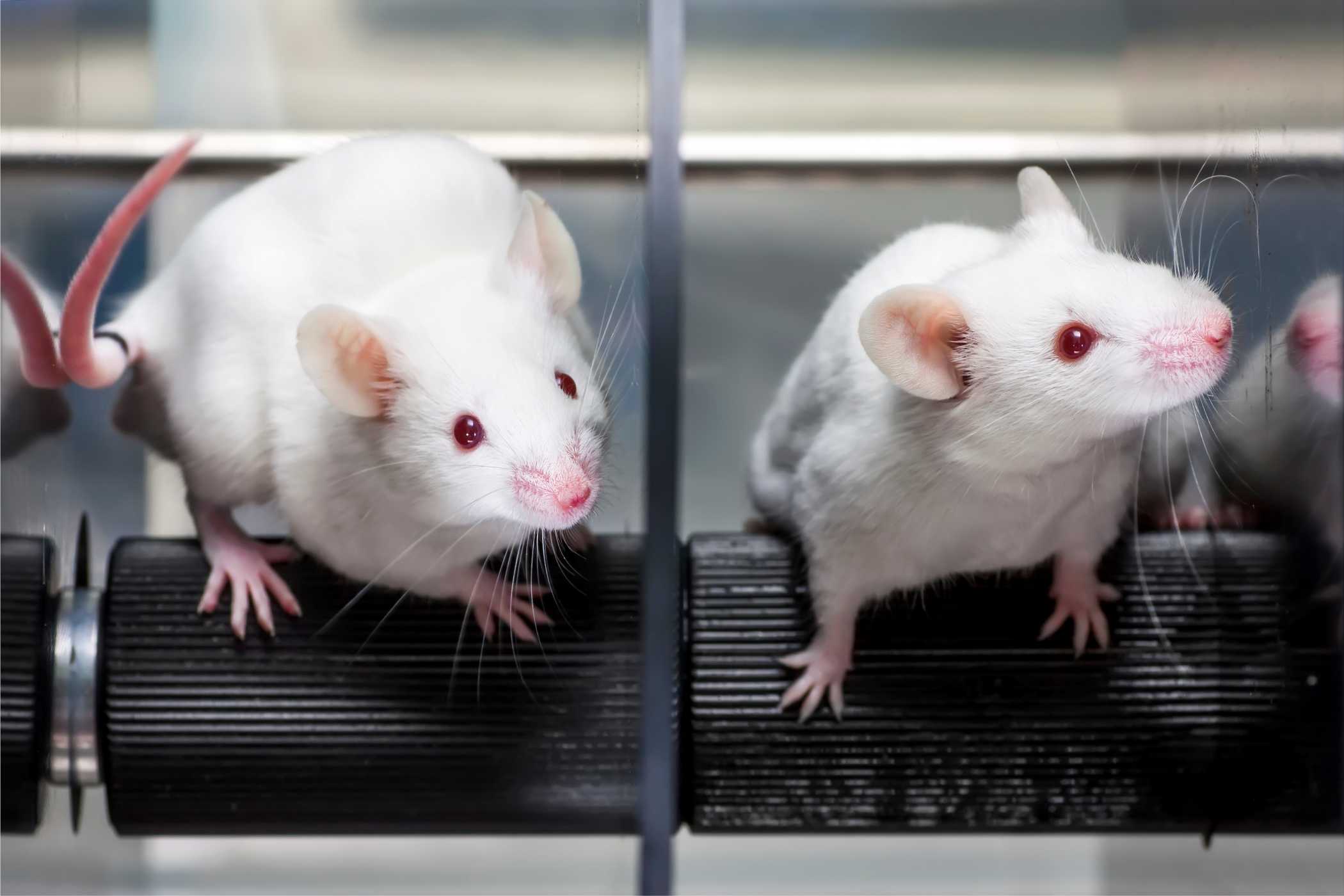
The eyes are connected to the brain via the retina, which makes it a potential pathway for brain stimulation. A study published in Cell Reports Physical Science has used contact lenses equipped with a system for transcorneal electrical stimulation to treat depression in animal models of the disorder. Mice fitted with the device showed behavioural improvements, including increased sociability, as well as physiological changes, such as the restoration of altered neural connections. The results were comparable to those obtained with fluoxetine —known commercially as Prozac— administered for three weeks in one of the mouse groups.
2026 05 14 lentillas depresión Elisa Martín-Arévalo EN
Elisa Martín-Arévalo
Professor in the department of Experimental Psychology and researcher at the Mind, Brain and Behaviour Research Center (CIMCYC) at the University of Granada
This study has been published in the prestigious journal Cell Reports Physical Science, ensuring a peer-review process and appropriate scientific rigour in the evaluation of this new therapy based on retinal electrical stimulation. The research demonstrates that, in animal models (mice), the use of non-invasive electrical stimulation through contact lenses may be as effective as traditional pharmacological treatments for depression.
This effect could be explained by the direct anatomical connection between the retina and the brain circuits involved in mood regulation. This finding is particularly relevant as a potential alternative to pharmacological intervention, as it could allow the modulation of deep brain regions, such as the hippocampus, restoring neural connectivity without the side effects associated with medication.
However, the main limitation of the study lies in the extrapolation of the results from animal models to humans, given that there is no direct biological equivalent and that clinical trials are still required to validate both its efficacy and safety. At present, neuromodulation interventions approved by the Food and Drug Administration (FDA) for treatment-resistant depression, such as transcranial magnetic stimulation (TMS), have required a substantial body of evidence before being considered safe, and even then they still present limitations, particularly regarding the durability of their long-term effects. In this context, although this new therapeutic approach —which would operate in a manner analogous to TMS, but via the ocular pathway— represents a step towards more precise and potentially portable neuromodulation, its application in humans remains a distant prospect and will depend on overcoming several challenges, including adaptation to the human context, treatment personalisation, safety assurance, and the replicability of results.
Naia Sáez - lentillas depresión
Naia Sáez
Psychiatrist, holder of a Ph.D. in Psychiatry from the University of Barcelona, and community coordinator at the Fundació Hospitalàries Barcelona
This study proposes a novel line of research for the treatment of depression. Its theoretical basis centers on the retina-brain axis. To date, this axis has been studied from various perspectives. On the one hand, given that the retina is embryologically related to the brain, various studies have examined how alterations in the central nervous system might be reflected in the retina. It has been suggested that the early detection of retinal changes or abnormalities using non-invasive ophthalmological techniques could help detect brain changes before symptoms appear. In other words, from this perspective, the retina would offer a pathway to the brain that would allow for the early detection of certain dysfunctions. Currently, studies have already been published indicating that in some mental disorders there may be thinning of certain nerve layers of the retina, changes in the optic nerve, microvascular alterations, and changes in ganglion cells. However, the study of the significance and extent of these alterations is in its preliminary phase and is not used in routine clinical practice.
On the other hand, light stimulation of the retina has been used for therapeutic purposes, although, as noted in the present study, the mechanism by which this technique acts on the brain differs from that of transcorneal electrical stimulation. In the case of depression, light therapy has been used for years as a therapeutic tool, albeit with limited efficacy. Its effect is based on the stimulation of photosensitive cells connected to other brain structures involved in depression.
Building on this theoretical foundation, this study uses intermittent transcorneal electrical stimulation (TI-TES) as a non-invasive brain stimulation technique that could modulate the functioning of different neural networks altered in depression. This strategy is conceptually interesting and allows for a deeper understanding of the etiopathogenesis of depression, while also exploring new therapeutic avenues for its treatment.
The results of the present study indicate that mice treated with TI-TES showed improvements in mood and behavior, as well as changes in neural function, improved connectivity, reduced inflammation, and increased BDNF (brain-derived neurotrophic factor). All of this suggests that retinal stimulation could produce neuronal effects similar to those of other treatments already in use in routine clinical practice.
Although this study has a solid theoretical foundation and interesting results, its scope is limited to preclinical analysis and, therefore, cannot be extrapolated to routine clinical practice. Nevertheless, this work represents a novel starting point that suggests avenues to explore for treating this condition. Its significance also lies in proposing a minimally invasive approach to treat a condition that, in some cases, responds only partially to current pharmacological approaches, requiring more complex therapeutic strategies such as electroconvulsive therapy or transcranial magnetic stimulation.
Gerard Anmella - lentillas depresión
Gerard Anmella
Psychiatrist and researcher at the Depressive and Bipolar Disorders Unit of the Hospital Clínic de Barcelona
This study presents a novel and promising system for treating depression based on non-invasive physical stimulation delivered through the eye.
The authors have developed a soft, flexible contact lens that delivers an electrical current through the cornea (transcorneal electrical stimulation via temporal interference, or TI-TES). This current reaches the retina and, from there, travels along the visual pathways to deep brain structures.
The key lies in how the stimulus is generated: the technique is called temporal interference. It works like this: two high-frequency electrical signals, very similar to each other (2,000 Hz and 2,020 Hz), are emitted. Neither of them, on its own, activates the neurons, because they oscillate too quickly. But when they cross in the tissue, they generate an “enveloping wave” at a much lower frequency—in this case, 20 Hz—which is what actually stimulates the neurons. This allows deep structures to be reached without the need for surgery or implanted electrodes.
Before evaluating its efficacy, the researchers verified in mice that the device was safe: it caused no structural, functional, cellular, or inflammatory damage to the cornea or retina, and was biocompatible even with prolonged use.
Next, they verified that the external stimulation effectively activated retinal cells and that this signal reached the cerebral cortex, where they recorded the corresponding evoked potentials.
To induce a depressive state, they administered corticosterone (the primary stress hormone in rodents) to a group of mice. They then compared those receiving stimulation with those who did not, testing different durations and frequencies. A significant, though partial, improvement was observed on four levels:
- Behavior: the treated mice showed a reduction in typical signs of depression—they regained some of their social behavior, reduced anxiety, showed less hopelessness, and regained mobility—without achieving complete normalization.
- Brain connectivity: communication between the hippocampus and prefrontal cortex improved, a pathway typically inhibited in depression.
- Synaptic microstructure: connections between neurons increased, and part of the synapses’ plastic and regenerative capacity was restored.
- Inflammation: inflammatory markers decreased in brain structures, a known abnormality in depression.
To gauge the extent of the effect, they compared it with a group treated with fluoxetine (a common antidepressant): rTMS showed comparable efficacy. In other words, this is not a complete reversal of symptoms, but an improvement on par with that offered by a commonly used antidepressant.
It is worth recalling the context. The tools available to treat depression fall into three categories: psychotherapeutic, pharmacological (antidepressants), and physical treatments. Among the physical treatments, the following stand out:
- Electroconvulsive therapy (formerly known by the stigmatizing name “electroshock”): highly effective, but requires general anesthesia and can cause reversible amnesia associated with the sessions.
- Transcranial magnetic stimulation (TMS), which is gaining ground in our country, with increasing evidence of its usefulness and few adverse effects. It works by applying a pulsed magnetic field from a coil placed on the scalp; this field induces, through electromagnetic induction, small electrical currents in the most superficial layer of the cerebral cortex. Its main limitation is twofold: on the one hand, its reach is limited to relatively superficial brain structures; on the other, it is logistical—currently, patients must visit a specialized center and use specific equipment.
- Deep brain stimulation, which requires implanting an electrode in deep brain structures via neurosurgery and is reserved for cases of treatment-resistant depression.
TI-TES would fall into this latter group, that of neurostimulation treatments, but with two important differences. The first: unlike TMS, which reaches only the superficial cortex, temporal interference would allow for the stimulation of deep brain structures without surgery. The second: it could be administered via a contact lens, in an outpatient setting and following a simple ocular procedure. In the study, adverse effects appear to be nonexistent (something that, logically, must be confirmed in humans).
It is worth emphasizing the most important point: the results are from mice, and the observed improvement is partial, not a cure. The leap to humans is never direct, and in the field of psychiatry we have seen many promising therapies in animal models that have not shown the same effect in people. The group sizes in this study are small (around 10 mice per group), although the observed signal is consistent and of notable magnitude. The authors themselves also note that there are technical challenges yet to be resolved, such as the wireless transmission of the signal to the contact lens.
Even so, this work opens a door that was hard to imagine just a few years ago: stimulating the deep brain using electrical currents delivered through contact lenses. And, if the technology matures, it could be applied to other brain-related disorders and diseases. One might even consider its potential as a cognitive enhancer in the society we live in and are moving toward—with all the ethical questions that would raise.
Conflicts of interest: Gerard Anmella has received fees related to continuing medical education (CME) or consulting fees from Abartis Pharma, Adamed, Abbott, Angelini, Casen Recordati, Esteve, Johnson & Johnson, Lundbeck, Lundbeck/Otsuka, Rovi, and Viatris; however, there are no financial or other relationships relevant to the subject of this article.
Wonjung Park et al.
- Research article
- Peer reviewed
- Animals