12 de Octubre University Hospital
If you are the contact person for this centre and you wish to make any changes, please contact us.
Researcher at GenELA - Genetic Diagnosis and ALS Research Laboratory, 12 de Octubre University Hospital, 12 de Octubre Hospital Health Research Institute, Biomedical Research Network Center for Rare Diseases (CIBERER)
Project Manager of the Innovation in Global Pediatric Infectious Diseases group. i+12 Research Institute. Hospital 12 de Octubre.
Coordinator of the Uroncology Unit at the 12 de Octubre University Hospital in Madrid, and medical doctor at ROC Clinic and HM Hospitals
Cardiologist at the 12 de Octubre Hospital in Madrid and principal investigator of the Multidisciplinary Translational Cardiovascular Research Group of the National Center for Cardiovascular Research (CNIC)
Psychiatrist for children and adolescents at the 12 de Octubre University Hospital and associate professor in the Legal Medicine, Psychiatry and Pathology Department of the Faculty of Medicine of UCM
Head of the Haematology Department at Hospital 12 de Octubre
Neurologist at the Department of Neurology of the Hospital Universitario 12 de Octubre and professor at the Department of Medicine of the Universidad Complutense de Madrid
Researcher of the Innovation in Global Pediatric Infectious Diseases group. i+12 Research Institute. Hospital 12 de Octubre.
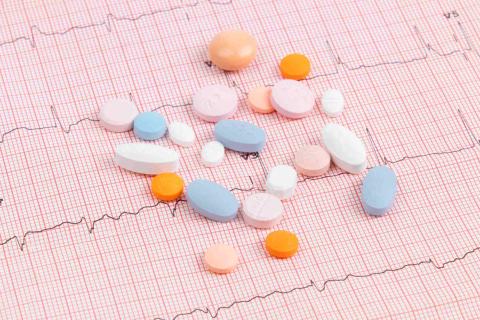
Statins are a group of drugs widely used to lower cholesterol levels and reduce cardiovascular risk. Although they have been associated with various adverse effects, a meta-analysis of 19 clinical trials with more than 120,000 participants in total concludes that only four of the 66 side effects listed in the package inserts are caused by statins themselves and the risks are very low. The authors, who published their findings in The Lancet, recommend revising the current list of side effects on statin labels to better reflect the evidence so that patients and doctors can make clearer and more informed decisions about treatment.

People with colour vision deficiency and bladder cancer have lower survival rates than patients with the same cancer who have not been diagnosed with this visual condition, according to an analysis of medical records between 2004 and 2025 comparing a group of 135 people with both diagnoses and another group of 135 with bladder cancer without visual impairment. In a study published in Nature Health, the authors suggest that this difference could be due to these patients not detecting the presence of blood in their urine, which delays the seeking of medical care and cancer diagnosis.
Researchers in the United States have used stem cells created from patients with a very rare type of ALS, more prevalent in Brazil, to target a key gene in the stress response and reverse the damage suffered by motor neurons in the laboratory. They believe it is "a promising proof-of-concept for future therapeutic strategies" and "could help lay the foundation for genetically informed clinical trials".
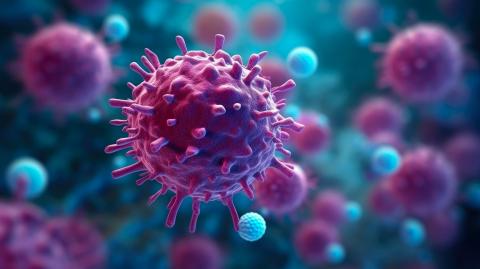
A phase 1 clinical trial has tested the safety and preliminary efficacy of a new form of CAR-T cell therapy - which they call “armed” - in patients with lymphoma. The novelty consists of adding another gene to help increase response. Of the 21 patients treated, all resistant to multiple lines of treatment including approved CAR-T therapies in 20 of them, 81% showed a response and 52% went on to achieve complete remission without significantly greater side effects than with the standard option. The results are published in the journal NEJM.

A team of US researchers has followed some patients treated with CAR-T therapies in a small clinical trial conducted between 2004 and 2009 to treat children with neuroblastoma, a nerve cell tumor that can have a poor prognosis. At least one of them, a woman who was treated with CAR-T as a child, remains in remission 18 years later, the longest duration of such therapy described to date. The results are published in the journal Nature Medicine.

In the context of World AIDS Day, which is celebrated on 1 December, it is essential to reflect on one of the most urgent challenges in the fight against this disease: HIV in the paediatric population. A project led by the Complutense University of Madrid seeks to reduce paediatric mortality by training research leaders in sub-Saharan Africa and applying technology and innovation.

CAR-T cell-based treatments have been successful against some blood tumours, but are much less effective for solid tumours. A phase 1 clinical trial has tested their use in 11 children and young adults with diffuse midline glioma, a tumour of the nervous system that is considered incurable. The results, published in the journal Nature, indicate that the treatment improved functional status in nine of the 11 patients. One of the four who showed a strong response is still healthy four years later.

The regulatory agencies for medicines in the United States and Europe have issued statements informing about a possible risk of developing certain types of tumors following CAR-T cell immunotherapy treatment. What do we know so far? What is the real risk? Does the benefit-risk balance still hold? Has anything changed after these alerts? We answer these questions with expert opinions and the data currently available.

Cancer immunotherapy, and in particular the so-called checkpoint inhibitors, have improved the prognosis of several types of tumours. However, they are not effective in everyone. Two early-stage clinical trials have tested the addition of a type of immunomodulator to this therapy in patients with lung cancer and Hodgkin's lymphoma, with apparent good results. The results are published in the journal Science.
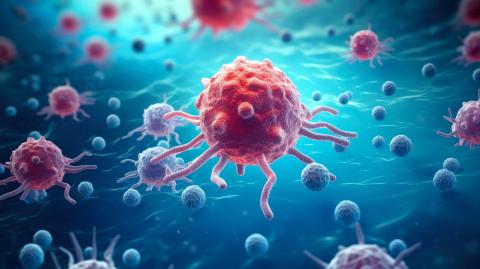
CAR-T cell therapies may, in some cases, produce tumours secondary to treatment. A few months ago, the US Food and Drug Administration (FDA) said it was assessing this risk. Now, a study conducted at Stanford University Medical Center (USA) has tracked 724 patients who received this type of treatment since 2016. Of these, 14 developed another blood tumour, but only one was a T-cell lymphoma that could be a direct consequence of the therapy. Further analysis ruled out this link. The results are published in the journal NEJM.