
Barcelona Supercomputing Center (BSC)
If you are the contact person for this centre and you wish to make any changes, please contact us.
Expert researcher in quantum computing at the Barcelona Supercomputing Center and coordinator of Quantum Spain
ICREA professor and director of Life Sciences at the Barcelona National Supercomputing Centre (BSC).
Researcher at the Department of Earth Sciences at the Barcelona Supercomputing Center
Head of the Data Analysis and Visualization group of the Barcelona Supercomputing Center (BSC-CNS)
ICREA Professor, Director of the Earth Sciences Department at the Barcelona Supercomputing Center
Postdoctoral researcher in the Atmospheric Composition Group, Department of Earth Sciences at the Barcelona Supercomputing Center - National Supercomputing Centre (BSC-CNS)
ICREA Research Professor, Climate Variability and Change Group Co-Leader
Co-leader of the Barcelona Supercomputing Center's Climate Change and Prediction Group
Established Researcher, Climate Variability and Change Group, Barcelona Supercomputing Center
Researcher in the Department of Earth Sciences - Climate Variability and Change at the Barcelona Supercomputing Centre (BSC)
Researcher in the Language Technologies group at the BSC (Barcelona Supercomputing Center)
ICREA research professor and head of the Comparative Genomics group at the Institute for Research in Biomedicine (IRB Barcelona) and the Barcelona Supercomputing Center (BSC-CNS).
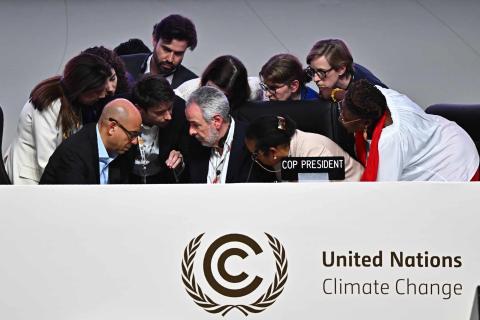
One day after the deadline, COP30 in Belém (Brazil) has finally reached a minimal agreement. The text does not mention a roadmap for abandoning fossil fuels, as requested by more than 80 states, including the European Union. The agreement states that countries agreed to accelerate climate action and triple funding for developing countries facing extreme weather events.
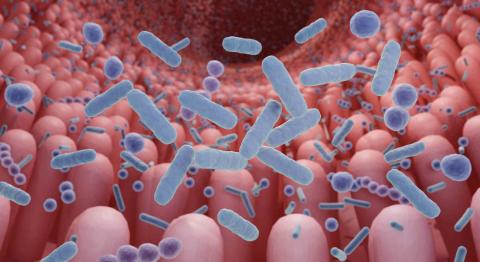
There is no solid scientific evidence that alterations in the gut microbiota cause autism, according to an opinion piece published in the scientific journal Neuron. The research supporting this hypothesis—observational studies and clinical trials in humans, as well as mouse models—has both conceptual and methodological shortcomings, the authors write.
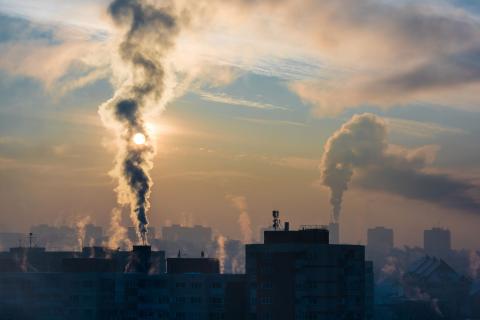
The Global Carbon Budget's projections for 2025 estimate that carbon dioxide (CO2) emissions from fossil fuels will reach a new all-time high of 38.1 billion tons, an increase of 1.1% over 2024. This global report—now in its 20th edition and to be presented at COP30 in Belém, Brazil—estimates that emissions in the United States and the European Union will grow this year, in contrast to the decline in previous years, partly due to weather conditions and higher energy consumption. The study is published in the journal Earth System Science Data in preprint format.
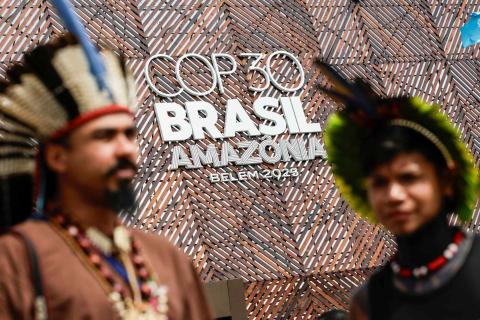
At the current rate of carbon dioxide emissions, the 1.5°C temperature increase limit set in the Paris Agreement will be exceeded in four years. This is one of the predictions of the Global Carbon Budget 2025, the global report on the carbon balance, now in its 20th edition, which will be presented at COP30 in Belém (Brazil). Pep Canadell, one of its authors, analyzed its findings at a briefing organized by SMC Spain.
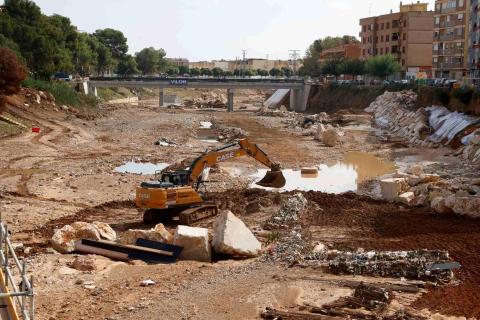
An Italian team has studied the factors that are increasing the frequency of massive floods in the Mediterranean region. According to their analysis, and in a context of climate change, a “dead end” effect is occurring in which mountains close to the sea block moisture and “trap” rain over the region. The article focuses on the floods suffered by the Emilia-Romagna region (Italy), but according to the authors, other Mediterranean areas with a similar geography, including Valencia and Catalonia, “could face the same risks and these events could become more frequent as the climate continues to change.” The results are published in Scientific Reports.
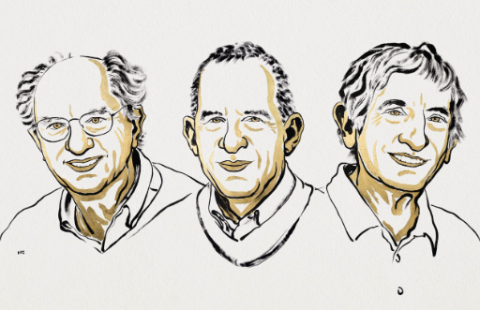
The Royal Swedish Academy of Sciences has awarded the 2025 Nobel Prize in Physics to John Clarke, Michel H. Devoret, and John M. Martinis, who demonstrated both the quantum tunnelling effect and quantised energy levels in a system small enough to fit in the palm of your hand. These advances have served to develop the next generation of quantum technology, including quantum cryptography, quantum computers and quantum sensors.
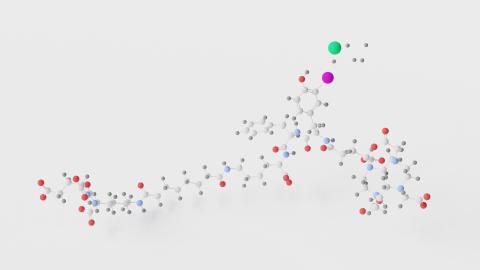
Artificial intelligence (AI)-assisted protein engineering is enabling advances in the design of new molecules, but it also poses biosafety challenges related to the potential production of harmful or dangerous proteins. Some of these threats, whether deliberate or accidental, may not be detected by current control tools. An international team has analyzed the situation and developed software patches to improve their identification, although they acknowledge that it remains incomplete. The authors of the study, published in the journal Science, warn that some of the data and code should not be published in a public repository due to its potential misuse.
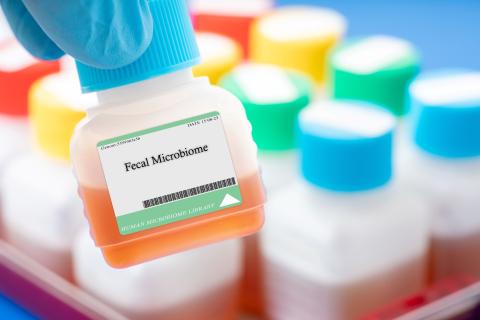
An international study has warned of the potential risks of widespread use of faecal microbiota transplantation without taking into account the region of the intestine where the transferred microbes arrive. The experiment, conducted on mice and human tissue samples, showed that the microbes from the transplant—mostly anaerobic microbes from the colon—colonised the small intestine, persisted there for months and modified that new environment, causing changes in the host's metabolism. According to the authors, whose study is published in the journal Cell, this may have long-lasting and unforeseen consequences, as well as imbalances in the intestinal ecosystem of patients.

A team led by the Centre for Genomic Regulation (CRG) in Barcelona and the Institute for Bioengineering of Catalonia (IBEC) has developed and used a new artificial intelligence (AI) tool called CANYA, together with a large volume of data, to predict when and why protein aggregation takes place. The resource could be used to advance research into neurodegenerative diseases and drug production, according to the joint press release. The results are published in the journal Science Advances.

US President Donald Trump has announced that all goods imported into the United States will be subject to a 10 % tariff. In the case of goods from the European Union, this will increase to 20 %, according to the executive order signed by Trump, which will affect the EU's science and health industry. This tariff will be even higher with other trading partners. The measure will not affect pharmaceuticals for the time being.