Complutense University of Madrid
If you are the contact person for this centre and you wish to make any changes, please contact us.
Lecturer of Palaeontology at the Complutense University of Madrid (UCM) and affiliated researcher at CENIEH
Assistant Professor in the department of Nursing at the Complutense University of Madrid and Director of the CEST Research Group on Emotional Competence, Health, and Well-being in the Workplace
Professor of Prehistory and member of the Institute for Feminist Research at the Complutense University of Madrid
Associate Professor at Camilo José Cela University, researcher at the HM Hospitales Health Research Institute (Madrid) and collaborating researcher in the Department of Personality, Evaluation and Clinical Psychology at the Complutense University of Madrid
Professor of Astrophysics and Director of the Space Astronomy Group at the Complutense University of Madrid
Acute Cardiac Care Unit Coordinator. Cardiovascular Institute. Hospital Clínico San Carlos. Madrid; Associate Professor of Medicine at Complutense University of Madrid; and President of the Association of Ischemic Heart Disease and Acute Cardiac Care of the Spanish Society of Cardiology
Accredited professor, lecturer at the Faculty of Psychology and director of the Research Group on Testimony Psychology at the Complutense University of Madrid
Professor of Biochemistry at the Complutense University of Madrid, president of the Spanish Society of Dietetics and Food Sciences (SEDCA) and treasurer of the Spanish Federation of Nutrition, Food and Dietetics Societies (FESNAD).
Lecturer in the Department of Theoretical Physics and member of the Dynamics of Disordered Systems group at the Complutense University of Madrid
Professor and Director of the Antibiotic Resistance Unit at the Complutense University of Madrid, WHO adviser on antibiotic resistance and One Health
Researcher at the TRANSOC Institute of the Faculty of Political Science and Sociology at the Complutense University of Madrid (UCM)
Professor at the Complutense University of Madrid (UCM) and director of the Arthropod Biology and Biodiversity Research Group.
Professor of Regional Geographical Analysis and Director of the Research Group 'Forest Geography, Policy and Socioeconomics'
Professor in the Department of Mathematical Analysis at the Complutense University of Madrid, Full Member of the Royal Academy of Exact, Physical and Natural Sciences of Spain (RAC) and member of the Spanish Royal Mathematical Society (RSME)
Talent Researcher in the Department of Theoretical Physics of the Complutense University of Madrid
Retired professor of Geophysics and Meterorology in the Department of Earth Physics and Astrophysics at the Complutense University of Madrid.
Full Professor in the Department of Personality, Assessment, and Clinical Psychology at the Complutense University of Madrid and expert in unwanted loneliness
Researcher at the Optics Department of the Complutense University of Madrid
Lecturer in the Department of Immunology, Ophthalmology, and ENT at the School of Medicine of the Complutense University of Madrid
Researcher at the Institute of Geosciences, IGEO (CSIC-UCM)
Full Professor of the Department of Biodiversity, Ecology and Evolution at the Complutense University of Madrid
Professor in the Psychology Division
Lecturer of the Department of Sociology: Methodology and Theory at the Complutense University of Madrid
Psychiatrist for children and adolescents at the 12 de Octubre University Hospital and associate professor in the Legal Medicine, Psychiatry and Pathology Department of the Faculty of Medicine of UCM
Research professor at the Institute of Geosciences, IGEO (CSIC-UCM)
Professor of the Department of Earth Physics and Astrophysics at the Faculty of Physical Sciences of the Complutense University of Madrid
Professor in the Department of Biochemistry and Molecular Biology, Faculty of Medicine
Professor of Zoology at the Complutense University of Madrid (UCM)
Planetary geologist and astrobiologist at the IGEO (CSIC-UCM). Academician of the Royal Academies of Sciences and Doctors of Spain. President of the Planetary Geology Commission of the Geological Society of Spain and of the Spanish Network of Planetology and Astrobiology.
Professor of Biochemistry and Molecular Biology, director of the Biophys-Hub research group and former dean of the Faculty of Biology at the Complutense University of Madrid
Permanent tenured professor in the Prehistory Area of the Department of Prehistory, Ancient History and Archaeology at the Complutense University of Madrid
Scientific researcher in Parkinson's disease at the Complutense University of Madrid
Lecturer in the Department of Optics at the Faculty of Physical Sciences and member of the interdisciplinary research group on Computational Optics (GICO) at the Complutense University of Madrid
Adjunct professor at the International University of La Rioja (UNIR) and member of the Cognitive Psychology Research Group at the Complutense University of Madrid Measurement and Modelling of Processes (PsiMed / MEMOpro)
Professor at the UCM and member of the research group on Evolutionary and Conservation Biology
Professor in the Department of Prehistory, Ancient History and Archaeology at the Complutense University of Madrid
Professor of Atomic, Molecular, and Nuclear Physics in the Department of Structure of Matter, Thermal Physics, and Electronics at the Complutense University of Madrid (UCM) and researcher in Gamma Ray Astrophysics at the Institute of Particle Physics and Cosmos (IPARCOS) at UCM
CSIC geologist and paleontologist at the Institute of Geosciences (CSIC-UCM)
UNA4CAREER postdoctoral researcher in the Condensed Matter Theoretical Physics Group of the Complutense University of Madrid
Neurologist at the Department of Neurology of the Hospital Universitario 12 de Octubre and professor at the Department of Medicine of the Universidad Complutense de Madrid
Head of Cardiology at San Carlos Clinical Hospital and professor at Complutense University of Madrid
Professor of Ergonomics, Faculty of Psychology, Colour Blindness and Design Research Group
PhD in Planetary Geology and researcher at the Lunar and Planetary Laboratory of the University of Arizona-UCM who applied for this ESA selection process
Permanent lecturer, Faculty of Psychology, Daltonism and Design Research Group
Lecturer and principal investigator of the Nano-Immunotherapies group in the Department of Cell Biology at the Complutense University of Madrid
Pre-doctoral researcher in the Department of Earth Physics and Astrophysics, School of Physical Sciences, Complutense University of Madrid
Specialist in immunodeficiencies and Associate Professor of Paediatrics at the Complutense University of Madrid
Professor of Biochemistry and Molecular Biology at the Complutense University of Madrid and vice-president of the Spanish Observatory of Medicinal Cannabis
Professor at the Department of Applied Sociology, Faculty of Education, Complutense University of Madrid
Senior Lecturer (PhD) in the Department of Algebra, Geometry and Topology at the Complutense University of Madrid
Researcher in the department of Physics of the Earth and Astrophysics at the Complutense University of Madrid (UCM).
Professor of Geophysics in the Department of Earth Physics and Astrophysics, School of Physical Sciences, Complutense University of Madrid
Professor of Theoretical Physics
Faculty of Physical Sciences
Complutense University of Madrid
Associate Professor, Department of Public and Maternal and Child Health, Faculty of Medicine, Universidad Complutense de Madrid
professor of Obstetrics and Gynaecology at the Universidad Complutense de Madrid, ex-president of the Spanish Association for the Study of Menopause (AEEM)
Director of Research and Innovation at the Foundation for Climate Research and Associate Professor in the Department of Algebra, Geometry and Topology at the Complutense University of Madrid (UCM).
Economist at the Complutense University of Madrid, President of SESPAS.
Professor of the Department of Optics at the Faculty of Physical Sciences of the Complutense University of Madrid and Director of the Research Group "Laser Physics, Quantum Optics and Nonlinear Optics"
Immunologist
Permanent Lecturer in the Department of Biochemistry and Molecular Biology at the Complutense University of Madrid
Researcher in the Department of Experimental Psychology, Cognitive Processes and Speech Therapy of the Faculty of Psychology
Professor in the Department of Prehistory, Ancient History and Archaeology
Professor of the Department of Microbiology and Parasitology, Faculty of Pharmacy, Complutense University of Madrid
Lecturer in the Department of Immunology, Ophthalmology, and ENT at the School of Medicine of the Complutense University of Madrid

The 16th meeting of the United Nations Conference on Biodiversity (COP16) in Rome has concluded with an agreement to adopt the first global plan for financing nature conservation, after three days of meetings. This meeting meant resuming the negotiations that began last October in Cali (Colombia), where the parties failed to reach an agreement on how to finance the Kunming-Montreal Global Biodiversity Framework reached at COP15, which aims to protect a third of the land and oceans by 2030.

The red colour of Mars corresponds to a type of ferrihydrite that is the dominant form of iron oxide in Martian dust, although previous studies have attributed it to anhydrous haematite. The persistence of ferrihydrite, whose formation requires water, suggests that it formed during a cold, wet period, followed by a transition to the planet's current arid environment. The result, based on ESA and NASA space data and new laboratory experiments, is published in Nature Communications.

Aspartame, a common sweetener used in many sugar-free foods and drinks, affects the cardiovascular health of mice and monkeys, a study claims. Consuming aspartame increases the animals' insulin levels and contributes to the development of atherosclerosis, the buildup of fatty plaque in the arteries, according to the research article published in Cell Metabolism.

A study in 2024 described how the Earth's core had slowed down its rotation speed in recent decades. Now, the same international team of scientists adds that its shape has also changed over the last two decades. Until now, it was thought that both processes could not occur simultaneously. According to the researchers, who publish the results in the journal Nature Geoscience, the finding could improve our knowledge of the core's properties and structure.

Populist movements often pit people against political elites, but they can also target academic elites. Science-related populism pits ‘ordinary people’ and common sense against academic elites and scientific knowledge. A report published by FECYT analyses this phenomenon in Spain for the first time. Science Media Centre España organised an informative meeting with its authors to explain the main results.
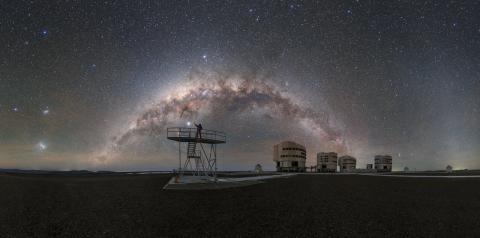
In a press release, the European Southern Observatory (ESO) warns that a huge industrial complex threatens the skies above the Paranal Observatory in Chile's Atacama Desert. According to ESO, on 24 December, AES Andes, a subsidiary of the US electricity company AES Corporation, submitted for environmental impact assessment a project for a huge industrial complex that would be located between 5 and 11 kilometres from the Paranal telescopes. This astronomical observatory, the darkest in the world, has led to important breakthroughs, such as the first image of an exoplanet or the confirmation of the accelerated expansion of the universe.
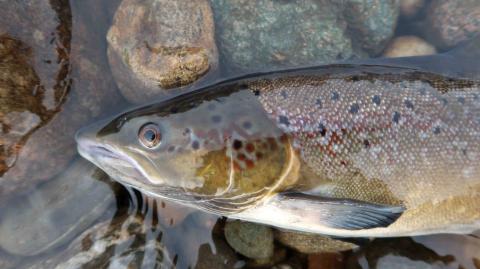
An assessment of the extinction risk of freshwater fauna, covering more than 23,000 species, reveals that around 24% of the species studied are at risk of extinction. The analysis, published in Nature, identifies the main threats from pollution, dams, agriculture and invasive species. Decapods - such as freshwater crabs and shrimps - have the highest percentage of threatened species (30 %), followed by freshwater fish (26 %) and odonates - such as dragonflies (16 %).

UNESCO has proclaimed 2025 as the International Year of Quantum Science and Technology. This initiative aims to ‘raise public awareness of the importance of quantum science and its applications’, as well as to celebrate and recognise 100 years since the initial development of quantum mechanics. But why is this scientific discipline so relevant? We explore with experts the key issues and the impact of quantum science and technology on the development of our society.

In the context of World AIDS Day, which is celebrated on 1 December, it is essential to reflect on one of the most urgent challenges in the fight against this disease: HIV in the paediatric population. A project led by the Complutense University of Madrid seeks to reduce paediatric mortality by training research leaders in sub-Saharan Africa and applying technology and innovation.
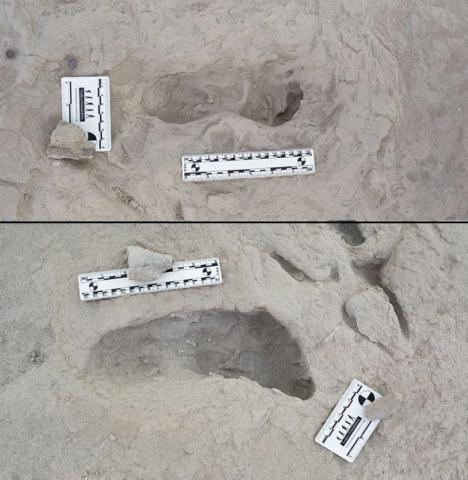
At least two hominin species - Homoerectus and Paranthropus boisei- coexisted in Kenya's Turkana Basin around 1.5 million years ago, a study published in Science confirms. The authors describe the first physical evidence of this coexistence in the form of footprints, found at several sites in the area.