
CSIC Delegation in Catalonia
If you are the contact person for this centre and you wish to make any changes, please contact us.
Researcher at the Department of Physical and Technological Oceanography of the Institute of Marine Sciences (ICM-CSIC).
Director of the Institute of Environmental Assessment and Water Studies (IDAEA-CSIC)
Research Professor at the Institute for Environmental Diagnoses and Water Studies (IDAEA-CSIC) and Director of the Natural Risk Assessment and Management Service (NRAMS)
Research Professor at the CSIC, Department of Environmental Chemistry at the Institute of Environmental Diagnosis and Water Studies (IDAEA-CSIC)
Researcher at Geosciences Barcelona (GEO3BCN - CSIC)
Senior Scientist at the Institute of Environmental Diagnosis and Water Studies at CSIC (IDAEA-CSIC) and visiting professor at SLU Swedish University of Agricultural Science (Sweden)
Industrial pollution researcher, member of the Environmental Geochemistry and Atmospheric Research group (EGAR)
CSIC Research Professor at the Instituto de Diagnóstico Ambiental y Estudios del Agua (IDAEA), CSIC.

In the ephemeral pools along the coasts of the Caribbean island of Curaçao lives Choanoeca flexa, a tiny unicellular aquatic organism belonging to the choanoflagellates, important for being close relatives of animals. As the pools evaporate and refill, C. flexa can switch between unicellular and multicellular forms in three different ways: by division, by aggregation, or by combining both, mechanisms that were previously thought to be mutually exclusive. The discovery, published today in Nature, may challenge current understanding of the origins of multicellular life.
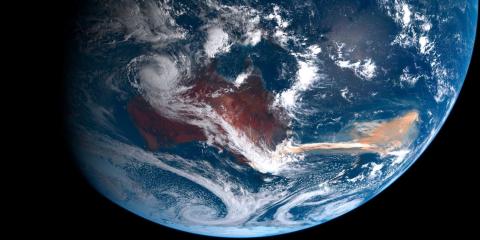
A study published in PNAS reveals the effects of large-scale wildfire smoke and aerosols from major volcanic eruptions on global atmospheric temperatures. Using satellite observations, the team estimated the temperature disturbances associated with the 1991 eruption of Mount Pinatubo in the Philippines, the 2019–2020 Australian wildfires, and the 2022 eruption of the submarine Hunga Tonga volcano in Tonga. All three events had measurable impacts on global atmospheric temperatures. Sulfate particles from Pinatubo caused cooling in the troposphere and warming in the stratosphere, confirming previous measurements. Aerosols from the Australian wildfires —though only about 5 % of the aerosol mass emitted by Pinatubo— also produced both effects, while water vapor from Hunga Tonga led to tropospheric cooling.
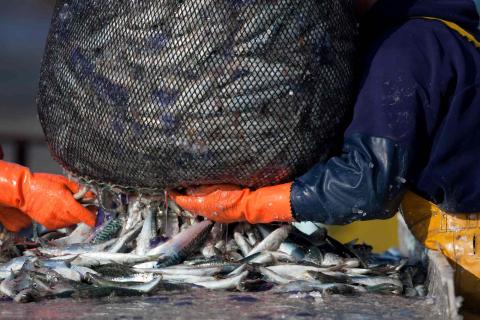
Science journal has published a global map showing exposure to perfluoroalkyl and polyfluoroalkyl substances (PFAS) through the consumption of fish products. PFAS are substances that are difficult to break down, meaning they can accumulate in the body, and some are linked to health problems. The authors collected data over 20 years from PFAS measurements in the marine environment and fisheries, and mapped the concentrations of these compounds in more than 200 species of marine fish. The study shows that international fish trade redistributes the risk of PFAS exposure from highly polluted regions to less exposed areas, with European trade playing a key role in increasing the risk of exposure to these substances.
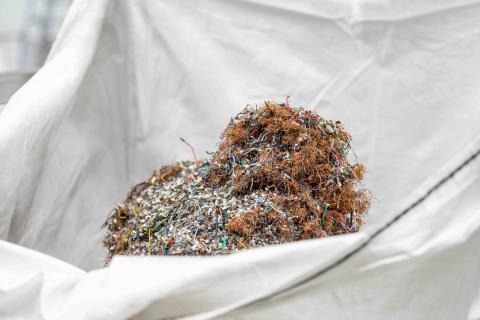
In 2050, the total volume of waste electrical and electronic equipment in Europe will reach between 12.5 and 19 million tonnes, compared to 10.7 million tonnes – around 20 kilograms per person – in 2022, according to the report 2050 Critical Raw Materials Outlook for Waste Electrical and Electronic Equipment. Of this volume, only 54% was collected and treated correctly in 2022. Furthermore, of the one million metric tonnes of critical raw materials such as copper, aluminium and silicon present in this waste, less than half was successfully recovered, according to the report's estimates.

After 10 days of meetings and beyond the deadline, representatives from more than 180 countries gathered at the UN headquarters in Geneva (Switzerland) have failed to agree on a global treaty against plastic pollution, the first legally binding one. This negotiation was, in principle, the last chance to reach an agreement, after the last meeting in Busan (South Korea) also ended without a treaty in December, two and a half years after negotiations began.

Ahead of the anticipated conclusion of a United Nations global treaty on plastics, a group of international experts calls for greater attention to health effects when addressing plastic pollution. The work, published in The Lancet, reviews current evidence on how plastics—including microplastics and plastic chemicals—affect health, and announces the launch of a new project to monitor these effects.
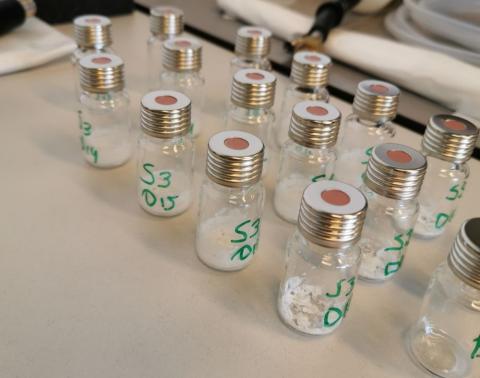
Most research on the presence of plastics in the seas has focused on macro- and microplastics. Now, an international team has analyzed the presence of nanoplastics - smaller in size - in different locations and depths of the North Atlantic Ocean, including areas near the European coasts. The results suggest that these may account for the majority fraction of the total mass of plastic in the oceans and that the total mass of marine plastic may be greater than previously thought. The work is published in the journal Nature.
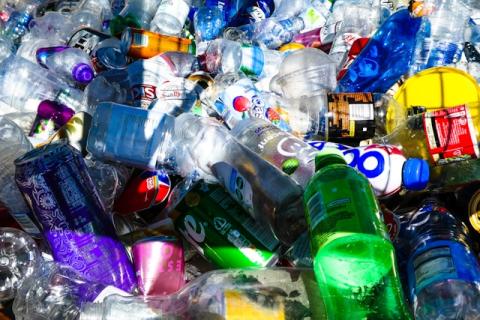
Only 9.5% of plastics produced globally in 2022 were generated from recycled materials. The findings, published in Communications Earth & Environment, are part of a comprehensive analysis of the global plastics sector, which also reveals a large increase in the amount of plastic being disposed of by incineration and substantial regional differences in its consumption.

An article reviews evidence on the accumulation of microplastics in human brain tissue recently published in Nature Medicine. The authors highlight practical measures to reduce exposure, noting that switching from bottled water to filtered tap water could reduce microplastic intake from 90,000 to 4,000 particles per year. The paper is a commentary in Brain Medicine.
A multidisciplinary team of US researchers has analyzed the presence of micro- and nanoplastics in 52 human cadavers between 2016 and 2024. The concentrations of these particles were higher in the brain than in the liver or kidneys. They were also higher in the brains of people with dementia, although the researchers acknowledge that causality cannot be established. The results are published in the journal Nature Medicine.