International fish trade increases risk of PFAS exposure worldwide
Science journal has published a global map showing exposure to perfluoroalkyl and polyfluoroalkyl substances (PFAS) through the consumption of fish products. PFAS are substances that are difficult to break down, meaning they can accumulate in the body, and some are linked to health problems. The authors collected data over 20 years from PFAS measurements in the marine environment and fisheries, and mapped the concentrations of these compounds in more than 200 species of marine fish. The study shows that international fish trade redistributes the risk of PFAS exposure from highly polluted regions to less exposed areas, with European trade playing a key role in increasing the risk of exposure to these substances.
2025 12 18 Pablo Gago PFAS pescado EN
Pablo Gago
Senior Scientist at the Institute of Environmental Diagnosis and Water Studies at CSIC (IDAEA-CSIC) and visiting professor at SLU Swedish University of Agricultural Science (Sweden)
The study is of high scientific quality and stands out for its ambition and methodological rigour. It integrates global data on PFAS contamination in the marine environment, models of bioaccumulation in food webs, fish consumption and international trade, covering more than 99% of global marine fish production. This approach allows us to go beyond local or purely analytical studies and provides an unprecedented systemic view of how human exposure to PFAS depends not only on local environmental pollution, but also on the dynamics of global food trade. The results fit well with previous evidence identifying fish as a significant source of dietary exposure to PFAS, but they add a key element: the international redistribution of risk, with Europe as a central player in exposure flows, even to countries with relatively low environmental levels.
From a public health perspective, the study reinforces concerns about C8-PFAS (PFOA and PFOS), which are highly persistent, bioaccumulative compounds associated in numerous studies with endocrine, immunological, metabolic and developmental disorders, as well as an increased risk of certain cancers. Although the study is based on risk assessment (hazard index) rather than direct clinical effects, its results have clear regulatory implications: they show that restrictions on PFOS have been effective, but also that unregulated long-chain PFAS continue to pose a high risk, especially through the food trade.
One limitation to bear in mind is that the analysis focuses solely on marine fish and does not include other dietary or environmental sources, so total exposure may be underestimated. Even so, the study provides robust evidence to support stricter food safety policies, control criteria in international trade and broader regulation of PFAS as a group, rather than addressing compounds individually.
Conflicts of interest: "Two of the authors, Daniel Schlenk and Shu Tao, are editors of Environmental Science & Technology. I am the executive editor of that journal".
Julián Campo - PFAS pesca EN
Julián Campo
Member of the Food Security and Environment Research Group of the Desertification Research Centre (Valencia)
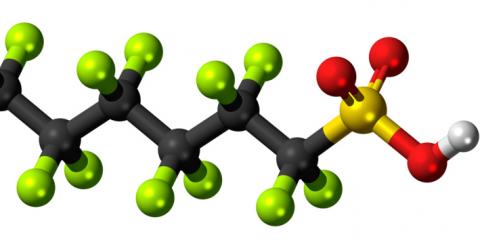
Per- and polyfluoroalkyl substances (PFAS) are a group of more than 4,700 synthetic chemical compounds. Due to their properties (they are non-flammable, thermodynamically stable, and highly resistant), they are widely used in a range of industrial and commercial applications, from non-stick cookware to foams used to control and extinguish fires. Because of these characteristics, PFAS are considered extremely persistent in the environment and are also known as “forever chemicals.” These compounds are highly toxic and pose a clear potential danger to human health as they can act as endocrine disruptors, cause liver damage and thyroid disease, lead to obesity, and be linked to fertility problems and cancer.
Once in the environment, PFAS have the potential to bioaccumulate and biomagnify, meaning that their concentration increases progressively as they move up the food chain. In the marine environment, PFAS tend to accumulate in aquatic food webs, from where they can pass to humans through the consumption of fish and other marine species. However, the significance of these products for human exposure remains unclear. To attempt to answer this question, a group of researchers led by Dr. Qiu of the Southern University of Science and Technology in Shenzhen, China, has published an article in the journal Science in which they comprehensively assess the risks of human exposure to PFAS through the consumption of marine fish. The authors conclude that such exposure is generally low and has generally decreased with the phasing out of PFAS production, but they also warn that the international seafood market is responsible for redistributing these exposure risks globally.
Dr. Qiu and his colleagues conducted a combined analysis of fishery data and PFAS levels, mainly PFOA and PFOS, in 212 marine fish species by combining marine food web models, global fishery data, and PFAS measurements in seawater from 3,126 sites over 20 years. The model, which also includes the calculation of risk indices, was validated by measuring PFAS concentrations in 150 samples of marine fish from 87 species collected in 14 countries. According to their results, fish from Asia (Saudi Arabia and Thailand) and Oceania (eastern coast of Australia) had the highest PFAS concentrations compared to the global average. On the other hand, fish from Africa and North America had the lowest concentrations. The authors also demonstrated that marine fish at higher trophic levels contained more PFAS than those at lower levels and that freshwater fish have higher PFAS concentrations than marine fish (up to an order of magnitude). They also point out that international fish trade redistributes the risk of PFAS exposure from highly contaminated areas to regions with low contamination. In Europe, for example, although fish do not have the highest levels, European countries can be considered key points for the distribution of PFAS through the trade in seafood products.
The study concludes that, following the inclusion of several PFAS compounds in the Stockholm Convention in 2009 and 2019, a significant decrease in the global average risk of exposure was observed, demonstrating the need for greater international cooperation and stricter regulatory measures to reduce human exposure to “forever chemicals” through the marine food system.
Begoña Jiménez - PFAS pesca EN
Begoña Jiménez
CSIC research scientist in the Department of Instrumental Analysis and Environmental Chemistry at the Institute of General Organic Chemistry (IQOG-CSIC)
In this study, Qiu and colleagues investigate the risk of exposure to toxic and persistent chemicals through the consumption of marine fish, focusing their research on per- and polyfluoroalkyl substances (PFAS). PFAS, known as “forever chemicals” due to their persistence in the environment, are a class of several thousand chemicals used in numerous industrial applications and consumer products for their water-, oil-, and stain-repellent properties, among others, and their high physicochemical stability. Through food intake, PFAS accumulate in the human body and pose health risks.
The expansion of global food trade, despite its advantages, can also be a vector for increased pollution in certain regions. The study provides a global map of human exposure to PFAS from marine fish and quantifies the risks to human health from global fish trade. The assessment focused on two well-known PFAS: perfluorooctane sulfonate (PFOS) and perfluorooctanoic acid (PFOA), regulated by the Stockholm Convention in 2009 and 2019, respectively, and found that the PFOS risk index decreased by 72% after its 2009 regulation, while unregulated long-chain PFAS continue to pose high risks.
The results reveal the positive effect of global regulations such as the Stockholm Convention in reducing global exposure to already regulated PFAS and highlight the comparatively higher exposure risks of PFAS that are not yet regulated. This robust work, based on a large global dataset, highlights the urgent need to strengthen global chemical regulation policies in order to reduce human exposure to PFAS, the forever chemicals, on a global scale.
Wenhui Qiu et al.
- Research article
- Peer reviewed
- Observational study