University of Burgos
If you are the contact person for this centre and you wish to make any changes, please contact us.
Researcher in the Palaeomagnetism Group at the University of Burgos
Professor of Palaeontology and Director of the Human Evolution Laboratory at the University of Burgos
Professor of Commercial Law at the University of Burgos
Professor in the Department of Health Sciences
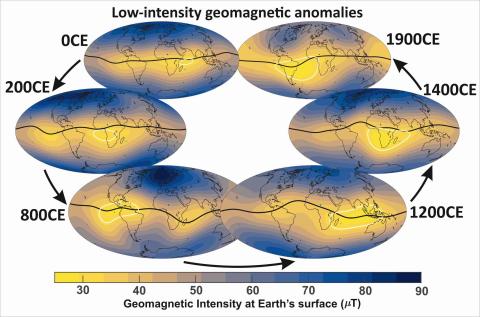
The geomagnetic field protects Earth from harmful cosmic radiation. Over the past two centuries, this field has weakened, coinciding with the growth of the South Atlantic Anomaly—a region of reduced magnetic intensity spanning South America and the South Atlantic Ocean—which poses risks to satellites and space missions. Research led by a Spanish team shows that this anomaly is a recurring event on timescales ranging from centuries to millennia, according to a reconstruction of the geomagnetic field over the past 2,000 years. The study, published in PNAS, shows that the current anomaly emerged after the year 1100 in the Indian Ocean and crossed Africa before reaching South America.

A study claims that 98% of the environmental claims made by meat and dairy companies constitute greenwashing—statements and promises of environmental action that are not backed by scientific evidence. The analysis is based on 1,233 claims published between 2021 and 2024 in sustainability reports and on websites (for example, “producing carbon-neutral dairy products by 2050 at the latest”) by 33 major companies, including Danone and Nestlé. “The meat and dairy industry may be misleading consumers and investors about whether and to what extent they are addressing environmental impacts, including climate change,” the authors write, whose study is published in PLoS Climate..
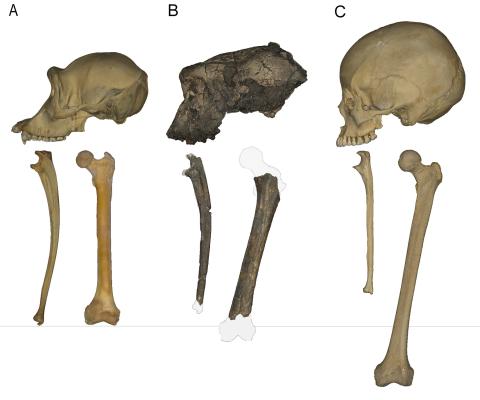
A US research team presents new evidence in Science Advances that Sahelanthropus tchadensis was a biped that evolved from an ape ancestor. Based on the study of two partial ulnas and a femur, they conclude that S. tchadensis—the oldest known hominid, which lived around 7 million years ago—had bones similar in size and shape to those of chimpanzees, but with a relative proportion more similar to that of hominids.

Around 840 million women worldwide — nearly one in three — have been victims of physical, psychological or sexual violence by their partner or have suffered sexual violence outside of their relationship, a figure that has barely changed since 2000. This is one of the conclusions of a report led by the World Health Organisation (WHO) that analyses data from 168 countries between 2000 and 2023. For the first time, the study includes estimates of sexual violence outside of intimate relationships: 263 million women have suffered this type of assault since the age of 15, a figure that, according to experts, is well below the actual number.
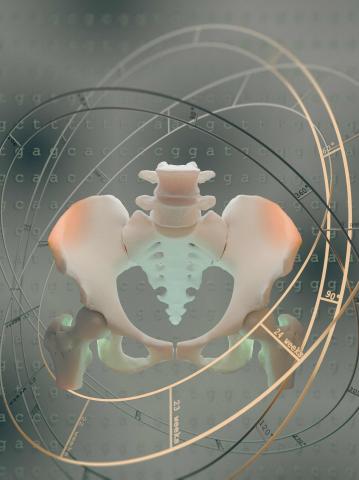
The upper part of the human pelvis, the ilium, underwent two major structural changes during evolution that enabled humans to walk on two legs. One was the formation of cartilage and the second was the process of bone formation. New research identifies differences in the way bone cells are deposited on cartilage in the human ilium, compared to other primates and human long bones. The study, published in Nature, lays the genetic and evolutionary foundations for bipedalism, according to the authors.