University of Lleida
If you are the contact person for this centre and you wish to make any changes, please contact us.
Professor of Sociology at the University of Lleida and Principal Investigator of GESEC (Consolidated Research Group on Society, Health, Education and the Culture of Care).
Director of the Energy and Artificial Intelligence Research Group at the University of Lleida
Lecturer of Forestry Engineering and Global Change, University of Lleida and researcher at Agrotecnio
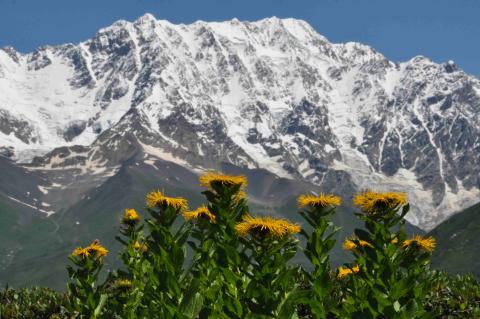
The peaks of European mountains such as the Pyrenees or the Sierra Nevada may be gaining plant species as the climate warms, but this apparent increase in biodiversity is masking a growing wave of local extinctions. These are the main conclusions of a study published in the journal Science, which includes Spanish participation and analyses nearly a thousand vegetation plots spread across 62 European mountain peaks. The reason is that higher-altitude mountain regions have gained plant species in recent decades as plants from lower altitudes have expanded up the slopes, but this may mask the decline or disappearance of specialised, high-altitude resident species.
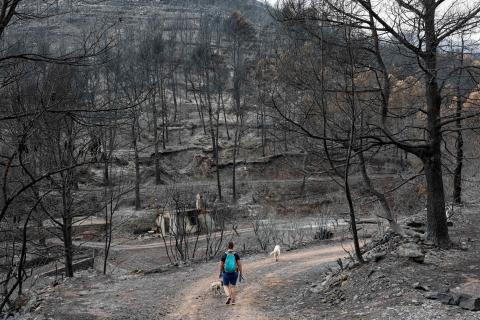
So far this year, up to 20 August, 262,000 hectares have been burnt in Spain, compared with the average of 105,600 hectares burnt between 2015 and 2024. Large-scale wildfires, exacerbated by climate change, are increasing both in frequency and in the area affected. But what happens in the forests after a fire? Can the woodland regenerate on its own? What criteria should be followed? We analyse, with the help of experts, how these ecosystems recover and what measures are taken to protect and restore them.
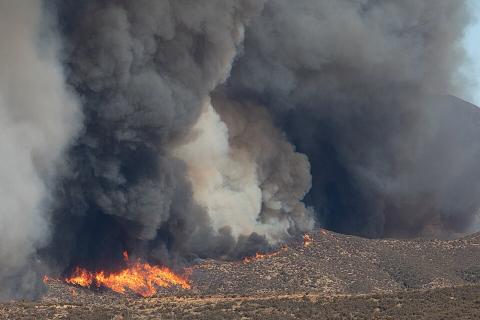
A team of researchers in Germany has analyzed various factors to estimate the potential annual forest area burned in Europe by the end of the century. According to their findings, in a low-emissions scenario, the area burned would increase by 39%, while it could almost triple in a high-emissions scenario. However, improvements in fire management have the potential to significantly limit these projections. The authors, who published their work in the journal Global Change Biology, point out that “while reducing emissions is essential to lessening the impact of fires, the results also show that improvements in prevention, early detection, and firefighting play a key role in helping to reduce the extent of the affected area."
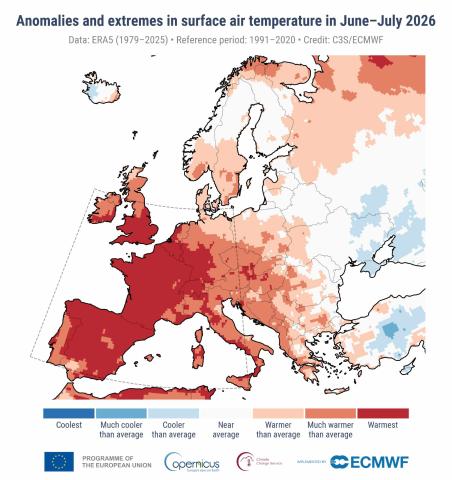
Western Europe experienced its hottest June–July on record, according to data from the Copernicus Climate Change Service (C3S). July saw the third and fourth heatwaves since May, marking an exceptional spell of extreme heat this summer. Across much of the region, the drought observed in May and June also persisted and intensified, with exceptionally low rainfall and soil moisture in France, Spain, parts of Germany and the United Kingdom. These hot and dry conditions in Western Europe led to the spread and intensification of last month’s extreme wildfires in countries such as Spain and France, according to the report.
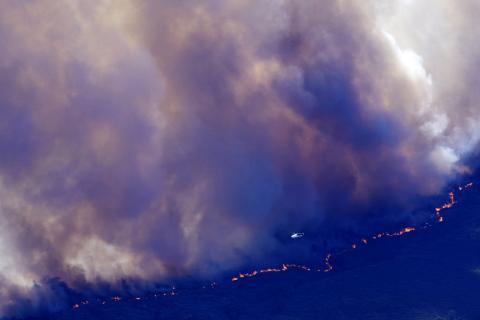
The fire in Ávila, which merged with the one in the south-western mountains of Madrid last Saturday and spread to the province of Toledo, remains unstabilised, although it is under control in some areas. Wind gusts of up to 30 km/h will complicate fire-fighting efforts on Monday, according to the Madrid 112 Safety and Emergency Agency. The fire in Ávila is now the largest in Spain’s recent history. Meanwhile, the fire that broke out on Saturday in La Vall d’Uixó (Castellón), which has spread into the Sierra de Espadán Natural Park, has not yet been stabilised either. In total, around 100,000 people have been evacuated or are under lockdown across all the fire fronts.
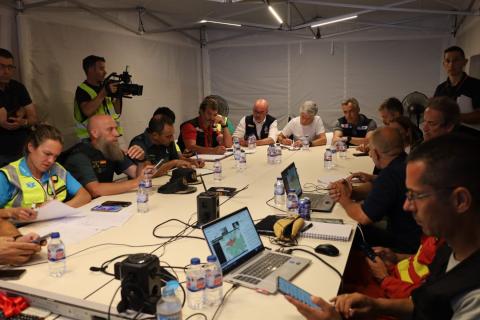
Early this morning, the Minister of Interior, Fernando Grande-Marlaska, declared a state of emergency of national interest in the Community of Madrid and the province of Ávila due to the forest fires in Villa del Prado, San Martín de Valdeiglesias and Burgohondo. According to Carlos Novillo, the Regional Minister for the Environment, Agriculture and the Interior of the Community of Madrid, the fires were beyond the capacity of the fire services to extinguish and posed a serious threat to the population. The Madrid 112 Security and Emergency Agency has reported that, although the night-time firefighting efforts have been effective, the fires have still not been contained or brought under control. More than 10,000 people remain evacuated.
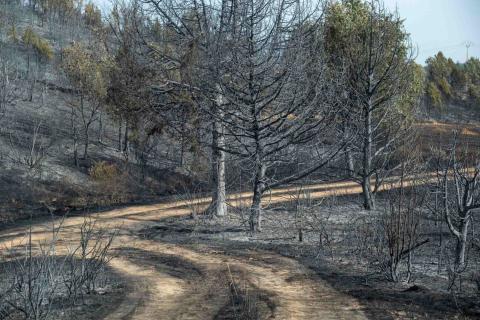
Data from the Copernicus European Forest Fire Information System (EFFIS) show that, as of 22 July, 119,458 hectares have been burnt in Spain. The average number of hectares burnt from 2006 to 2025 up to this date stands at 35,736 hectares. The fire in the Sierra Norte de Guadalajara, which has scorched more than 30,000 hectares and is still active, together with numerous fire fronts in other provinces and the fire in Los Gallardos (Almería), in which 13 people died, have caused the total area burnt to soar.
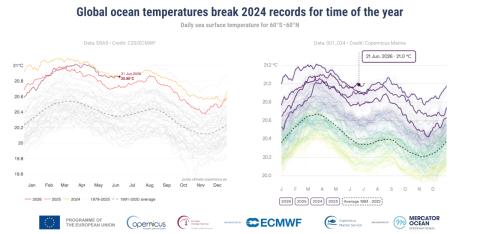
Two Copernicus services have independently confirmed that global sea surface temperatures have broken records for this time of year. Daily data from the Copernicus Climate Change Service exceeded the 2024 levels on 21 June, reaching 20.86 °C, higher than the 20.83 °C recorded in 2023 and 2024. Data from the Copernicus Marine Watch Service show temperatures of 21.0 °C on 21 June, beating the 2023 and 2024 records by 0.1 °C. This unprecedented warming is linked to the onset of El Niño (announced by the WMO and declared by NOAA on 11 June) and to record-breaking sea surface temperatures in the North Pacific; consequences are anticipated for weather patterns, the global climate and marine ecosystems.
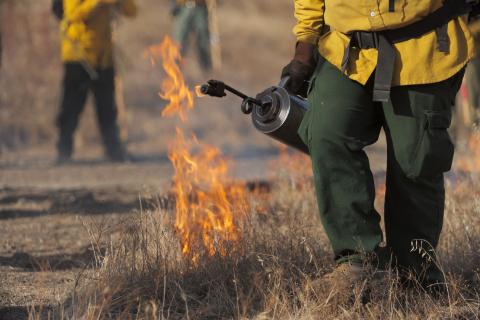
Controlled burning of coniferous forests helps prevent larger wildfires and thus reduces emissions of polluting smoke, according to a study published in Science. The study uses satellite data to estimate the severity of wildfires in California between 2000 and 2021, combined with estimates of fine particulate matter emitted by the fires. By simulating the prescribed burning of more than 2,000 km² of forest per year, the authors estimate a 10% reduction in the cumulative emission of harmful particles in California up to a decade later.
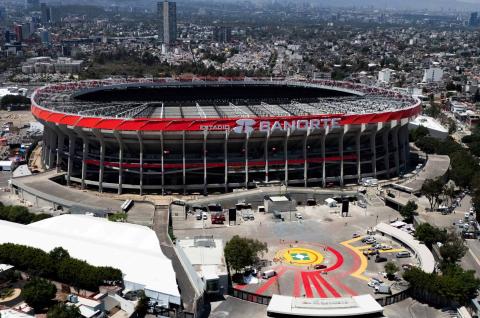
An analysis by World Weather Attribution shows that players and fans face a much higher risk of extreme heat and humidity at the 2026 FIFA World Cup—to be held from June 11 to July 19 in North America—compared to the 1994 tournament held on the same continent. The report analyzes the likelihood that each of the 104 matches to be played in Canada, the United States, and Mexico will meet the safety guidelines set by the FIFPRO players’ union. Nearly a quarter of the matches will be played when conditions exceed a wet-bulb temperature of 26°C—an index that measures the body’s ability to cool itself—which requires cooling breaks. In addition, five matches will exceed the 28°C threshold for this indicator—equivalent to 38°C in dry heat—a limit set by FIFPRO for postponing matches.