University of Valencia
If you are the contact person for this centre and you wish to make any changes, please contact us.
Chief of the Oncology Department at the University General Hospital of Valencia
President of the Spanish Multidisciplinary Melanoma Group
Professor of the Department of Statistics and Operations Research at the University of Valencia
Professor of Genetics at the University of Valencia and researcher of the Genomics and Health Area at the Foundation for the Promotion of Health and Biomedical Research of the Valencian Community (Fisabio)
Professor of Obstetrics and Gynaecology in the Department of Paediatrics, Obstetrics and Gynaecology
Professor of Theoretical Physics at the Institute of Corpuscular Physics (IFIC), University of Valencia - CSIC
Group Leader of the Functional Inorganic Materials Team (FuniMAT) at the Institute of Molecular Science (ICMol) and senior lecturer in the Department of Inorganic Chemistry at the University of Valencia.
Professor of Journalism and POLIBIENESTAR researcher at the University of Valencia
Researcher at the Climate, Atmosphere and Oceans Laboratory (Climatoc-Lab) at the Desertification Research Centre (CIDE, CSIC-UV-GVA)
Educational sociologist and lecturer in Sociology of Education at the University of Valencia
CIBEROBN researcher and professor of preventive medicine at the University of Valencia
CIDEGENT Distinguished Researcher
Professor Emeritus of Pediatrics at the University of Valencia
Researcher Emeritus at the Research Foundation of the Valencia University General Hospital Consortium
Research group head at CIBERobn
Professor of Genetics at the University of Valencia and researcher at the mixed unit Infection and Public Health FISABIO/Universitat de Valencia
Researcher, Instituto de Física Corpuscular
Professor of the Department of Theoretical Physics & IFIC of the University of Valencia - CSIC
Ramón y Cajal researcher, leader of the DREAM research group on Defect Engineering in Advanced Responsive Materials, Institute of Molecular Science (ICMol), University of Valencia
Professor of Astronomy and Astrophysics at the Universitat de València in the Department of Astronomy and Astrophysics and at the Astronomical Observatory, and coordinator of the activities of the Virgo Group of the Universitat de València for the detection and analysis of gravitational waves (LIGO-Virgo-KAGRA collaboration)
Coordinator of the Motor Neuron Diseases Unit at the Neuromuscular Diseases and Ataxias Unit of La Fe Hospital, contracted Juan Rodés, member of CIBERER and associate lecturer at the University of Valencia
Research professor at the Spanish National Research Council (CSIC) at the Institute of Corpuscular Physics (IFIC) in Valencia (University of Valencia-CSIC), co-principal investigator of the KM3NeT research team at IFIC and co-leader of the VEGA Group at IFIC
CSIC lecturer at CIDE (Centre for Research on Desertification), Valencia
Professor of Biochemistry and Molecular Biology at the University of Valencia
Member of the Food Security and Environment Research Group of the Desertification Research Centre (Valencia)
Researcher and lecturer at the faculty of Pharmacy
Head of the Biotechnology and Synthetic Biology Group at the University of Valencia (I2SysBio) and founder of the company DARWIN
Professor in the Department of Physiology at the University of Valencia
Professor of Preventive Medicine and Public Health at the University of Valencia.
Senior Lecturer in the Department of Theoretical Physics at the University of Valencia and at the Institute of Corpuscular Physics (IFIC)
Professor at the University of Valencia, former director of the Institute of Corpuscular Physics (IFIC), University of Valencia - CSIC
Professor of Preventive Medicine and Public Health at the University of Valencia and outgoing president of the Spanish Society of Epidemiology (SEE).
Professor of Theoretical Physics at the University of Valencia
Researcher in the Department of Preventive Medicine and Public Health at the University of Valencia and member of CIBEROBN (CIBER of Physiopathology of Obesity and Nutrition)
Assistant Professor in the Department of Preventive Medicine and Public Health at the University of Valencia, and researcher at the CIBER Centre for the Physiopathology of Obesity and Nutrition (CIBEROBN) at the Carlos III Institute
Researcher CIDEGENT
GenT Researcher of the Functional Inorganic Materials Team (FuniMAT) at the Institute of Molecular Science (ICMol), University of Valencia

The Royal Swedish Academy of Sciences has awarded the Nobel Prize in Physics 2024 to researchers John J. Hopfield and Geoffrey E. Hinton for discovering the foundations that enable machine learning with artificial neural networks. Hinton for discovering the foundational basis that enables machine learning with artificial neural networks. This technology, inspired by the structure of the brain, is behind what we now call ‘artificial intelligence’.

An international team of researchers publishes a review of the complex environmental impacts of genetically modified crops in the journal Science. According to the study, widespread adoption by some of the world's largest agricultural countries has had mixed results for biodiversity, deforestation and human health, depending on the specific characteristics of these crops and the regions involved.

A healthy diet during pregnancy is associated with a lower likelihood of children being diagnosed with autism or communication difficulties, according to a study. The research team did not find a correlation between prenatal diet and repetitive and restricted behaviors (characteristic of these disorders). The analysis is published in JAMA Network Open and gathers data from more than 96,000 mother-child pairs in England and Norway.

About one in 5,000 people have a genetic variant in the SMIM1 gene that results in a particular type of blood type called Vel negative. An international team of researchers now describes the same variant as being associated with a predisposition to obesity, metabolic disturbances and lower resting energy expenditure. Women studied with the variant weigh, on average, 4.6 kg more, while in men the difference is about 2.4 kg. The results are published in the journal Med, published by the Cell group.
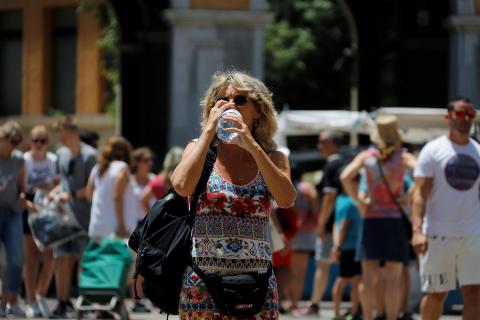
Research led by ISGlobal has analysed more than 11 million hospital admissions in 48 Spanish provinces during the months of June to September between 2006 and 2019. The results, published in the journal Environmental Health Perspectives, show that high temperatures increase admissions for obesity-related issues and renal and urinary insufficiency, among other causes.
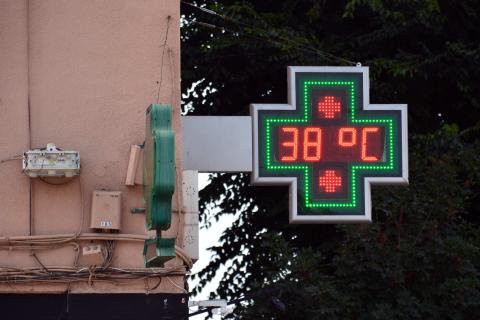
A study published in the journal Environmental Health Perspectives has analysed hospital admissions in 48 Spanish provinces during the months of June to September between 2006 and 2019. Its results, discussed at a briefing organised by Science Media Centre Spain, show that high temperatures increase admissions for issues related to obesity and renal and urinary insufficiency, among other causes.

A "large fraction" of groundwater samples are contaminated by perfluoroalkyl and polyfluoroalkyl substances (PFASs) and would be considered unacceptable for drinking water, a study claims. The analysis, published by Nature Geoscience, brings together data from 273 studies of surface and groundwater samples from around the world since 2004. The exact proportion of samples exceeding the thresholds varies according to the standards considered. For example, 69% of groundwater samples with no known source of contamination exceed the Canadian threshold, but the figure is only 6% if the EU criterion for the sum of all PFASs is considered.

A meta-analysis by the University of Valencia has studied the links between leisure reading habits on digital devices and the reading comprehension of students of different ages. The research - which is based on 25 studies published between 2000 and 2022 involving some 470,000 students from different countries - concludes that in the early stages (primary and 1st and 2nd ESO in the Spanish case) there were small negative relationships between digital leisure reading and reading comprehension, while in later stages (3rd and 4th ESO, baccalaureate and university) the relationship became slightly positive. The research is published in Review of Educational Research.

A team of researchers has managed to combine more than seven synthetic chromosomes made in the laboratory in a single yeast cell. This involves developing for the first time a eukaryotic cell with more than 50% synthetic DNA, which survives and replicates in a similar way to wild yeast strains. The results, which are part of the Synthetic Yeast Genome Project (Sc2.0), are published in the journal Cell.

The vast majority of mammals remain fertile until the end of their lives. Humans and some species of whales deviate from that norm and do go through menopause. Now, research published in Science reveals that menopause exists in female chimpanzees, too, and that it lasts for a fifth of their adult lifespan. To reach these conclusions, the research team observed 185 female chimpanzees between 1995 and 2016 in Uganda's Kibale National Park and measured hormone levels in urine samples from specimens of various ages.