University of Valencia
If you are the contact person for this centre and you wish to make any changes, please contact us.
Chief of the Oncology Department at the University General Hospital of Valencia
President of the Spanish Multidisciplinary Melanoma Group
Professor of the Department of Statistics and Operations Research at the University of Valencia
Professor of Genetics at the University of Valencia and researcher of the Genomics and Health Area at the Foundation for the Promotion of Health and Biomedical Research of the Valencian Community (Fisabio)
Professor of Obstetrics and Gynaecology in the Department of Paediatrics, Obstetrics and Gynaecology
Professor of Theoretical Physics at the Institute of Corpuscular Physics (IFIC), University of Valencia - CSIC
Group Leader of the Functional Inorganic Materials Team (FuniMAT) at the Institute of Molecular Science (ICMol) and senior lecturer in the Department of Inorganic Chemistry at the University of Valencia.
Professor of Journalism and POLIBIENESTAR researcher at the University of Valencia
Researcher at the Climate, Atmosphere and Oceans Laboratory (Climatoc-Lab) at the Desertification Research Centre (CIDE, CSIC-UV-GVA)
Educational sociologist and lecturer in Sociology of Education at the University of Valencia
CIBEROBN researcher and professor of preventive medicine at the University of Valencia
CIDEGENT Distinguished Researcher
Professor Emeritus of Pediatrics at the University of Valencia
Researcher Emeritus at the Research Foundation of the Valencia University General Hospital Consortium
Research group head at CIBERobn
Professor of Genetics at the University of Valencia and researcher at the mixed unit Infection and Public Health FISABIO/Universitat de Valencia
Researcher, Instituto de Física Corpuscular
Professor of the Department of Theoretical Physics & IFIC of the University of Valencia - CSIC
Ramón y Cajal researcher, leader of the DREAM research group on Defect Engineering in Advanced Responsive Materials, Institute of Molecular Science (ICMol), University of Valencia
Professor of Astronomy and Astrophysics at the Universitat de València in the Department of Astronomy and Astrophysics and at the Astronomical Observatory, and coordinator of the activities of the Virgo Group of the Universitat de València for the detection and analysis of gravitational waves (LIGO-Virgo-KAGRA collaboration)
Coordinator of the Motor Neuron Diseases Unit at the Neuromuscular Diseases and Ataxias Unit of La Fe Hospital, contracted Juan Rodés, member of CIBERER and associate lecturer at the University of Valencia
Research professor at the Spanish National Research Council (CSIC) at the Institute of Corpuscular Physics (IFIC) in Valencia (University of Valencia-CSIC), co-principal investigator of the KM3NeT research team at IFIC and co-leader of the VEGA Group at IFIC
CSIC lecturer at CIDE (Centre for Research on Desertification), Valencia
Professor of Biochemistry and Molecular Biology at the University of Valencia
Member of the Food Security and Environment Research Group of the Desertification Research Centre (Valencia)
Researcher and lecturer at the faculty of Pharmacy
Head of the Biotechnology and Synthetic Biology Group at the University of Valencia (I2SysBio) and founder of the company DARWIN
Professor in the Department of Physiology at the University of Valencia
Professor of Preventive Medicine and Public Health at the University of Valencia.
Senior Lecturer in the Department of Theoretical Physics at the University of Valencia and at the Institute of Corpuscular Physics (IFIC)
Professor at the University of Valencia, former director of the Institute of Corpuscular Physics (IFIC), University of Valencia - CSIC
Professor of Preventive Medicine and Public Health at the University of Valencia and outgoing president of the Spanish Society of Epidemiology (SEE).
Professor of Theoretical Physics at the University of Valencia
Researcher in the Department of Preventive Medicine and Public Health at the University of Valencia and member of CIBEROBN (CIBER of Physiopathology of Obesity and Nutrition)
Assistant Professor in the Department of Preventive Medicine and Public Health at the University of Valencia, and researcher at the CIBER Centre for the Physiopathology of Obesity and Nutrition (CIBEROBN) at the Carlos III Institute
Researcher CIDEGENT
GenT Researcher of the Functional Inorganic Materials Team (FuniMAT) at the Institute of Molecular Science (ICMol), University of Valencia
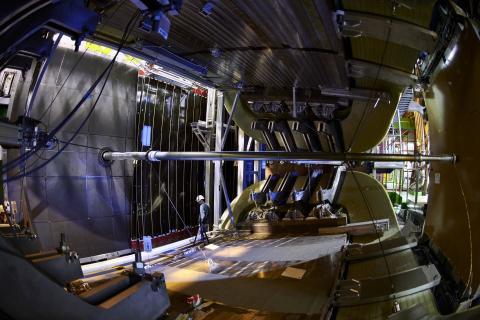
Cosmological models suggest that matter and antimatter were created in equal amounts in the Big Bang, but in the current universe matter seems to predominate over antimatter. This imbalance is believed to be due to differences in the behaviour of the two, a violation of symmetry known as CP violation. This effect was predicted by the Standard Model of Physics and observed experimentally in mesons more than 60 years ago. Now, the LHCb collaboration at CERN, which includes significant Spanish participation, has observed this phenomenon for the first time in the decay of baryons, particles that make up most of the matter in the observable universe. The study is published in Nature.
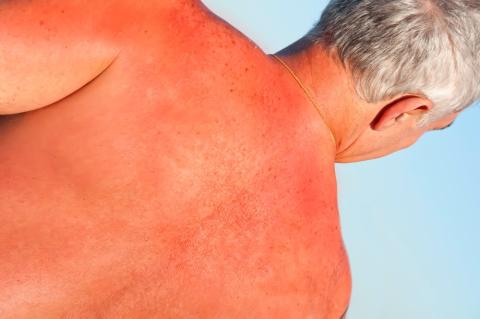
Research analyzing data from more than 200 countries concludes that people over the age of 65 will face an increase in skin cancer cases over the next two decades. The study, published in JAMA Dermatology, used data from 1990 to 2021 and made estimates through 2050. Men and people living in countries with higher sociodemographic indices showed a higher incidence.
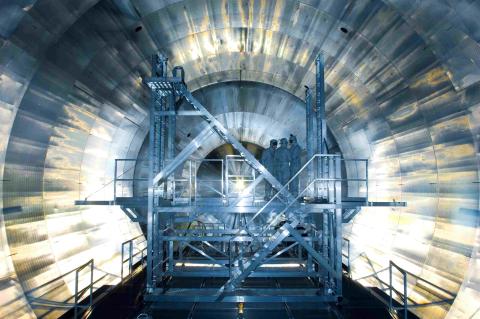
The KATRIN (Karlsruhe Tritium Neutrino Experiment) team has published the most accurate measurement to date of the upper limit of the neutrino mass in the journal Science, establishing it at 0.45 electronvolts (eV), less than a millionth of the mass of an electron. The KATRIN experiment, launched in 2018 in Germany, will finalise its neutrino mass measurement campaign this year, having reached 1,000 days of data acquisition.

Today the Spanish Parliament rejected the creation of the State Public Health Agency, a proposal that had been envisaged since the Public Health Act of 2011 and whose idea of implementation had resurfaced after the pandemic.

According to a modelling study published in Nature Cities, the frequency of some types of fires in cities is expected to increase in the coming decades as a result of climate change. This increase would be seen in vehicle fires and in those that occur outdoors. The conclusions are based on data from more than 2,800 cities in 20 countries and could be useful for future urban planning and emergency response strategies.

From 2011 to 2019, improvements in life expectancy slowed down in many European countries and many experienced declines in this indicator during the Covid-19 pandemic (2019-2021), according to a study published in The Lancet Public Health. The research shows that the average annual improvement in life expectancy fell from 0.23 years (1990-2011) to 0.15 years (2011-2019) in 20 European countries, including Spain.

An international team of scientists from the KM3NeT collaboration has detected the signal from the highest-energy cosmic neutrino to date, some 30 times higher than those previously detected. The result suggests that the particle came from beyond the Milky Way, although its precise origin has yet to be determined. The results are published in the journal Nature.

The new US president, Donald Trump, announced on his first day that the country will leave the World Health Organisation (WHO) within the next twelve months. The reasons behind the decision, according to him, are the ‘mismanagement of the covid-19 pandemic and other global health crises’, as well as ‘disproportionate payments compared to other countries’ dues’.
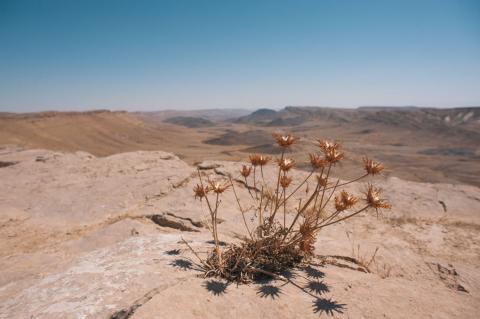
More than three-quarters of the earth's land surface experienced drier climates between 1990 and 2020 compared to the previous three decades, according to a new report by the United Nations Convention to Combat Desertification. Over the past 30 years, 40.6 percent of the global landmass, excluding Antarctica, is classified as drylands, three percentage points more than the previous three decades. The report, which is being presented at the COP16 on desertification being held in Riyadh, Saudi Arabia, also shows that 2.3 billion people were living in drylands in 2020, a population that could rise to 5 billion by 2100 under a worst-case climate change scenario.
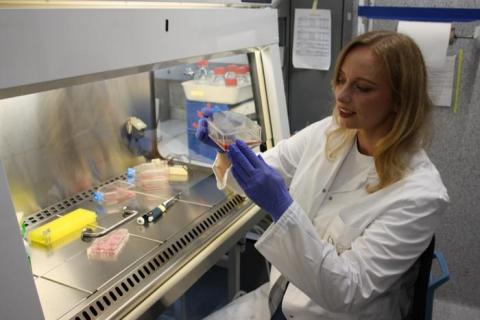
A team of researchers led by the Center for Genomic Regulation in Barcelona has mapped the human spliceosome for the first time. This complex and partially unknown cellular machinery is responsible for cutting and splicing the RNA fragments encoded by genes in different ways, making it possible to obtain a wide variety of proteins from the same sequence. Its alteration is related to processes such as cancer, neurodegenerative processes or various rare diseases. According to the researchers, who publish the results in the journal Science, “by knowing exactly what each part does, we can find completely new angles to address a broad spectrum of diseases”.