European mountain peaks are seeing an increase in plant species due to rising temperatures, but this is leading to a rise in local extinctions
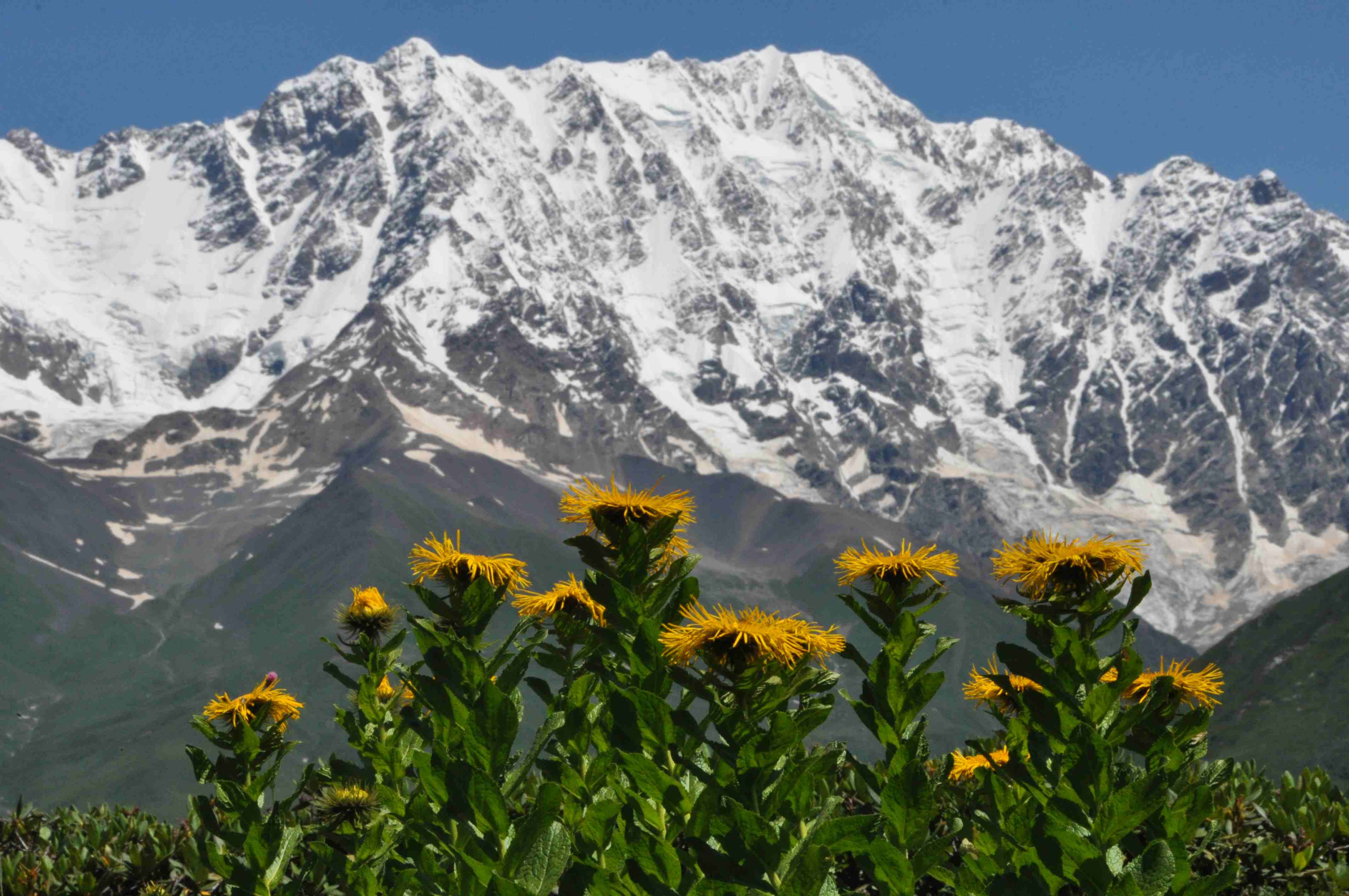
The peaks of European mountains such as the Pyrenees or the Sierra Nevada may be gaining plant species as the climate warms, but this apparent increase in biodiversity is masking a growing wave of local extinctions. These are the main conclusions of a study published in the journal Science, which includes Spanish participation and analyses nearly a thousand vegetation plots spread across 62 European mountain peaks. The reason is that higher-altitude mountain regions have gained plant species in recent decades as plants from lower altitudes have expanded up the slopes, but this may mask the decline or disappearance of specialised, high-altitude resident species.
Víctor Resco de Dios - montañas europeas sept 2026
Víctor Resco de Dios
Lecturer of Forestry Engineering and Global Change, University of Lleida and researcher at Agrotecnio
Heraclitus said that one cannot step into the same river twice – a phrase that sums up just how dynamic nature is. Although we often regard the landscape as an unchanging snapshot, the truth is that in ecology, change is the norm. This natural dynamic is intensifying on the world’s mountain peaks as a result of anthropogenic changes. More specifically, the study quantifies how our mountain peaks are home to an ever-increasing number of species. This is because, following rising temperatures, some species are migrating upwards in altitude, joining those that already inhabited the peaks. Whilst this may seem like good news, as it increases biodiversity in some areas, the effect will be temporary. In other words, the plants that previously occupied the mountain peaks are being displaced by the new arrivals, and extinction rates have accelerated over the course of this century. In a climate change scenario, species must migrate, adapt or go extinct. For now, it seems that the third option is the one prevailing.
Borja Jiménez-Alfaro - montañas vegetación EN
Borja Jiménez-Alfaro
The study presents a detailed and robust analysis of the sampling carried out across the GLORIA network of Alpine summits at four different points in time (2001, 2008, 2015 and 2022). These data are unique on a global scale because they are based on highly accurate observations made by experts in botany.
The study is consistent with the findings of regional studies, which highlight a higher risk of local extinction in thermophilic communities in southern (Jiménez-Alfaro et al. 2016, Evangelista et al. 2015) and central Europe (Horka et al. 2025). The novelty of the study lies in confirming these trends on Alpine summits at a continental scale, using the most extensive time series analysed to date, which further enhances our understanding of the influence of climate change on Alpine flora.
The authors have taken into account significant potential sources of confounding, such as temporal fluctuations inherent in population dynamics or sampling error in field observations. Although these factors may introduce a margin of error, the results are sufficiently robust to draw conclusions regarding local extinction rates and their direct or indirect relationship with climate change.
It should be borne in mind, however, that the definition of local extinction used by the authors refers to the disappearance of species from sampling plots, which represent a very small area of the total extent of alpine habitats. Although the results clearly show declining trends for the alpine species most sensitive to climate change, these trends do not imply the total disappearance of species from the sampled mountains.
The study provides new evidence of changes in biodiversity associated with climate change. The fact that one of the coldest ecosystems in Europe is showing signs of relatively rapid change implies that there are no longer any natural systems that remain unaffected by climate change. Furthermore, the changes observed are directly linked to glacial melt, such as that which caused the recent flooding between Nepal and China.
Wessely et al.
- Peer reviewed
- Research article