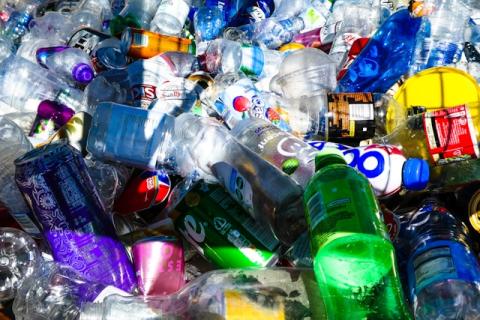
The health impacts related to plastic emissions could double by 2040
A study based on models and data concludes that adverse health effects related to plastic emissions could more than double by 2040 if current practices do not change. The authors note that their model could not assess the potential impacts associated with many chemicals contained in plastics, nor with the microplastics and nanoplastics that form throughout their life cycle, due to a lack of data and “a serious lack of transparency regarding their composition.” The results are published in The Lancet Planetary Health.
Rosal - Modelo plásticos (EN)
Roberto Rosal
Professor of Chemical Engineering in the Department of Analytical Chemistry, Physical Chemistry and Chemical Engineering at the University of Alcalá
The article attempts to quantify the impact of plastic on human health. To do so, it integrates a material flow model with a life cycle assessment. The study compares disability-adjusted life years (DALYs) under various scenarios, based on a projected 100% increase in production from 2016 to 2040. This figure, however, appears to be overestimated. An extrapolation of recent growth rates suggests a real increase of closer to 60%.
The study highlights a scenario that clearly improves health indicators: one that reduces the use of non-essential plastics and promotes reusable glass, paper, and compostable materials. However, the approach is somewhat confusing, as it does not precisely define which uses are non-essential or what would happen if alternative materials were used. Even so, the conclusion is clear: reducing plastic consumption decreases its impact.
The findings indicate that raw material extraction and polymer manufacturing are the main culprits behind health damage, resulting from global warming associated with production. This result, besides being counterintuitive, ignores the potential risk posed by chemical additives and microplastics and nanoplastics, which it excludes due to a lack of data on their composition and effects. This severely limits the analysis's ability to reflect the true extent of the damage.
Another weakness is that the study is limited to common plastics found in municipal waste (two-thirds of the total), excluding sectors such as construction, transportation, agriculture, and textiles. Furthermore, there is a geographical bias, as the inventories were primarily extrapolated from data from Europe and North America. In short, the premise is interesting, but the study's methodological limitations considerably diminish its value. Reducing the impact by cutting production is common to all industrial activity.
Carmen Morales - plásticos salud Lancet EN
Carmen Morales
Lecturer at the University of Cadiz, researcher at the Institute of Marine Research (INMAR) and Scientists Coalition for an Effective Plastics Treaty
The article provides a solid and well-founded analysis of the climate and health impacts associated with the life cycle of single-use plastics, which represent a very significant part of global production. The approach is ambitious and of good quality, integrating different future scenarios and translating them into impacts on human health. At the same time, the study acknowledges important limitations, such as the lack of detailed information on the chemical composition of plastics and the exclusion of still-emerging dimensions, such as the health effects of nanoplastics, which remain the subject of research. Precisely in the current context, where some scientific results are questioned or used to generate doubt, it is worth remembering that science advances precisely through debate and the continuous improvement of methods.
The most powerful aspect of the study is that it shows that reducing the production of primary plastics is the most effective measure for reducing emissions and alleviating the impact on human health. Furthermore, the study highlights the importance of considering the entire life cycle of a material in order to assess its impacts and shows how aspects such as considering the entire life cycle of a material, reducing the production of primary polymers and using safe chemicals are crucial for our future and well-being, issues that continue to be the subject of debate and resistance in the process of building a common international regulatory framework.
Overall, the study reinforces the need for the long-delayed global treaty on plastics to be based on principles of prevention and precaution, with the protection of human rights at its core, including the right to health and to a safe, clean, sustainable and healthy environment.
Muñoz - Plásticos 2040
Juan Muñoz Arnanz
Researcher specializing in environmental chemistry at the Institute of General Organic Chemistry (IQOG-CSIC)
In my opinion, the article is of very high scientific quality. It is very well written and stands out for several reasons: the use of a transparent and reproducible methodology, the coherent integration of material flow models with life cycle assessment, and the clear translation of environmental emissions into comparable human health metrics (DALYs).
The work is particularly rigorous in documenting assumptions, scenarios, and sources of uncertainty, and, very importantly, it avoids speculative claims. The authors clearly indicate which effects are included and which are not, which I believe strengthens the study's credibility.
The study not only fits very well with previous evidence but also represents a significant qualitative leap. Currently, there is abundant literature documenting adverse effects of plastics at different stages of their life cycle, as well as LCA studies focused on climate emissions or pollution. However, to my knowledge, an integrated quantification of human health impacts on a global scale is not common.
This work confirms and reinforces previous findings indicating that primary plastic production is a dominant source of environmental and health impacts, and demonstrates that focusing exclusively on waste management is insufficient (key finding). Therefore, it provides a solid quantitative basis for justifying policies such as reducing plastic production, simplifying the chemical compounds used, and mandating transparency in material composition.
I also believe it is important to highlight that, in the current context of the Global Plastics Treaty negotiations, the article provides directly relevant evidence to support a comprehensive life cycle approach, not limited to the end-of-life of products.
I would say that the most significant limitation is the exclusion of the direct effects of human exposure to chemical compounds present in plastics, microplastics, and nanoplastics, as well as the impacts during the product use phase. These exclusions are due to the lack of available data in LCA inventories, especially the lack of industrial transparency regarding the chemical composition of plastics. Furthermore, the study covers only a portion of the plastics universe (primarily municipal waste) and does not include sectors such as construction, textiles, electronics, or agriculture, which use potentially more hazardous polymers in larger volumes. This is important because it implies that the presented estimates likely underestimate the true health burden. Another relevant limitation is the high uncertainty inherent in long-term global models. Although the authors incorporate sensitivity analyses and Monte Carlo simulations from the P2O model, a complete quantification of the accumulated uncertainty is not possible.
However, all these limitations are explicitly acknowledged in the article and, in my opinion, do not weaken its central message. On the contrary, they reinforce the conclusion that even using prudent and conservative estimates reveals very significant health impacts, and that, therefore, the actual effects could be considerably greater.
Deeney et al.
- Research article
- Peer reviewed
- Modelling