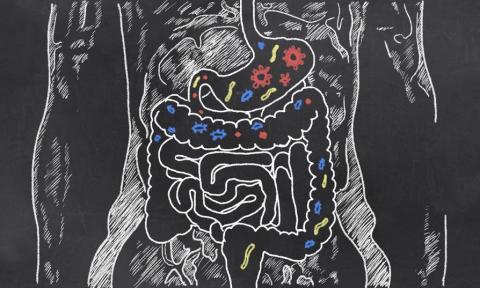
'Helicobacter pylori' infection could be linked to as many as one in five cases of colorectal cancer worldwide, according to a study
Infection with the bacterium Helicobacter pylori is a known risk factor for stomach cancer. Its link to colorectal cancer, however, remains an unconfirmed hypothesis. An international team has reviewed 43 studies on this subject and found that 22 per cent of colorectal cancer cases could potentially be linked to this infection, although when they selected the 14 most reliable studies, the figure fell to 12 per cent. According to the authors, exposure to Helicobacter pylori could be contributing significantly to the number of cases of colon cancer worldwide, but they point out that their study is only exploratory and that more robust research, such as clinical trials, is needed to establish a causal link. The results have been published in eGastroenterology.
Ramón Salazar - helicobacter colon
Ramón Salazar
Head of Medical Oncology at the Catalan Institute of Oncology (ICO), head of the Colorectal Cancer Research Group, Oncobell programme (IDIBELL) and associate professor of Medicine at the University of Barcelona
Although the quality of data collection is high, this is a rather heterogeneous observational study in terms of the origin and nature of its databases.
I was unaware of the proposed link between Helicobacter pylori infection and colorectal cancer, but it may make sense if the bacterium is identified in the colon, given its pro-inflammatory properties; however, in this study it has only been quantified or detected in the stomach.
The study finds an association between Helicobacter pylori (detected only in the stomach) and colorectal cancer, but this does not mean that it has been proven that the bacterium is the cause of these tumours. Furthermore, the fact that the bacterium was detected in the stomach does not necessarily imply its presence in the colon mucosa – where it could indeed cause a pro-cancerous inflammatory reaction – and the strength of the correlation varies substantially depending on which studies are taken into account, suggesting that the result is not particularly robust.
This is one of the major problems with causal inference: coincidence is not causation. As Nassim Nicholas Taleb argues in his book Fooled by Randomness, we can construct highly convincing narratives based on associations that actually reflect chance, biases or factors we have not taken into account. In science, finding an association is only the beginning; there must then be a rational mechanism of action to explain causality, and this must ultimately be validated: the difficult part is proving that we are not being misled by chance.
In summary, although the study is well-conducted and the authors attempt to verify their results in various ways, it still relies on observational data, studies that differ greatly from one another, possible errors in measuring exposure to H. pylori, and several assumptions inherent in the model itself. For this reason, its results should be viewed as exploratory and hypothesis-generating, not as a definitive demonstration of causality.
Luis Bujanda - helicobacter colon
Luis Bujanda
Specialist in Digestive System at Donostia University Hospital, coordinator of the Liver and Gastrointestinal Diseases Area at the Biogipuzkoa Institute and professor of Medicine at the University of the Basque Country (UPV/EHU)
This is not a high-quality article, as it is a summary of summaries.
[With regard to the evidence that was already known] There have been articles in favour and others against.
Overall, the conclusions are unreliable and run contrary to compelling data:
- The prevalence of H. pylori infection in Spain has fallen, as has the incidence of gastric cancer. However, the incidence of colorectal cancer has risen.
- The prevalence of H. pylori infection is the same in men as in women. However, colorectal cancer is more common in men (60 per cent of cases).
Iago Rodríguez-Lago - helicobacter colon
Iago Rodríguez-Lago
Gastroenterologist at the Inflammatory Bowel Disease Unit, Digestive System Department
It is a well-designed and well-conceived study from the outset, but it is important to note that it does not include new patients nor does it constitute a clinical trial: it is a mathematical model that combines three previously published findings (the global prevalence of H. pylori, the risk of colorectal cancer observed in 43 studies, and the number of cases recorded by GLOBOCAN in 2022).
The methodology applied is robust and, in some respects, innovative: simulations to account for uncertainty in the estimates, multiple sensitivity analyses, and an assessment of publication bias. It is also worth noting that the authors acknowledge that their results are exploratory, precisely because causality cannot be proven with this study design.
Part of this limitation stems from the data source, as, of the 43 studies, 38 are case-control or cross-sectional studies, and only five are prospective cohorts. The disparity between them is very great, and the authors are barely able to explain 7 per cent of the differences (heterogeneity). In summary, the study presents a very interesting statistical model, but one based on somewhat weak evidence. Nevertheless, this approach allows for the inclusion of a very large number of patients, requires less time to obtain results, and serves to guide future research, although it does not appear likely to change our current clinical practice.
It is consistent with what we already know, as the association was described years ago with similar magnitudes; there is a certain degree of biological plausibility, because in animal models the infection alters gut immunity and the microbiota, and eradication prevents this effect. The key to interpreting the study is to distinguish between three things: ‘association’ does not mean ‘caused’, and ‘caused’ does not mean ‘preventable’. That 22 per cent risk would only translate into preventable cases if the relationship were causal and if eradicating the bacterium were to reverse the risk. The evidence on eradication cited in the article itself is limited: four studies, with an overall neutral result, and the only indication of a benefit appears only after 10 years. It is also worth putting these figures into perspective, as in colorectal cancer, lifestyle factors, diet, family history, etc., account for a significant proportion of cases; consequently, these are still currently regarded as the key areas for preventive action.
Although the study offers an interesting approach and a comprehensive overview of these issues, it does not provide any immediate practical implications for our patients or the general population. Nevertheless, it raises an interesting point, as there is therefore the possibility of a dual benefit in countries that already carry out active screening for the bacterium to prevent gastric cancer. In Spain, the priority remains increasing participation in colorectal screening, which does have a proven benefit.
[Regarding possible limitations] If we analyse the methods used in detail, it has been mathematically assumed that the relationship between the two factors (H. pylori and colorectal cancer) is causal. We must bear in mind that the infection is also a marker of socio-economic conditions and hygiene during childhood, which are in turn linked to diet, smoking, obesity, etc. As some of these factors are associated with both conditions, there may be some uncertainty regarding the nature of the relationship between them and the role played by exposure to the bacterium itself.
They also highlight a striking detail: if the bacterium were a more direct cause of the tumour, one would expect a higher risk with the more virulent strains, yet the opposite is true.
All estimates for strains carrying CagA, VacA and GroEL fall below the overall risk.
In conclusion, although one-fifth of cases are linked to the bacterium, this does not mean that one-fifth are preventable. Association does not imply causality, and causality does not imply preventability. The study shows that the higher the quality of the research from which the data are derived, the lower the observed effect. Taking all 14 studies into account, the figure drops from 22 per cent to 12 per cent, demonstrating that data quality is essential for drawing robust conclusions. Based on this evidence, we do not have sufficient grounds to screen for H. pylori with a view to reducing the risk of colorectal cancer. We do know that participation in colorectal cancer screening programmes is effective, and there is very solid evidence to support this. The most valuable aspect of this work is that it highlights where further research is needed, particularly in countries that already screen for the bacterium to prevent gastric cancer, as this could help us uncover the influence this might have on colorectal cancer.
Ángel Lanas - pylori cáncer colon EN
Ángel Lanas
Professor at the Faculty of Medicine of the University of Zaragoza, a researcher at the Aragón Institute for Health Research (IIS Aragón) and CIBERehd, and an honorary professor at the University of Hong Kong (China)
What do you think of the article overall? Is it of good quality?
"The article is complex from a methodological point of view and appears to be rather “stretched” from a statistical point of view, but I didn’t feel it offered anything of substance.
The authors report that 22 per cent of colon cancers may be linked to H. pylori infection, but at no point does this go beyond an association and, of course, the authors do not in any way venture to suggest a causal relationship. There are many other factors that may underlie this association besides the infection itself, such as age, diet, lifestyle, socio-economic status, access to medical tests and many other factors.
The margin of uncertainty reported by the authors is quite high and, when they focus on the highest-quality studies, this association drops to 12 per cent. The heterogeneity between studies is also very high, as the authors themselves point out, and the studies with the greatest bias are those that find the strongest association. Overestimates are made for countries where a great deal of data is missing.
In summary, we would say that the study is interesting, methodologically complex to carry out, and its conclusions must be treated with extreme caution.”
How does this fit in with the existing evidence, and what implications might it have?
“H. pylori infection is indeed clearly linked to gastric cancer. Its link to colorectal cancer is much weaker.
For some time now, mechanistic and epidemiological studies have been carried out in an attempt to link H. pylori infection with colorectal cancer. However, this potential link is, in a sense, counterintuitive.
Colon cancer is a cancer of developed countries, where the prevalence of H. pylori infection is precisely low. Conversely, in developing countries, the prevalence of H. pylori infection and the incidence of gastric cancer are high, whilst that of colon cancer is much lower than in developed countries.
This does not mean that H. pylori cannot play a role in the development of colorectal cancer, but this first needs to be demonstrated and, if it does, its effect is limited.
In my view, the study has no practical implications for current strategies for the prevention of colorectal cancer or the eradication of H. pylori.”
Li et al.
- Research article
- Peer reviewed