Press Offices

Press Offices

SMC Spain amplifies the voices of experts on current topics that provoke controversy. 

¿Qué me ofrece?

The sources that collaborate with SMC Spain will multiply their national and international media impact. Register your office to become part of a directory on this website that journalists can consult. Our guides on communication and science can help you in your daily work.

Icono
Cómo trabajamos

We will rely on you when we contact sources from your organization or when we organize briefing sessions with them. We will provide you with support resources to facilitate your work. You can learn more about our method here

Título qué me ofrece
What We Offer You
Título cómo trabajamos
How We Work

New neurons detected forming in adult human brains

A team from Sweden has analysed post mortem brain samples from people aged between 0 and 78 using various techniques and found that, although it varies between individuals, new neurons continue to form in the hippocampus with no apparent age limit. Although previous studies had reached similar conclusions, controversy remains about these results. According to the authors, the new work ‘provides an important piece of the puzzle in understanding how the human brain works and changes throughout life.’ The results are published in the journal Science.

0

What to do in the event of extreme fires?

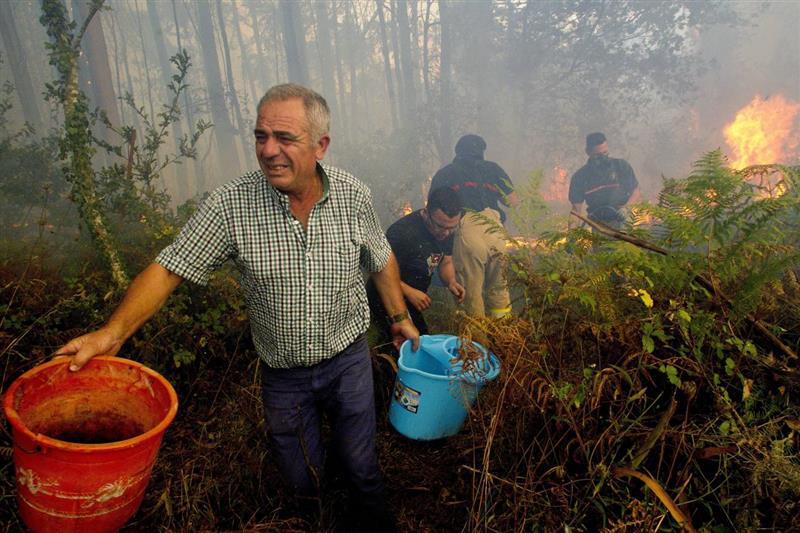
Two people have died in a fire that has burned more than 5,500 hectares in the province of Lleida. Firefighters from the Catalan government declared it under control last night, after 29 hours. Salvador Illa, president of the Catalan regional government, called for ‘maximum caution’ from the public, warning that ‘today's fires are not like those of the past, they are extremely dangerous,’ according to RTVE.es. Why is this fire considered extreme? What should you do when a fire breaks out? How can more fires be prevented? In this article, we have compiled explanations and basic recommendations with the help of expert sources.

0

People can habituate to democratic decline

The brain can become habituated to the deterioration of democracy, warn a neuroscientist and a law expert in an editorial published in Science Advances. "When democratic norms are violated repeatedly, people begin to adapt,’ they explain, calling for a "dishabituation" to democratic decline. This requires "see[ing] things not in light of the deterioration of recent years, but in light of our best historical practices, our largest ideals, and our highest aspirations.

0

Mutations caused by pollution in lung cancer in non-smokers revealed

Although tobacco consumption is declining in many parts of the world, there appears to be an increase in the number of lung cancer cases among non-smokers. One of the possible causes of this increase is air pollution. Now, researchers in the US, with Spanish participation, have analysed the genomes of 871 lung tumours in people from various locations who had never smoked. The results, published in the journal Nature, indicate that greater exposure to pollution is linked to an increase in the number of mutations, including those commonly associated with tobacco.

0

Microplastics found in reproductive fluids

A research team from Murcia has found several types of microplastics in 69% of follicular fluid samples from 29 women and 55% of seminal fluid samples from 22 men, according to a presentation at the annual meeting of the European Society of Human Reproduction and Embryology (ESHRE), being held from 29 June to 2 July in Paris, France. The most frequent polymer in both types of samples was polytetrafluoroethylene (PTFE). The abstract of the research is published in the journal Human Reproduction.

0

Electrical brain stimulation could improve mathematics learning in people with more difficulties

An international study with 72 participants has found that greater connectivity between certain brain areas is associated with greater mathematical computational ability. In addition, weak electrical stimulation in a particular area was associated with improved computational learning in volunteers with lower connectivity. The results are published in the journal Plos Biology.  

0

Age-related inflammation does not occur in some non-industrialized populations, which calls into question its universality

Aging is associated with an increase in chronic inflammation, a phenomenon known as inflammaging that is related to different diseases and that was considered universal. Now, an international team has analyzed data on 19 inflammation-associated proteins in four different populations: two industrialized (from Italy and Singapore) and two non-industrialized (the Tsimane population of the Bolivian Amazon and the Orang Asli population of Malaysia). The results show that, at least according to this form of measurement, in the non-industrialized populations there is no increase in inflammation with age, which questions whether this is a biological imperative and indicates that it would depend on lifestyles and social and cultural factors. The paper is published in letter format in Nature Aging

0

One in six people worldwide suffered from loneliness in the last decade

From 2014 to 2023, one in six people in the world suffered from loneliness, according to a World Health Organisation report, which outlines the causes of this phenomenon and its multiple impacts: on physical and mental health and mortality, as well as on work and the economy. The report estimates that loneliness is linked to more than 871,000 deaths per year and highlights a higher incidence among young people and in low- and middle-income countries.

0

Let's protect diverse science

Trump's measures are directly affecting trans and non-binary people in science. This uncomfortable mirror is not unique to the United States. International studies have documented how the LGTBIQA+ community in science experiences less safe working environments, greater discrimination and more frequent abandonment of academic careers. Better science will only be possible if it protects and celebrates all the people who make it possible.

1